
Fire Lane Striping
In NE Boston, MA
Code-Compliant Fire Lane Markings
1-800-STRIPER provides fire lane striping in NE Boston, MA — marking fire apparatus access roads, curbs, and no-parking zones to the 20-foot unobstructed width Massachusetts sets in 527 CMR 1.00 and to the local fire department’s approved plan for commercial properties.
1-800-STRIPER® of NE Boston PROVIDes Fire Lane Striping Services NEAR YOU
Is your parking lot ready for first responders?
Our team is well-versed in local fire regulations and will parter with you to design a fire lane striping plan that creates unobstructed emergency access to protect your customers and property.
Core Services:
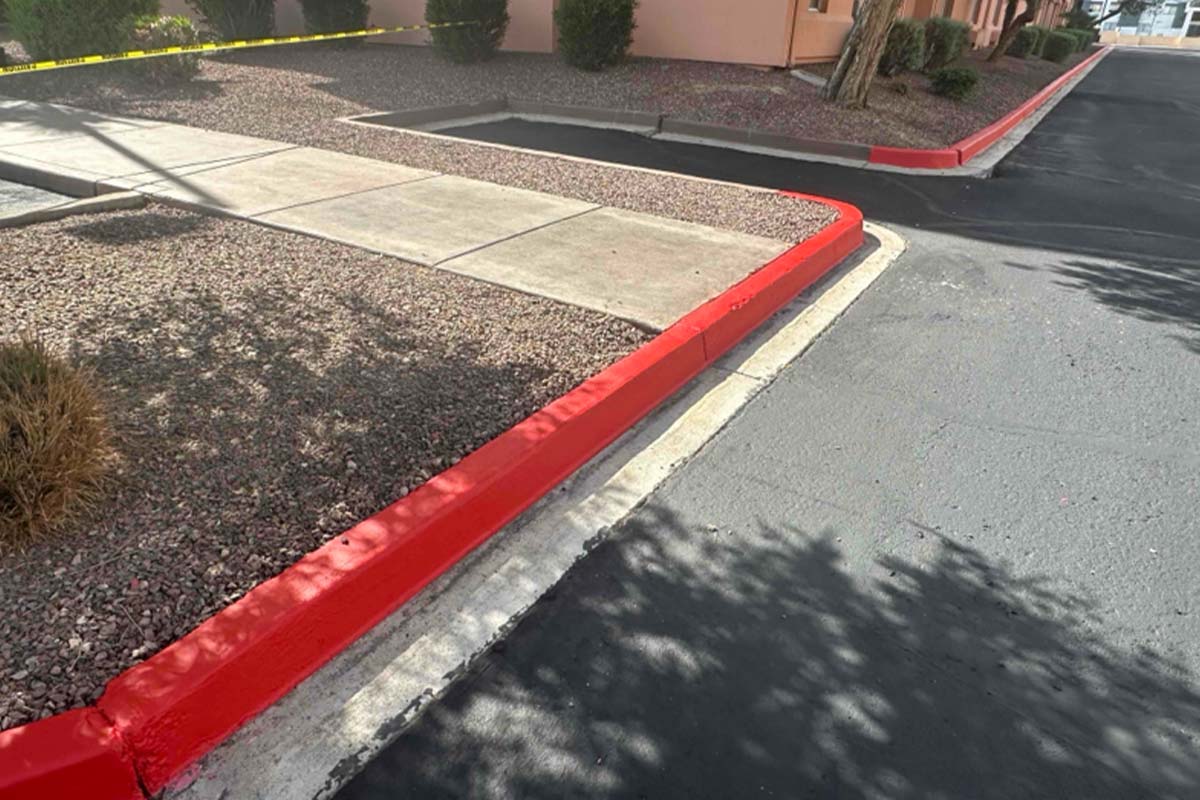
Fire Lane Striping in NE Boston, MA
Fire lane striping is the painted boundary, hatching, and curb marking that keeps a fire department’s route through your property clear. On commercial lots across Woburn, Lynn, Salem, Peabody, and the rest of northeast Boston, it is also the marking most likely to be the subject of a conversation with an inspector, because it is the one that has to work on the worst day the property ever has.
We mark the access road boundaries, paint the curbs and no-parking zones, and stencil the lettering to the plan your local fire department has approved. Where a property has grown or changed and no current approved plan exists, we say so before painting rather than guessing at a layout an inspector has never seen.
The work is not complicated. What makes it go wrong is that people assume the rules are national. In Massachusetts they are not. The state’s own vocabulary is the first clue.
What Massachusetts Calls a Fire Lane
Massachusetts does not legislate “fire lanes.” It legislates fire apparatus access roads.
That is not pedantry, and it is checkable: the phrase “fire lane” appears zero times in the full text of the Massachusetts amendments to the state fire code. Every requirement — width, turning radius, gradient, marking, approval — attaches to the term “fire apparatus access road” instead.
Two things follow, and both matter on a real property. First, when you search for the rule that governs your lot, searching for a fire lane requirement in Massachusetts returns the wrong instrument or nothing at all. Second, the standard your marking is judged against is the access road standard, which is about geometry and access, not about a painted curb in isolation. A red curb with the right lettering on a route that is too narrow or too tight to turn has not solved the problem it was painted for.
The governing instrument is the Massachusetts Comprehensive Fire Safety Code 527 CMR 1.00, issued by the Board of Fire Prevention Regulations and enforced by your municipal fire department.
The 20-Foot Access Road Rule
Massachusetts amends the base code’s access road geometry with its own numbers, and these are the figures a plan gets checked against. All of them come from the Massachusetts Board of Fire Prevention Regulations 527 CMR 1.00 (2021 Edition) amendment document.
| Requirement | Massachusetts figure |
|---|---|
| Unobstructed width of the access road | at least 20 feet |
| Minimum inside turning radius | 25 feet, and the authority having jurisdiction may require more for its own apparatus |
| Maximum gradient | 10 percent, unless approved in writing by the authority having jurisdiction |
| Use of the opposing travel lane | prohibited in the design of all new access roads |
| Plan review | submitted to the fire department for review and approval before construction |
| Plan preparation | must bear the seal and signature of a registered professional engineer |
| Plan content | must include swept path analysis and turn simulation |
| Modification | the owner must notify the authority having jurisdiction when access is modified |
The width figure is the one that decides most striping jobs. Twenty feet of unobstructed width means twenty feet clear of parked cars, curbing, dumpsters, and snow banks — which is precisely what the painted boundary and the no-parking hatching exist to protect. On a lot where the drive aisle is already close to that dimension, the striping is what makes the difference between a compliant route and a route that is only compliant when nobody parks in it.
Note the last row as well. Adding a building, changing a loading dock, or re-laying a drive aisle is a modification, and the duty to tell the fire department sits with the owner.
When Permanent Markings Are Required
One timing rule in the Massachusetts code almost nobody publishes. It saves construction-phase clients real money.
Under 527 CMR 1.00, fire apparatus access roads must be provided at the start of a project and maintained throughout construction. But permanent fire apparatus access road markings are not required until the building is complete or occupied for use.
Read those two together and the sequence is clear. From day one of a build, the route has to physically exist and stay usable — which is a job for temporary markings, cones, or field-applied paint on a surface that is still changing. The permanent painted markings, the ones that have to survive plows and traffic, attach at completion or occupancy.
That means a developer who paints permanent fire access markings in month two of an eighteen-month build has bought markings that will be scraped, muddied, and repainted anyway. The right sequence is temporary marking during construction, permanent marking at handover. We do both, and on the temporary side the same techniques used for event and construction-phase parking apply.
Working With Your Local Fire Department
Enforcement in Massachusetts is municipal. The state writes 527 CMR 1.00 and the Board of Fire Prevention Regulations issues it. But the authority that approves your plan, inspects your property, and decides whether a turning radius is adequate for its own apparatus is your town’s fire department. The code says so explicitly in several places, and it also preserves local requirements and zoning bylaws rather than overriding them.
Practically, across fifteen communities in Middlesex and Essex counties, that means the marking specification can vary between towns on the same job for the same chain. We work to the plan the local department has approved for the property. Where a property has never had one, or where the approved plan predates a change to the site, we will tell you that the right first call is to the fire prevention officer, not to a striping crew.
What we do not do is invent a specification and paint it. A marking that has not been approved by the authority that will inspect it is a cost, not a solution.
For a full list of our pavement marking services, visit our parking lot striping in NE Boston page.
Businesses We Serve




How it Works

GET A FREE ESTIMATE
Contact us today and we’ll have a quote to you in 24 hours

SCHEDULE AN INSTALLATION
We’ll have your installation scheduled in less than 7 days, without affecting your business hours

GET A PARKING LOT THAT POPS
For a budget-friendly price, you’ll get a parking lot that looks like new
We proudly work with:


We proudly work with:


Frequently Asked Questions About Fire Lane Striping in NE Boston, MA
Is a fire lane the same thing as a fire apparatus access road in Massachusetts?
Functionally yes, legally the second term is the one that exists. The phrase “fire lane” does not appear anywhere in the Massachusetts amendments to the state fire code; the code uses “fire apparatus access road” throughout. Everyone on a job site says fire lane, and that is fine in conversation, but when you are checking what your property actually has to provide, the access road provisions are the ones to read.
How wide does a fire apparatus access road have to be in Massachusetts?
At least twenty feet of unobstructed width, under the Massachusetts amendment to the state fire code. Unobstructed is the operative word. The dimension has to remain clear of parked vehicles, curbing, dumpsters, and winter snow banks, which is exactly what the painted boundary lines and no-parking hatching are there to protect. Your local fire department may set additional requirements for its own apparatus.
When do permanent fire lane markings have to be in place?
Not until the building is complete or occupied for use. The Massachusetts fire code separates the two duties clearly: the access road itself must be provided at the start of a project and maintained throughout construction, while permanent access road markings are not required until completion or occupancy. On a long build that usually means temporary marking during construction and permanent marking at handover.
What color should fire lane markings be in Massachusetts?
Ask your municipal fire department, because that is the authority that decides. Massachusetts enforcement of the fire code is municipal, and the code expressly preserves local requirements. Red curbing with white lettering is the most common convention across northeast Boston, but the specification that governs your property is the one in the plan your local fire prevention office has approved. We mark to that plan.
Do fire apparatus access road plans need an engineer’s stamp?
Yes. The Massachusetts amendments require access road plans to bear the seal and signature of a registered professional engineer, and to include swept path analysis and turn simulation showing that apparatus can actually make the turns. Those plans go to the fire department for review and approval before construction. This applies to the design work, not to repainting markings on a route that is already approved and unchanged.
Does the turning radius on my lot meet the Massachusetts requirement?
The state minimum is a 25-foot inside turning radius, and the authority having jurisdiction may require more for the apparatus it actually runs. That is a measurement question rather than a paint question, and it is worth answering before striping: a route marked to a radius the local department cannot use has cost you money without solving anything. We can measure what your lot has and tell you where it sits.
What happens if the site changes after the access road was approved?
The owner has to notify the authority having jurisdiction when access is modified. That duty sits in the Massachusetts amendments and it attaches to the owner, not to the contractor. Adding a building, moving a dumpster enclosure into the route, changing a loading dock, or re-laying a drive aisle all count. In practice a modification is usually the moment the markings need re-planning as well as repainting.
Can you restripe our fire lane at the same time as the parking stalls?
Yes, and it is the sensible way to do it. Fire access markings wear on the same schedule as the stall lines, they are the markings an inspector looks at first, and one visit means one setup rather than two. While the crew is on site we check the access markings against the approved fire department plan and flag anything that has drifted from it, which is the kind of thing that only shows up when someone is looking.