Temporary Parking Lot Striping
In SW Chicago, IL
Event and Construction Markings
1-800-STRIPER provides professional temporary parking lot striping in SW Chicago, IL — short-duration event markings, construction zone striping, and overflow parking layouts on grass, gravel, pavement, or any surface using removable water-based traffic paint.
1-800-STRIPER® of SW Chicago PROVIDes Temporary Striping Services NEAR YOU
Need Temporary Stripes?
Use temporary stripes to direct traffic and create parking areas at your special event or to keep construction sites safe without a long-term commitment. We paint on grass, gravel, pavement, or any other surface where temporary striping is needed.
Striping solutions for:
What Temporary Striping Is For — Events, Construction, and Overflow
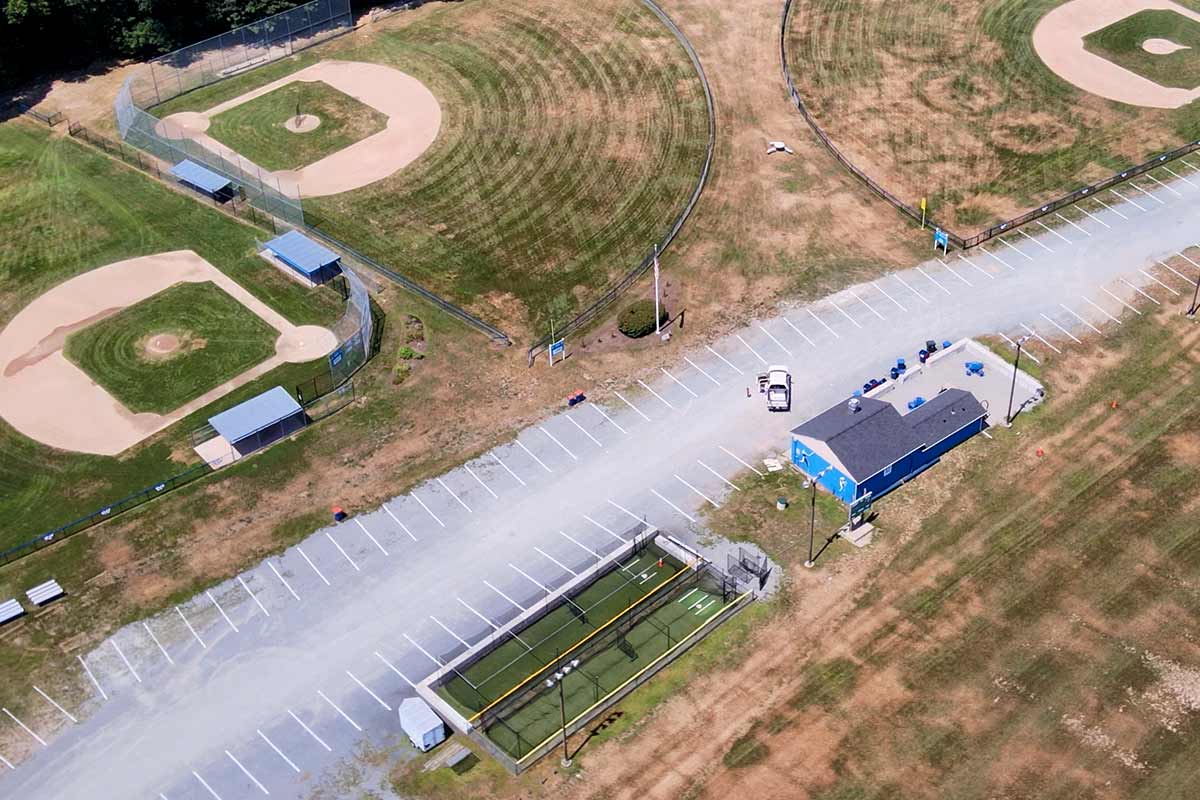
Temporary parking lot striping lays down short-duration markings — stall lines, directional arrows, fire lanes, and accessible spaces — that guide traffic and parking for a defined window instead of a permanent lifespan. 1-800-STRIPER of SW Chicago uses it for one-day festivals, weekend fairs, church and school events, multi-week construction phasing, and seasonal overflow parking across the southwest suburbs, where lots and open sites routinely need a different layout than their permanent striping calls for.
The demand here is seasonal. Chicago’s summer runs on festivals, fairs, and community events, and the southwest suburbs fill their calendars from late spring through fall — town festivals, carnivals, farmers markets, sporting events, and church and school gatherings that all need parking laid out fast and cleared just as fast. Three use cases cover most of the work. Events need a layout that goes down quickly and reads clearly to arriving traffic: vendor rows, general parking, accessible stalls near the entrance, and arrows steering cars in and out without backups. Construction sites use temporary striping to keep worker and visitor parking separate from active work zones while a lot is repaved or expanded in phases. Overflow parking — a holiday retail rush, a graduation weekend, a packed day at a sports complex — gets a temporary layout that adds capacity without committing to a permanent restripe the rest of the year. In each case we plan the stall count, lane widths, and traffic flow around the surface and timeline you give us.
Surfaces — Grass, Gravel, Pavement, and Any Surface
Temporary striping isn’t limited to asphalt and concrete. Event sites, construction staging areas, and overflow lots across the southwest suburbs often mean grass, gravel, or bare dirt, and 1-800-STRIPER of SW Chicago stripes grass, gravel, pavement, or any other surface a layout calls for — matching the marking method to what’s underneath.
| Surface | Method |
|---|---|
| Pavement (asphalt / concrete) | Removable water-based traffic paint |
| Grass / turf | Temporary athletic-field marking paint |
| Gravel / compacted dirt | High-visibility spray with stakes or flags as needed |
| Any surface (very short term) | Chalk-based paint, tape, or cones for same-day layouts |
Removable water-based traffic paint is the default on pavement — it lays down a clean, visible line and wears off with traffic and weather instead of needing a separate removal step. On grass or turf, we switch to temporary athletic-field marking paint, the same category used to line sports fields, which marks clearly without killing the grass underneath. Gravel and compacted dirt get a high-visibility spray combined with stakes or flags where a painted line alone wouldn’t hold up on loose material. And for a same-day or single-use layout — a one-afternoon overflow lot, a pop-up vendor row — chalk-based paint, tape, or cones can mark the space with no lasting paint at all. A grass field for a festival, a gravel overflow lot at a church, a paved lot being repaved in sections: each gets the method that fits both the surface and how long the layout has to stay visible.
How Temporary Striping Works
Every temporary job follows the same short sequence, built around the date and the surface you give us.
- Confirm the date, surface, and layout. We nail down when the layout has to be ready, what surface it’s going on — grass, gravel, or pavement — and the layout itself: how many stalls, what traffic pattern, and any accessible stalls near the entrance.
- Mark the layout with the method that fits the surface. We lay out the stalls, drive lanes, and directional arrows using removable water-based paint on pavement, athletic-field paint on turf, or high-visibility spray and stakes on gravel and dirt — whatever the surface calls for.
- Return for touch-up or removal. After the event or construction phase, we come back for touch-up work or removal depending on what the site needs next — or let the removable markings simply weather off on their own.
That sequence keeps the job predictable for event organizers and site managers already juggling a dozen other logistics around the same date. Temporary accessible stalls follow the same placement logic as permanent ones — positioned for the shortest route to the entrance — so an event lot stays usable for every visitor, not just the ones parking closest. Because the layout is planned around your window, the markings are there when the crowd arrives and gone when the property needs its everyday layout back.
Removable Paint & Duration
Temporary markings are built to disappear — that’s the whole point. On pavement we use removable water-based traffic paint, formulated to wear down with traffic and weather instead of lasting multiple seasons like the solvent-based paint used for permanent striping. Chicago’s weather does part of the work: rain, sun, and the freeze-thaw swings that come with a Midwestern shoulder season all fade removable paint at a predictable rate, and normal traffic scrubs it off the high-wear areas first.
That short lifespan is a feature, not a limitation. On a leased lot, HOA-managed grounds, or any site where the property owner wants the original layout restored later, temporary paint and chalk-based markings let an event or a construction phase come and go without leaving a permanent mark on the surface underneath. None of the materials we use for temporary work are the long-life solvent formulas meant to survive years of traffic — removable water-based paint on pavement, athletic-field paint on turf, and high-visibility spray or stakes on gravel are all chosen specifically not to damage or permanently alter the surface.
If a layout needs to disappear faster than natural wear allows — say a festival lot that has to be clear for Monday morning — ask about removal options when you book, and we’ll plan the method and the return visit around your timeline. Between a summer of back-to-back events and the shoulder-season weather that weathers paint quickly, temporary striping in the southwest suburbs is built to show up sharp and clear out clean.
For a full list of our pavement marking services, visit our parking lot striping in SW Chicago page.
Businesses We Serve




How it Works

GET A FREE ESTIMATE
Contact us today and we’ll have a quote to you in 24 hours

SCHEDULE A STRIPING
We’ll have your space restriped in less than 7 days, without affecting your business hours

GET A PARKING LOT THAT POPS
For a budget-friendly price, you’ll get a parking lot that looks like new
We proudly work with:


We proudly work with:

Frequently Asked Questions About Temporary Parking Lot Striping in SW Chicago, IL
Can you stripe on grass or gravel, not just pavement?
Yes. 1-800-STRIPER of SW Chicago stripes grass, gravel, pavement, or any other surface a layout calls for. Grass and turf get temporary athletic-field marking paint — the same type used to line sports fields — which marks clearly without killing the grass. Gravel and compacted dirt get a high-visibility spray, often paired with stakes or flags, since a painted line alone doesn’t always hold on loose material. We match the method to the surface and to how long the layout has to stay visible.
How long does temporary paint last, and how is it removed?
Temporary layouts use removable water-based traffic paint on pavement, formulated to wear down with traffic and weather instead of lasting seasons like permanent striping paint. Chicago rain, sun, and freeze-thaw fade it at a predictable rate, and normal traffic scrubs it off the busy spots first, so most event and construction-phase markings lighten out on their own within the expected window. If a layout has to disappear faster than natural wear allows, ask about removal options — scrubbing or a scheduled return visit — when you book.
Can you handle event, construction, or overflow parking layouts?
Yes — those three are the core of temporary striping. Event layouts lay out vendor rows, general parking, accessible stalls, and directional arrows for festivals, fairs, and church or school gatherings. Construction-phase layouts keep worker and visitor parking separated from active work zones while a lot is repaved or expanded in sections. Overflow layouts add capacity for a holiday rush, a graduation weekend, or a busy day at a sports complex without committing to a permanent restripe. All three use the same removable, surface-matched materials.
Will temporary striping damage the surface underneath?
No. Temporary layouts are built around materials chosen specifically not to damage what’s underneath — removable water-based traffic paint on pavement, temporary athletic-field marking paint on grass and turf, and high-visibility spray or stakes on gravel and dirt. None of these are the solvent-based, long-life formulas used for permanent striping. That’s what makes them the right fit for leased lots, HOA-managed grounds, or any site where the property needs its original layout restored once the event or construction phase ends.
What’s your turnaround, and do you offer free estimates?
Scheduling depends on crew availability and the size of the job, so we don’t promise a fixed turnaround without knowing your date and layout — but the sooner we know, the more options we can offer. Call 1-800-STRIPER of SW Chicago for a free estimate as soon as you have an event date, construction schedule, or overflow need. Tell us the surface, rough stall count, and timeline, and we’ll work up a plan before anything is scheduled.