Parking Lot Pressure Washing
In SW Chicago, IL
Surface Prep Before Restriping
1-800-STRIPER provides professional parking lot pressure washing in SW Chicago, IL — removing dirt, oil stains, gum, and debris from asphalt and concrete surfaces with commercial hot-water equipment while managing wash-water runoff per EPA stormwater discharge guidelines for commercial properties across the southwest suburbs.
1-800-STRIPER® of SW Chicago PROVIDes Parking Lot Power Washing Services NEAR YOU
Need to blast away years of grime?
If your parking lot or parking garage looks dull and dirty, our professional crew can wash away grime, oil, stains, and slippery buildup to restore the appearance of your property.
Benefits:
What Parking Lot Pressure Washing Includes
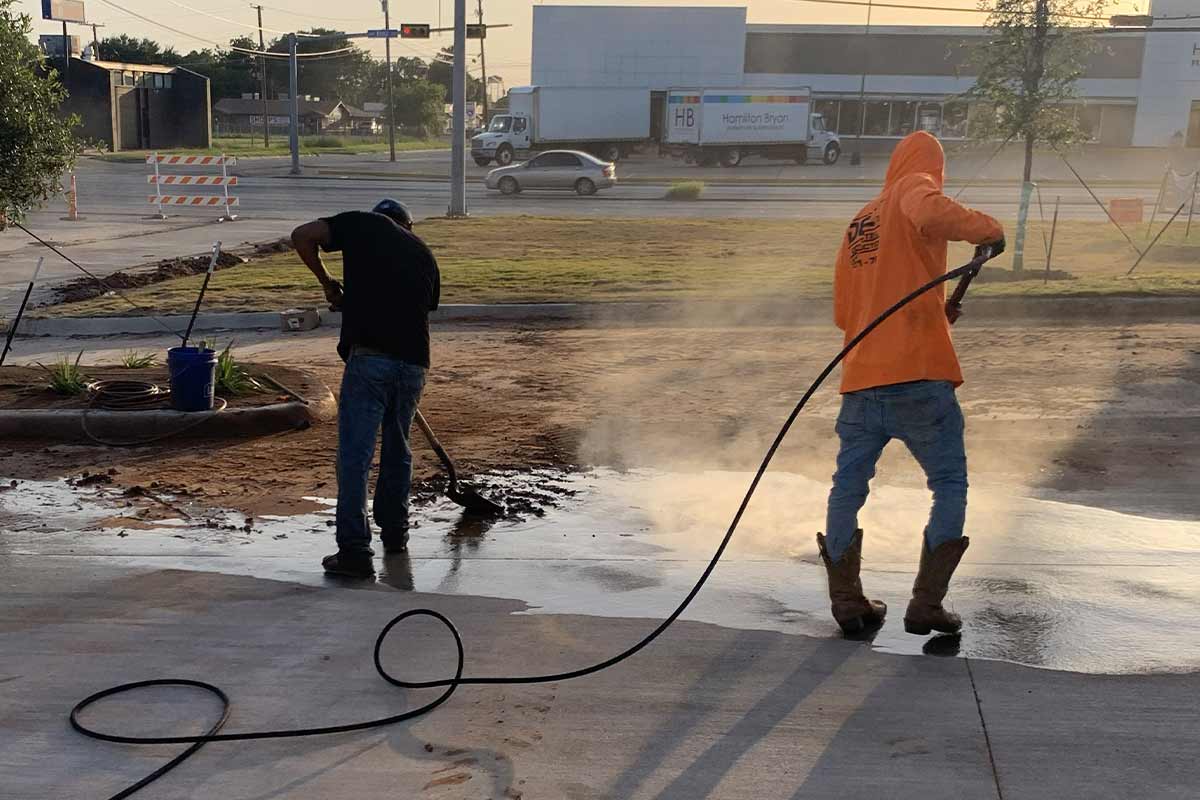
Pressure washing strips built-up grime, oil, gum, and road residue off a parking lot so the surface looks maintained and grips like it should. A commercial lot in the southwest suburbs takes a beating: tire rubber ground in at turns and stop bars, engine drips under every stall, windblown dirt, and the road salt and traction grit that plows and tires drag across the pavement all winter. Left alone, that buildup dulls the asphalt, fills in the surface texture that gives tires traction, and turns into a slick film in wet or freezing weather. For a retail center, office park, or multi-tenant property in Cook, DuPage, or Will County, a clean lot reads as well-run; a grimy one reads as neglected even when the pavement underneath is structurally sound.
1-800-STRIPER of SW Chicago cleans asphalt and concrete lots with commercial hot-water pressure equipment — hot water cuts the oil and ground-in grease that cold water just pushes around. The service covers the whole surface, not only the obvious stains: full-lot washdowns, targeted oil-and-gum spot treatment at problem areas, concrete entryways and loading aprons, and the spring cleanup that clears a winter’s worth of salt and sand. Because asphalt and concrete don’t clean the same way, we match pressure and water temperature to the pavement — moderate pressure on softer, oil-based asphalt so the binder isn’t stripped, higher pressure and hot water on harder, more porous concrete to lift set-in stains and mineral residue.
Why Clean Before Restriping — Paint Adhesion
Wash first, then stripe — a clean surface is the difference between paint that lasts and paint that peels within a season. Line-striping paint bonds to the pavement itself, so anything sitting between the paint and the asphalt or concrete — oil film, dust, old rubber, salt residue — becomes the weak point where a fresh stripe fails first. A lot that’s washed and dried before the striping crew arrives holds its markings through more traffic and more Chicago winters before it needs a refresh.
That’s why pressure washing does double duty as prep work. Property managers scheduling a restripe should plan the wash first, let the lot dry fully, then bring the striping crew in — moisture trapped under a new stripe is one of the most common causes of early peeling. Running both in one project keeps everything on a single schedule and avoids a second mobilization to the site. 1-800-STRIPER of SW Chicago coordinates the cleaning and the restriping together so the surface is wash-ready and paint-ready in the same pass.
The timing lines up with the local climate. Southwest-suburban lots come out of winter coated in salt film, cinder grit, and de-icer residue, so a spring wash both clears that buildup and preps the surface for a restripe right when faded winter markings need attention. Cleaning ahead of the paint isn’t an upsell — it’s the step that decides how long the new lines survive the salt, plows, and freeze-thaw that follow.
How Pressure Washing Works
Every wash follows the same sequence, whether it’s a standalone cleanup or the prep stage of a restripe.
- Pre-sweep loose debris. Dirt, gravel, leaves, cinder grit, and loose sand get cleared first so pressure washing lifts residue instead of just chasing debris around the lot.
- Pre-treat oil, grease, and gum. Concentrated stains get a degreasing pre-treatment, and gum is softened before it’s lifted — a single pass of pressure alone won’t fully release oil worked into the pavement or gum bonded to warm asphalt.
- Hot-water surface clean, matched to the pavement. Commercial hot-water equipment cleans the full lot surface — moderate pressure and warm water on asphalt, higher pressure and hot water on concrete to cut efflorescence and ground-in stains — targeting the whole surface, not just the visibly dirty spots.
- Contain and manage the wash water. Wash water carries oil, sediment, and cleaning residue, so it’s contained and managed on-site rather than sent into a storm drain, consistent with EPA and Illinois EPA stormwater discharge rules.
- Dry and inspect. The pavement dries fully before any paint goes down, and a final walk-through confirms the surface is clean, dry, and ready for layout and striping.
Bundling the wash and the restripe into one project gives the property a lot that’s cleaned, prepped, and striped without a second scheduling round.
Runoff & EPA / Illinois EPA Stormwater Compliance
Wash water off a parking lot isn’t clean water — it picks up oil, sediment, gum residue, and cleaning product as it runs across the surface, and it can’t be sent untreated into a storm drain. Storm drains in the southwest suburbs discharge to local creeks and rivers, so the runoff from a commercial wash is a regulated discharge, not just dirty water headed down the nearest inlet.
The rule behind that traces to the federal Clean Water Act, which created the National Pollutant Discharge Elimination System (NPDES) — the permit program that governs stormwater discharges from commercial sites. Illinois received delegation to run the NPDES program in-state, so across Cook, DuPage, and Will County the program is implemented by the Illinois Environmental Protection Agency (Illinois EPA) as the state layer on top of the federal rule. The practical takeaway for a property owner is simple: wash water that carries oil and sediment shouldn’t be allowed to flow into the storm system untreated.
1-800-STRIPER of SW Chicago contains and manages wash water on-site rather than letting it run off into storm drains — capturing and directing it so oil and sediment stay out of the storm system. That approach keeps a routine cleaning from turning into a stormwater problem for the property, and it aligns the work with the EPA and Illinois EPA stormwater discharge expectations that apply to commercial sites across the southwest suburbs.
For a full list of our pavement marking services, visit our parking lot striping in SW Chicago page.
Businesses We Serve


How it Works

GET A FREE ESTIMATE
Contact us today and we’ll have a quote to you in 24 hours

SCHEDULE AN INSTALLATION
We’ll have your installation scheduled in less than 7 days, without affecting your business hours

GET A PARKING LOT THAT POPS
For a budget-friendly price, you’ll get a parking lot that looks like new
We proudly work with:


We proudly work with:
Frequently Asked Questions About Parking Lot Pressure Washing in SW Chicago, IL
Should I pressure wash a parking lot before restriping?
Yes. Striping paint bonds directly to the pavement, and oil film, dust, and salt residue on the surface break that bond, so a lot that’s cleaned first holds its lines longer than one striped over grime. In the southwest suburbs that matters even more — winter salt and plow grit attack fresh paint hard. 1-800-STRIPER of SW Chicago schedules the wash ahead of the restripe so the surface is clean and dry when the striping crew arrives.
Do you contain the wash water, or does it go down the drain?
We contain and manage it on-site. Parking-lot wash water carries oil, sediment, and cleaning residue, so it isn’t directed into storm drains. That follows the federal Clean Water Act’s NPDES stormwater program, which regulates discharges from commercial sites and is implemented in Illinois by the Illinois EPA. Keeping wash water out of the storm system protects local waterways and aligns the cleaning with the stormwater discharge rules that apply to commercial properties across Cook, DuPage, and Will County.
Do you use hot water, and does it matter?
Yes, we use commercial hot-water pressure equipment, and it matters. Hot water cuts oil, grease, and ground-in grime that cold water only pushes around, which is why it’s the right tool for engine drips and set-in stains. We also match pressure and temperature to the surface — moderate on softer asphalt so the binder isn’t stripped, higher pressure and hot water on harder, porous concrete to lift efflorescence and stains without damaging the pavement.
Can you remove oil stains and gum?
Yes. Oil and grease get a degreasing pre-treatment before the general wash, since pressure alone often won’t fully lift oil that’s worked into the pavement pores. Gum is softened and lifted rather than scraped, which avoids gouging the surface underneath. Both are handled in the pre-treatment step, ahead of the full-lot hot-water wash, so isolated problem spots don’t get left behind after the rest of the lot is clean.
How often should a busy suburban lot be washed?
It depends on traffic and season, but spring is the common baseline in the southwest suburbs. Winter leaves lots coated in road salt, cinder grit, and de-icer residue, so a spring wash clears that buildup and sets the surface up for any restriping. High-traffic retail and commercial lots collect oil drips, tire marks, and grime faster and may want a mid-year cleaning too. Call 1-800-STRIPER of SW Chicago for a free estimate to plan a schedule for your property.
Do you offer free estimates for pressure washing?
Yes. Call 1-800-STRIPER of SW Chicago for a free estimate on parking lot pressure washing anywhere across the southwest suburbs. An estimate covers lot size, surface type, and condition — oil staining, gum, winter salt residue, efflorescence on concrete — so the scope and process match what the property actually needs. If you’re pairing the wash with a restripe, we’ll schedule both together so the lot is cleaned, dried, and striped in one coordinated visit.