Parking Lot Restriping
In SW Chicago, IL
Restripe Existing Lines and Markings
1-800-STRIPER provides professional parking lot restriping in SW Chicago, IL — refreshing faded lines, ADA stalls, fire lanes, and directional arrows using fast-dry traffic paint and precision line-striping equipment for commercial properties across Cook, DuPage, and Will counties.
1-800-STRIPER of SW Chicago PROVIDes Restriping Services NEAR YOU
Need to brighten up your faded parking lot?
Keep your parking lot safe and attractive by restriping annually to freshen up lines and symbols that have faded from the sun, weather, and traffic. Nothing beats a fresh coat of paint!
Benefits:
What Parking Lot Restriping Includes
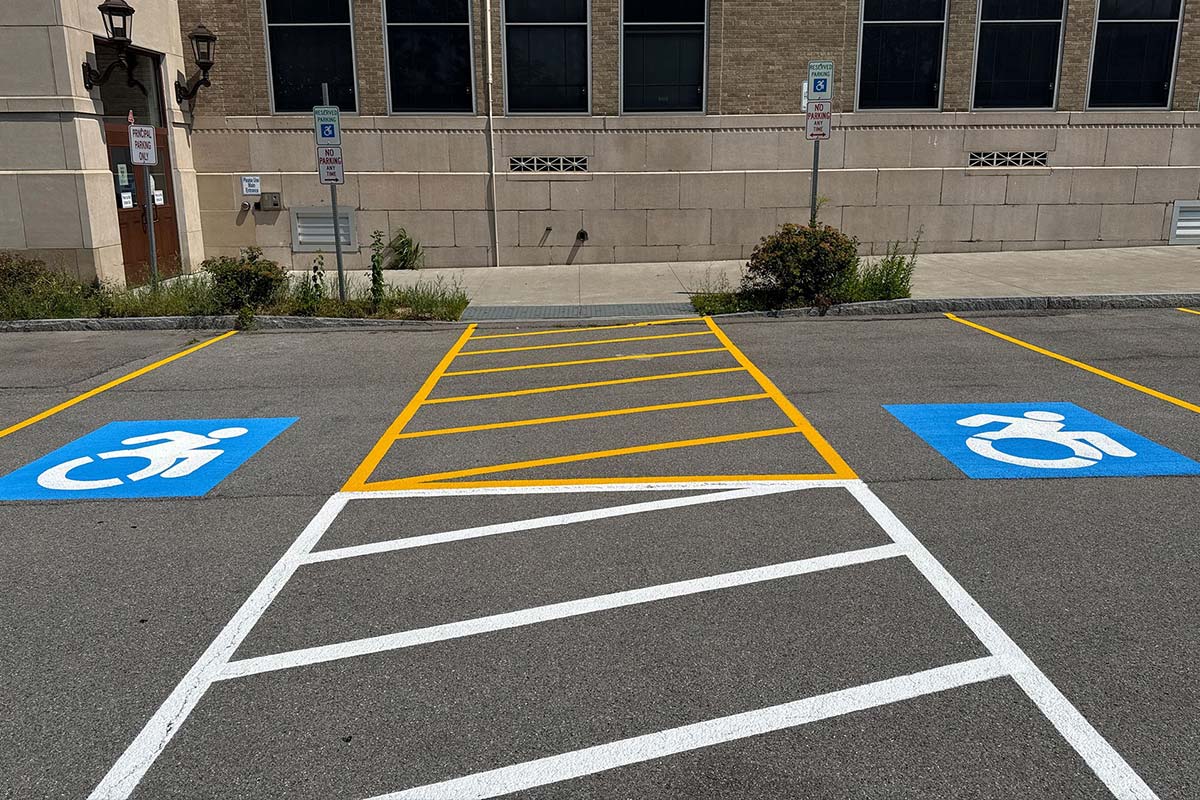
Restriping is repainting the worn markings on a lot that still has sound pavement — stall lines, ADA accessible spaces, fire lanes, crosswalks, stop bars, and directional arrows — so the layout reads clearly and stays compliant. It’s the fix for a lot whose asphalt is fine but whose paint has faded, chipped, or stopped meeting code.
1-800-STRIPER of SW Chicago restripes the full set of markings a commercial property carries. That starts with standard stall lines and runs through the markings that do real safety and compliance work: accessible stalls, access aisles, and the International Symbol of Accessibility; fire lanes and red no-parking curbs; directional arrows, one-way lanes, and stop bars; and loading-zone and crosswalk markings. Property managers, retail centers, medical offices, HOAs, warehouses, and restaurants across the southwest suburbs rely on restriping to keep traffic moving and liability down.
Restriping is different from repaving or seal-coating. Repaving replaces the asphalt itself; seal-coating protects the surface — restriping is the final step that puts the markings back on top. On a lot with sound pavement, it’s the fastest, lowest-impact way to make the whole property look maintained again. Crisp, high-contrast lines tell drivers where to park, where not to, and how to flow through the lot without guessing. Faded ones invite crooked parking, blocked fire lanes, and the near-misses that turn into complaints.
When to Restripe — Fade, ADA & Compliance Triggers
Restripe when the lines stop doing their job — when a driver has to hunt for a stall or an inspector can no longer read a compliance marking. In the Chicago area, that day comes sooner than most owners expect. Freeze-thaw winters, road salt, and snowplow-blade abrasion are hard on traffic paint: plow blades scrape markings directly every time the lot is cleared, salt and de-icer add chemical and abrasive wear, and repeated freezing and thawing works at the pavement surface all season. Markings that looked sharp two seasons ago can wash out to ghost lines by spring.
Watch for these triggers:
- Lines are faded, patchy, or low-contrast — drivers can’t read stalls or lanes at a glance.
- ADA accessible stalls, access aisles, or the ISA symbol have faded past what an inspector will accept. Worn accessible markings have to be repainted to stay compliant — a ghosted stall or access aisle is a live liability, not a cosmetic issue.
- Fire lanes or red curbs are no longer clearly marked.
- The lot was just seal-coated or resurfaced, covering the old layout.
- A new tenant, rebrand, or layout change means the striping plan needs to change.
Most commercial lots in the southwest suburbs benefit from a refresh every 18 to 24 months, with high-traffic or plow-exposed lots landing on the shorter end. A shaded, light-traffic lot can stretch toward the far end of that window; a busy retail entrance that gets plowed all winter usually can’t. A quick annual walk-through tells you where your lot stands — and refreshing on a schedule keeps restriping a small, predictable line item instead of a full re-layout down the road.
How Restriping Works
Every restriping job follows the same sequence, whether we’re refreshing an existing layout or reworking it.
- Assess and measure. We walk the lot, measure the existing layout, and note stall counts, ADA placement, fire lanes, and problem areas so the new markings match or improve what’s already there.
- Match the existing layout. We chalk-line the plan before any paint goes down, confirming stall spacing, accessible-stall dimensions, and fire-lane placement so fresh lines land exactly where drivers already expect them. If you’re changing the layout instead of just refreshing it, this is where we set out the new plan for your approval.
- Clean and prep the surface. Paint only bonds to a clean surface, so we sweep and blow off dirt, sand, and salt residue, and pressure-wash where oil or buildup would keep the paint from sticking. Skipping this step is why paint laid over grime lifts within a season.
- Mask and paint. Using precision line-striping equipment, we lay down clean, uniform lines, arrows, and legends with fast-dry traffic paint rated for heavy commercial wear, masking edges where crisp borders matter. Directional arrows, lane lines, and stop bars follow the Manual on Uniform Traffic Control Devices as amended by the IDOT Illinois Supplement, so the lot’s traffic markings read the way drivers expect.
- Cure and reopen. Fast-dry waterborne traffic paint is typically dry-to-drive in about 30 to 60 minutes, so we phase the work and reopen sections as we go — scheduling around your business hours to keep the property usable throughout.
Surfaces & Paint Systems
Restriping works on the two surfaces almost every commercial lot is built from — asphalt and concrete — and the approach adjusts to each. Asphalt is a softer, oil-based surface; concrete is harder and more porous. Both hold traffic paint well once they’re clean and dry, but concrete and freshly seal-coated asphalt need extra attention to prep and cure so the new markings bond instead of sitting on top.
The workhorse material is fast-dry waterborne traffic paint. It lays down a high-contrast line, cures fast enough to reopen a lane in under an hour, and holds up to the freeze-thaw and road-salt cycle that defines a Chicago-area winter. We apply it at the right film thickness so it wears evenly instead of thinning out at the busy spots first — a stripe that’s too thin ghosts out at the drive-aisle entrance long before the rest of the lot fades.
What makes new lines last is prep and paint, not just a straight edge. Paint laid over dust, salt, or oily residue lifts within a season no matter how good the coating is, which is why the cleaning step isn’t optional. Straight, sharp, consistent markings aren’t only cosmetic — they’re what keeps drivers reading the lot the same way months after we leave, through Cook, DuPage, and Will counties’ hardest winter weather. That’s the whole point of restriping in the first place.
For a full list of our pavement marking services, visit our parking lot striping in SW Chicago page.
Businesses We Serve




How it Works

GET A FREE ESTIMATE
Contact us today and we’ll have a quote to you in 24 hours

SCHEDULE AN INSTALLATION
We’ll have your installation scheduled in less than 7 days, without affecting your business hours

GET A PARKING LOT THAT POPS
For a budget-friendly price, you’ll get a parking lot that looks like new
We proudly work with:


We proudly work with:

Frequently Asked Questions About Parking Lot Restriping in SW Chicago, IL
How often should I restripe a lot in the Chicago area?
Most commercial lots in the southwest suburbs need restriping every 18 to 24 months, and high-traffic or plow-exposed lots often land on the shorter end. Chicago-area winters are hard on paint: snowplow blades scrape markings directly, road salt and de-icer add abrasion, and freeze-thaw cycles work at the pavement surface all season. A shaded, light-traffic lot can stretch toward two years; a busy retail entrance usually can’t. A quick annual walk-through tells you where your lot stands.
How long before we can drive on the fresh paint?
Fast-dry waterborne traffic paint is typically dry-to-drive in about 30 to 60 minutes under normal conditions, though cool or damp weather can extend that. The paint keeps curing over the following hours, so we recommend keeping traffic light at first where possible. Because we phase the work and reopen sections as they dry, we schedule around your business hours — most lots never fully close during a restriping job.
Do you restripe over the old lines or remove them first?
It depends on the layout and the condition of the existing paint. If the plan isn’t changing and the old lines are sound, we typically paint directly over them — a fresh coat restores contrast on the same layout. If you’re changing the layout, or there’s heavy buildup from many prior coats, we remove the old markings first by grinding or another method so the new lines are clean and accurate rather than shadowed by the old ones.
Will restriping keep our ADA stalls and fire lanes compliant?
It’s the point at which to confirm they are. Faded accessible stalls, access aisles, ISA symbols, and fire-lane markings all have to be repainted to stay legible and compliant. We chalk and verify accessible-stall and access-aisle placement against the 2010 ADA Standards for Accessible Design, and mark fire lanes to the local fire code and the Manual on Uniform Traffic Control Devices (MUTCD) as amended by the IDOT Illinois Supplement, confirming dimensions before painting so the lot stays inspection-ready.
Can you match our existing striping layout exactly?
Yes. We measure and replicate your current layout so stalls, lanes, arrows, and markings land right where drivers already expect them. If you’d rather improve the lot, we can also adjust the plan — adding capacity, tightening traffic flow, or bringing ADA and fire-lane markings up to current requirements. Either way, we chalk-line and confirm the layout before painting, so you see how it reads before anything is permanent.
How much does parking lot restriping cost?
Cost depends on the size and condition of your lot, the layout, and which markings you need — a straightforward refresh of an existing layout is very different from a full ADA and fire-lane rework. Because every commercial lot is different, we don’t quote flat rates online. Call 1-800-STRIPER of SW Chicago for a free estimate; we’ll look at the property, confirm what it needs, and give you a clear scope before any work is scheduled.