
Temporary Parking Lot Striping
In Long Island, NY
Event and Construction Markings
1-800-STRIPER® provides temporary parking lot striping in Long Island, NY — short-duration event markings, construction-phase traffic layouts, and overflow parking rows laid out on grass, gravel, pavement, or any other surface a site has available.
1-800-STRIPER® of Long Island PROVIDes Temporary Striping Services NEAR YOU
Need Temporary Stripes?
Use temporary stripes to direct traffic and create parking areas at your special event or to keep construction sites safe without a long-term commitment. We paint on grass, gravel, pavement, or any other surface where temporary striping is needed.
Striping solutions for:
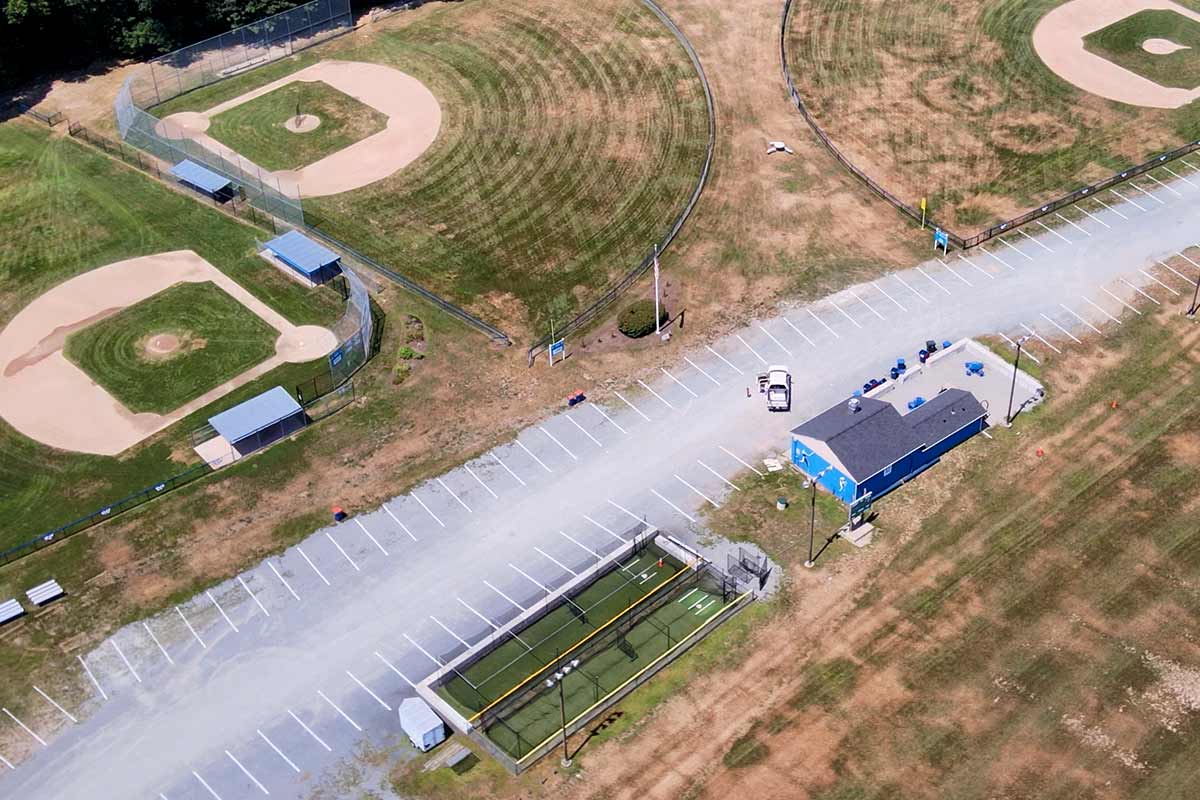
Temporary Parking Lot Striping in Long Island, NY
Temporary striping solves a problem permanent striping cannot: you need parking organized for a defined period, on ground that may not be a parking lot at all, and you need it gone or irrelevant afterward.
That covers a lot of Suffolk County ground over a year — event parking on fields, overflow rows opened for a seasonal peak, construction-phase layouts that change as a site progresses, and temporary circulation while a permanent lot is being resurfaced.
The materials and the approach differ from permanent work. The layout still has to be measured properly, because a field marked by eye wastes more space than anyone expects and traffic finds every ambiguity in it.
Surfaces We Can Stripe
This is the question that decides most temporary jobs, and the answer is broader than people assume. We are not limited to paved ground.
Grass and turf. Athletic fields, open lawns, and pasture used for event overflow. Marking on turf uses materials made for it, and the layout matters more here than anywhere else because there are no existing edges or curbs to guide drivers.
Gravel and stone. Gravel overflow areas, unpaved yards, and stabilized aggregate. Gravel is the most demanding surface to mark because the surface itself moves under traffic, so layouts on gravel lean more heavily on cones, stakes, and signage alongside marking.
Pavement. Asphalt and concrete, using temporary materials chosen to be removable or to wear off within the period you need rather than to last for years.
Dirt, compacted soil, and other surfaces. Construction sites and undeveloped ground where the surface is whatever the site currently is.
In short: grass, gravel, pavement, or any other surface the site has available. Tell us what you are working with and what the ground has to do afterward, and we will match the material to it for the period you need.
Event and Overflow Parking Layouts
Event parking is a throughput problem before it is a marking problem. The measure of a good layout is how fast cars clear the entrance and how fast the field empties afterward, not how neat the rows look.
So the layout is built around the flow: a defined entry point with enough queuing space that arrivals do not back onto the road, rows angled and sequenced so attendants can fill them in order, aisles wide enough for two-way movement or clearly marked one-way, a separated pedestrian route from the parking area to wherever people are going, and an exit that does not force everyone through the entrance.
Accessible parking is planned into event layouts too, positioned on the firmest available ground closest to the entrance, with a usable route from it.
Overflow parking on a commercial property is the same exercise at smaller scale — opening a grass or gravel area for a seasonal peak, marked so drivers use it efficiently instead of parking at random across it.
Construction-Phase Traffic Layouts
An active construction or renovation site has a parking and circulation problem that changes every few weeks, and the layout has to change with it.
The recurring needs are consistent: keeping customer and staff parking usable while a portion of the lot is closed off, separating construction traffic and deliveries from everyone else, maintaining a safe pedestrian route to the entrance as that entrance moves, keeping fire apparatus access clear through every phase, and preserving accessible parking and an accessible route throughout — that last one is the requirement most often lost during construction.
Because the phases change, we plan for the layout to be revised rather than treating each change as a fresh job.
How Temporary Striping Works
- Site visit. We look at the ground, the access points, and the space, and talk through what the site has to handle and for how long.
- Layout plan. Capacity, row and aisle arrangement, entry and exit points, pedestrian routes, and accessible parking placement, in writing.
- Material selection. Chosen for the surface and for the duration — long enough to last the period, not so permanent that removal becomes a problem.
- Layout and marking. The plan is measured and marked out, with cones, stakes, and signage supplementing the marking on surfaces that need it.
- Revisions or removal. For phased sites we come back and revise as the phases change. Where markings need removing at the end, that is planned from the start.
For a full list of our pavement marking services, visit our parking lot striping in Long Island page.
Businesses We Serve




How it Works

GET A FREE ESTIMATE
Contact us today and we’ll have a quote to you in 24 hours

SCHEDULE A STRIPING
We’ll have your space restriped in less than 7 days, without affecting your business hours

GET A PARKING LOT THAT POPS
For a budget-friendly price, you’ll get a parking lot that looks like new
We proudly work with:


We proudly work with:


Frequently Asked Questions About Temporary Parking Lot Striping in Long Island, NY
Can you stripe parking on grass or gravel?
Yes. Temporary striping is not limited to paved surfaces — we mark grass, turf, gravel, stone, compacted dirt, pavement, or whatever surface the site has. Grass and gravel both use materials made for them rather than parking lot paint. Gravel is the most demanding, because the surface itself shifts under traffic, so layouts there usually combine marking with cones, stakes, and signage. Tell us what the ground is and what it has to do afterward.
How long does it take to stripe a small parking lot?
A small temporary layout is usually a same-day job. What drives the timeline is the surface and the measuring, not the square footage — an open field with no existing edges takes longer to lay out than a paved area with curbs to reference, because every row has to be measured from scratch. Phased construction layouts take longer because each revision is planned around what the site is doing that week.
Do you need a permit for temporary event parking?
That is set by your town, and it varies across Suffolk County, so we will not tell you your event does or does not need one. Temporary event parking often touches several local approvals at once — site use, traffic management, and sometimes fire access — and the authority having jurisdiction for your location is who can answer it. Ask them early, because these approvals tend to have lead times, and we will lay the site out to whatever they require.
Is temporary striping removable?
It depends on the surface and on what you need. On pavement we can use materials chosen either to be removed at the end or to wear off naturally within your timeframe — tell us which, because it changes what we apply. On grass and gravel the marking is inherently short-lived and disappears with weather, traffic, and mowing. Say up front how long the layout needs to last and what the ground has to look like afterward.