Temporary Parking Lot Striping
In NE Boston, MA
Event and Construction Markings
1-800-STRIPER provides temporary parking lot striping in NE Boston, MA — laying short-duration event, overflow, and construction-phase markings on grass, gravel, pavement, or any surface, including the temporary accessible spaces Massachusetts requires under 521 CMR 23.00 for commercial properties.
1-800-STRIPER® of NE Boston PROVIDes Temporary Parking Lot Striping Services NEAR YOU
Need Temporary Stripes?
Use temporary stripes to direct traffic and create parking areas at your special event or to keep construction sites safe without a long-term commitment. We paint on grass, gravel, pavement, or any other surface where temporary striping is needed.
Striping solutions for:
Temporary Parking Lot Striping in NE Boston, MA
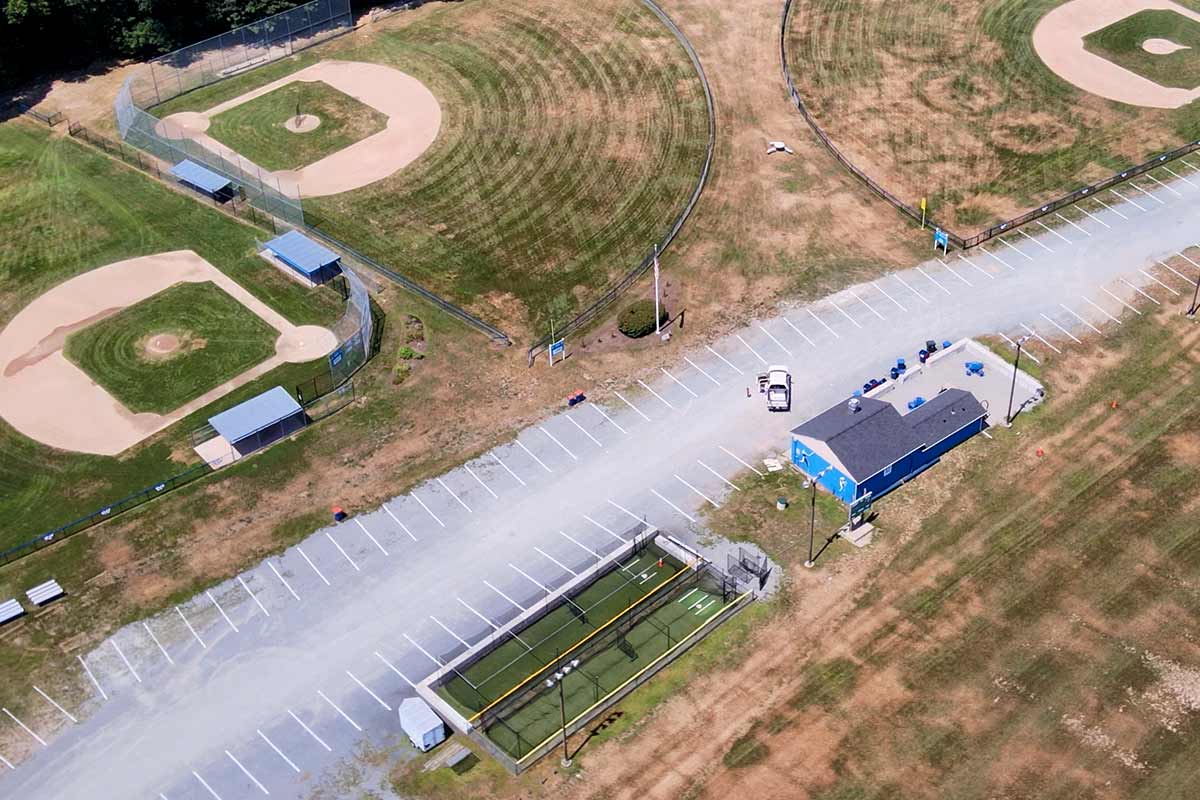
Temporary striping is short-duration marking. It is for parking that will not exist in six months. Event lots, overflow fields, construction-phase layouts, seasonal expansions, and lots being reconfigured mid-project all need lines that work now and come up later without leaving a ghost.
We lay temporary markings on grass, gravel, pavement, and any surface a vehicle can be parked on, across Woburn, Wakefield, Lynn, Salem, Peabody, and the surrounding communities. The material and method change with the surface; the requirement to make the parking legible and safe does not.
Event and Overflow Parking
Event parking is a capacity problem with a two-day life. A field has to absorb several hundred vehicles and direct them without a marshal at every corner. Then it goes back to being a field.
We mark row boundaries and stall positions, entry and exit routes, one-way directional arrows, and the pedestrian route from the far rows to the venue. Where the surface will not hold paint, cones, barrels, and field tape do the same job, laid out to the same plan. Fairs, festivals, sporting events, seasonal retail, school and municipal events, and places of worship with an overflow field are the regular work.
Construction-Phase Markings
Construction sites need parking that changes as the site does. Contractor parking, deliveries, staging, and a route the fire department can still use all share a footprint that shrinks and moves.
The fire route is the part that catches people. Under the Massachusetts fire code the fire apparatus access road must be provided at the start of a project and maintained throughout construction, but permanent access road markings are not required until the building is complete or occupied. That gap is exactly what temporary marking fills — the route is real from day one, and the permanent paint waits until the surface has stopped changing.
Striping Grass, Gravel and Unpaved Surfaces
Unpaved surfaces need a different method, not a compromised one.
| Surface | Method | How it comes up |
|---|---|---|
| Grass | Turf-marking paint formulated for the purpose | Holds a line through several mowings, then fades out rather than killing the surface |
| Gravel and hard-packed dirt | Paint, reinforced with cones, stakes and rope, or barrels at the row ends | Shorter service life; the reinforcement is simply collected |
| Pavement | Temporary traffic paint or removable tape | A clean line that comes up when the event does |
The plan matters more on an unpaved surface than a paved one, because there is no existing pattern to fall back on. Row spacing, aisle width, and the entry sequence all get set before anyone marks anything.
Temporary Accessible Parking Under 521 CMR
This is the requirement most temporary lots miss, and Massachusetts is unusual in legislating it explicitly.
Massachusetts Architectural Access Board 521 CMR 23.00 applies to private off-street parking where the public has a right of access as invitees or licensees — and its scope provision says expressly that this includes temporary parking areas. So an event field open to the public is inside the rules, not outside them.
The code then supplies a practical exception track for surfaces that cannot take conventional marking. Accessible spaces in a field go on the least sloping area available. The surface must be hard packed and smooth with a minimum amount of pooling or draining water. The spaces must be easily identifiable, such as lined with field markings, paint, or field tape — and traffic cones or barrels may be used where field markings, paint, or field tape cannot be used given the surface condition. Directional signage carrying the international symbol of accessibility plus an arrow runs along the accessible route, the route itself stays firm and stable at a minimum width, and temporary signage may be pole-in-bucket rather than permanently mounted.
Few states write this down. It means a temporary lot in Massachusetts can be made genuinely compliant with cones and field tape, and that there is a published standard to point at when someone asks.
Removable Markings and Removal
Temporary means removable. The removal method gets chosen when the marking goes down, not afterward.
Turf paint on grass fades with growth and mowing and needs nothing done to it. Removable tape on pavement lifts cleanly. Temporary traffic paint on asphalt wears off over a season or comes up with pressure washing. Cones, barrels, stakes, and rope are simply collected.
What we avoid is putting permanent traffic paint on a surface that will need to look unmarked afterward, because removing cured permanent paint from asphalt is a grinding job that damages the surface.
Lead Times
Event work is scheduled around the event, not around us, and the useful lead time is a week or two for a straightforward field layout. Larger sites, anything needing a drawn plan, and anything touching an accessible route or a fire apparatus access route benefit from more.
The constraints that actually move a date are weather and cure time. Paint of any kind needs a dry surface and enough temperature to set, and on grass a mow schedule matters as much as the forecast. Booking in advance for a known date is straightforward; a same-week request in a wet spell is the one we cannot always promise.
For a full list of our pavement marking services, visit our parking lot striping in NE Boston page.
Businesses We Serve




How it Works

GET A FREE ESTIMATE
Contact us today and we’ll have a quote to you in 24 hours

SCHEDULE A STRIPING
We’ll have your space restriped in less than 7 days, without affecting your business hours

GET A PARKING LOT THAT POPS
For a budget-friendly price, you’ll get a parking lot that looks like new
We proudly work with:


We proudly work with:


Frequently Asked Questions About Temporary Parking Lot Striping in NE Boston, MA
Do temporary event lots need accessible parking in Massachusetts?
Yes. The Massachusetts access code applies to private off-street parking where the public has a right of access as invitees or licensees, and its scope provision names temporary parking areas explicitly. An event field open to the public is inside the rules. The code also provides a practical exception track for unpaved surfaces, so compliance on a field is achievable rather than theoretical.
Can you stripe parking on grass or gravel?
Yes. On grass we use turf-marking paint made for the purpose, which holds a line through several mowings and then fades rather than damaging the surface. On gravel and hard-packed dirt, paint has a shorter life, so the layout is usually reinforced with cones, stakes and rope, or barrels at the row ends. On pavement, temporary traffic paint or removable tape gives a clean line that comes up afterward.
How do you mark accessible spaces on an unpaved surface?
The Massachusetts code sets out how. Accessible spaces go on the least sloping area available, on a hard packed smooth surface with a minimum amount of pooling or draining water. They must be easily identifiable, such as lined with field markings, paint, or field tape, and traffic cones or barrels may be used where field markings, paint, or tape cannot be used given the surface condition. Directional signage with the accessibility symbol and an arrow runs along the route.
How long do temporary markings last?
It depends entirely on the surface and the material. Turf paint on grass typically lasts a few weeks and several mowings. Removable tape on pavement lasts for the event and lifts cleanly. Temporary traffic paint on asphalt generally holds for a season. Cones and barrels last as long as you leave them out. We match the material to how long you actually need the parking, rather than defaulting to the most durable option.
Will temporary striping damage our field or our asphalt?
Not when the right material is used, which is the reason the material is chosen before the layout is marked. Turf paint is formulated to fade rather than kill grass. Removable tape lifts off pavement without residue. The failure mode we avoid is putting permanent traffic paint on a surface that has to look unmarked afterward, because removing cured permanent paint from asphalt is a grinding job that leaves its own mark.
How far in advance should we book temporary event striping?
A week or two is usually enough for a straightforward field layout, and more is better for larger sites, anything needing a drawn plan, and anything involving an accessible route or a fire apparatus access route. The two things that genuinely move a date are weather and cure time — every paint needs a dry surface and enough warmth to set, and on grass the mowing schedule matters as much as the forecast.