
Temporary Parking Lot Striping
In Fairfax, VA
Event and Construction Markings
1-800-STRIPER provides professional temporary parking lot striping in Fairfax, VA — short-duration event markings, construction-phase layouts, and overflow parking grids applied to grass, gravel, pavement, or any surface using removable water-based traffic paint.
1-800-STRIPER® of Fairfax PROVIDes Temporary Striping Services NEAR YOU
Need Temporary Stripes?
Use temporary stripes to direct traffic and create parking areas at your special event or to keep construction sites safe without a long-term commitment. We paint on grass, gravel, pavement, or any other surface where temporary striping is needed.
Striping solutions for:
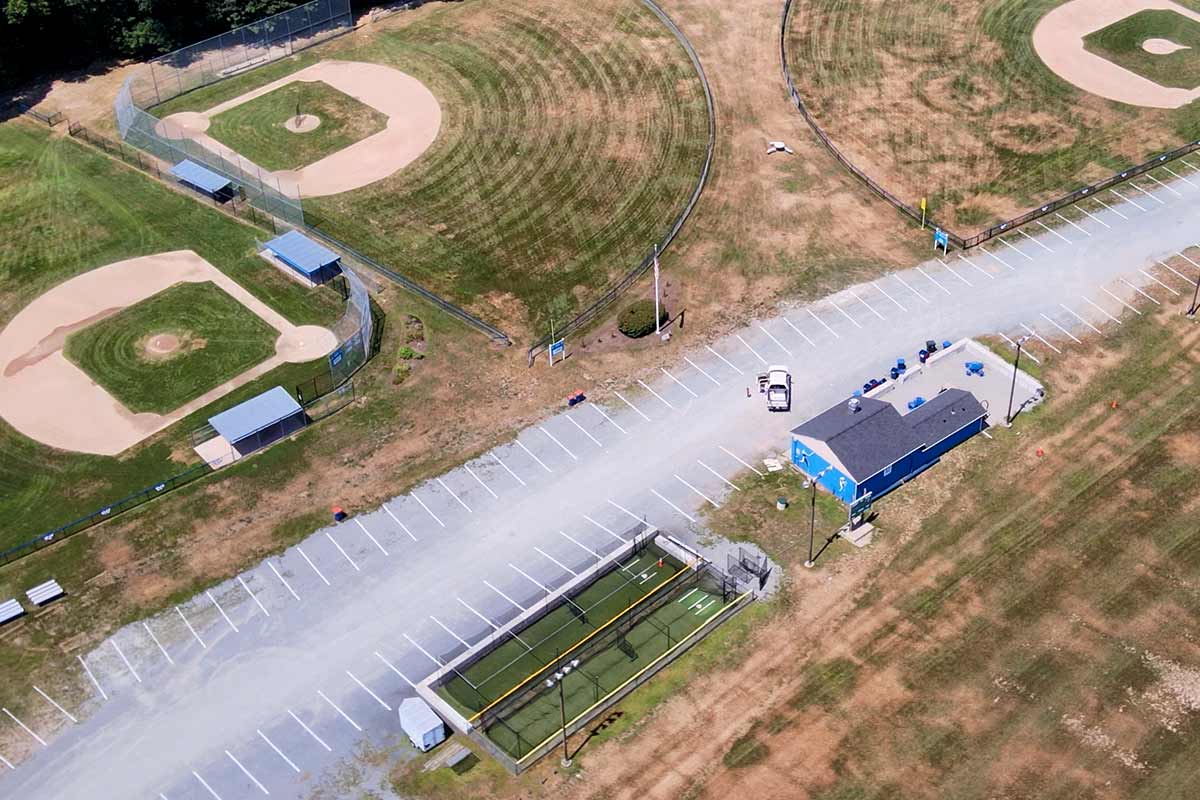
Temporary Parking Lot Striping in Fairfax, VA
Temporary striping solves a problem that permanent striping cannot: a site needs organized parking for days or weeks rather than for years, and the markings need to come back off afterwards.
The applications are consistent across Northern Virginia. Festivals, fairs, and community events on open ground. Overflow parking for a conference, a graduation, or a seasonal retail peak. Construction phasing, where a lot has to keep functioning while part of it is closed. Filming and one-off commercial events.
What makes it a different job from ordinary striping is the surface. Temporary parking rarely happens on clean asphalt. It happens on grass, on gravel, on compacted stone, on dirt, on pavement, and on whatever else the site offers, and the marking method has to change with the surface rather than the surface being expected to accommodate the paint.
Event and Overflow Parking Layouts
An event parking layout is a traffic problem before it is a striping problem. The questions that matter are how vehicles enter, how they are directed to the working face of the lot, how they exit without meeting the arriving queue, and where pedestrians walk once they have parked.
We lay out rows to fill in a deliberate sequence so attendants can direct arrivals to a moving face rather than letting drivers hunt. Aisles are set wide enough for two-way flow where the ground allows, and one-way where it does not. On grass and gravel we generally set rows slightly wider than a permanent lot would use, because drivers park less precisely on a surface with no curbs and no fixed reference.
The sequence we work through on an event lot is the same every time:
- Walk the ground. The surface decides the method, so the site is seen rather than drawn. Grass, gravel, compacted stone, dirt, and pavement each take marking differently.
- Set entry and exit. Arrivals and departures are separated first, so a departing queue never meets an arriving one.
- Lay out rows and the fill sequence. Rows are numbered in the order attendants will fill them, which is what keeps drivers from hunting.
- Place accessible parking. Firmest ground, closest to the entrance, on a route someone can actually cross — decided here, not after the rows are set.
- Mark to the surface. Removable water-based traffic paint on pavement, turf-marking paint on grass, paint plus stakes, flags, cones, or rope on gravel and dirt.
- Agree removal before anything goes down. The restoration standard is part of the layout conversation, not a follow-up call.
Accessible parking is designed in from the start rather than added at the end. It is placed on the firmest available ground, closest to the entrance, on a route someone can actually cross.
Construction-Phase Striping
During construction or resurfacing, a lot usually has to keep working while part of it is out of service. Temporary markings are what make that possible: they define the reduced layout, redirect circulation around the closed area, and mark the pedestrian route that replaces whatever the works have blocked.
Because the layout changes as the project moves through its phases, temporary striping on a construction site is normally applied in stages rather than once. We work from the phasing plan so each stage’s markings go down before that stage opens, and the previous stage’s markings are removed rather than left to confuse drivers.
The two elements that most often get overlooked in phasing are accessible parking and the pedestrian route. Both have to remain available throughout, not be restored at the end.
Striping on Grass, Gravel, and Unpaved Surfaces
Different surfaces take marking differently, and being straightforward about that avoids disappointment.
On pavement, removable water-based traffic paint gives crisp lines and comes up readily afterwards. It is the cleanest case.
On grass, a turf-marking paint of the type used for athletic fields gives good visibility and fades naturally with growth and mowing over the following weeks. It does not harm established turf.
On gravel and compacted stone, paint alone is unreliable because the surface moves under traffic. The practical answer is usually a combination — marking paint where the surface holds it, supported by stakes, flags, cones, or rope lines to hold the geometry.
On dirt and compacted soil the same logic applies, with more reliance on physical markers.
The honest summary is that we can lay out parking on grass, gravel, pavement, or effectively any surface a site offers, but the method changes with the ground, and on loose surfaces the layout is held as much by physical markers as by paint.
Removal and Site Restoration
Removal is part of the job specification rather than an afterthought, and it is agreed before anything goes down.
On pavement, removable water-based paint is designed to be taken off, and where a faster or more complete removal is needed, pressure washing lifts it. On turf, field-marking paint is normally left to fade and mow out over a few weeks, which is both simpler and gentler on the grass than trying to remove it. On gravel and unpaved ground, restoration is mostly the retrieval of stakes, flags, cones, and rope, plus raking where traffic has disturbed the surface.
Where a site is sensitive — a manicured lawn, a recently seeded area, a property with a lease condition about surface restoration — we agree the method and the restoration standard in advance rather than after the event has finished.
For a full list of our pavement marking services, visit our parking lot striping in Fairfax page.
Businesses We Serve




How it Works

GET A FREE ESTIMATE
Contact us today and we’ll have a quote to you in 24 hours

SCHEDULE A STRIPING
We’ll have your space restriped in less than 7 days, without affecting your business hours

GET A PARKING LOT THAT POPS
For a budget-friendly price, you’ll get a parking lot that looks like new
We proudly work with:


We proudly work with:


Frequently Asked Questions About Temporary Parking Lot Striping in Fairfax, VA
Do you need a permit to restripe a parking lot?
A straight restripe of an existing private commercial lot does not require a building permit in Fairfax County. Temporary event parking is a different question, and it is usually the event rather than the paint that triggers a requirement — a special event permit, a site-plan condition, or a zoning approval for parking on ground not normally used for it. Those requirements come from the county and from the property’s own approvals rather than from the striping. We recommend confirming them well before the event date.
Can you stripe temporary parking on grass or gravel?
Yes, on grass, gravel, pavement, or effectively any surface a site offers — but the method changes with the ground. On grass we use turf-marking paint of the type used for athletic fields, which gives good visibility and fades out with mowing and growth. On gravel and compacted stone, paint alone is unreliable because the surface shifts under traffic, so the layout is held with a combination of marking paint and physical markers such as stakes, flags, cones, or rope lines.
How long does temporary striping last?
It depends on the surface and the product, and that is by design. On pavement, removable water-based traffic paint typically stays clearly legible for several weeks to a few months, degrading faster under heavy traffic. On turf, field-marking paint generally reads well for two to four weeks before growth and mowing fade it out. On gravel and unpaved ground, paint alone can be disturbed within days under traffic, which is why physical markers carry the layout there. We match the product to how long you actually need it.
How is temporary striping removed afterward?
On pavement, removable water-based paint is formulated to come off, and pressure washing lifts it where faster or more complete removal is wanted. On turf, field-marking paint is normally left to fade and mow out over a few weeks, which is simpler and gentler on the grass than attempting removal. On gravel and unpaved ground, restoration is largely retrieving stakes, flags, cones, and rope, plus raking where traffic has disturbed the surface. The removal method is agreed before the markings go down, not afterwards.
Do temporary accessible spaces still have to meet ADA requirements?
Yes. Temporary parking does not come with an accessibility exemption, and an event lot on grass is not excused because it is only there for a weekend. Accessible spaces still need to be provided in the required proportion, still need an access aisle, and still need to sit on a route someone can actually use to reach the entrance. In practice this means placing them on the firmest available ground, closest to the entrance. The 2010 ADA Standards for Accessible Design are the reference.
What does scheduling temporary striping for an event involve?
It starts with a site walk to see the ground rather than a drawing of it, because surface condition decides the method. From there we work out the layout, the entry and exit routing, the fill sequence, and where accessible parking sits. Application is scheduled close enough to the event that the markings are fresh, with a weather allowance built in, since paint needs a dry surface. Removal or restoration is agreed at the same time as the layout so nothing is negotiated after the event.