Parking Lot Pressure Washing
In Tulsa, OK
Surface Prep Before Restriping
1-800-STRIPER® provides professional parking lot pressure washing in Tulsa, OK — removing oil stains, tire marks, gum, and surface grime from concrete and asphalt while containing wash water so it does not enter the storm drain under EPA stormwater discharge rules.
1-800-STRIPER® of Tulsa PROVIDes Parking Lot Pressure Washing Services NEAR YOU
Need to blast away years of grime?
If your parking lot or parking garage looks dull and dirty, our professional crew can wash away grime, oil, stains, and slippery buildup to restore the appearance of your property.
Benefits:
Parking Lot Pressure Washing in Tulsa, OK
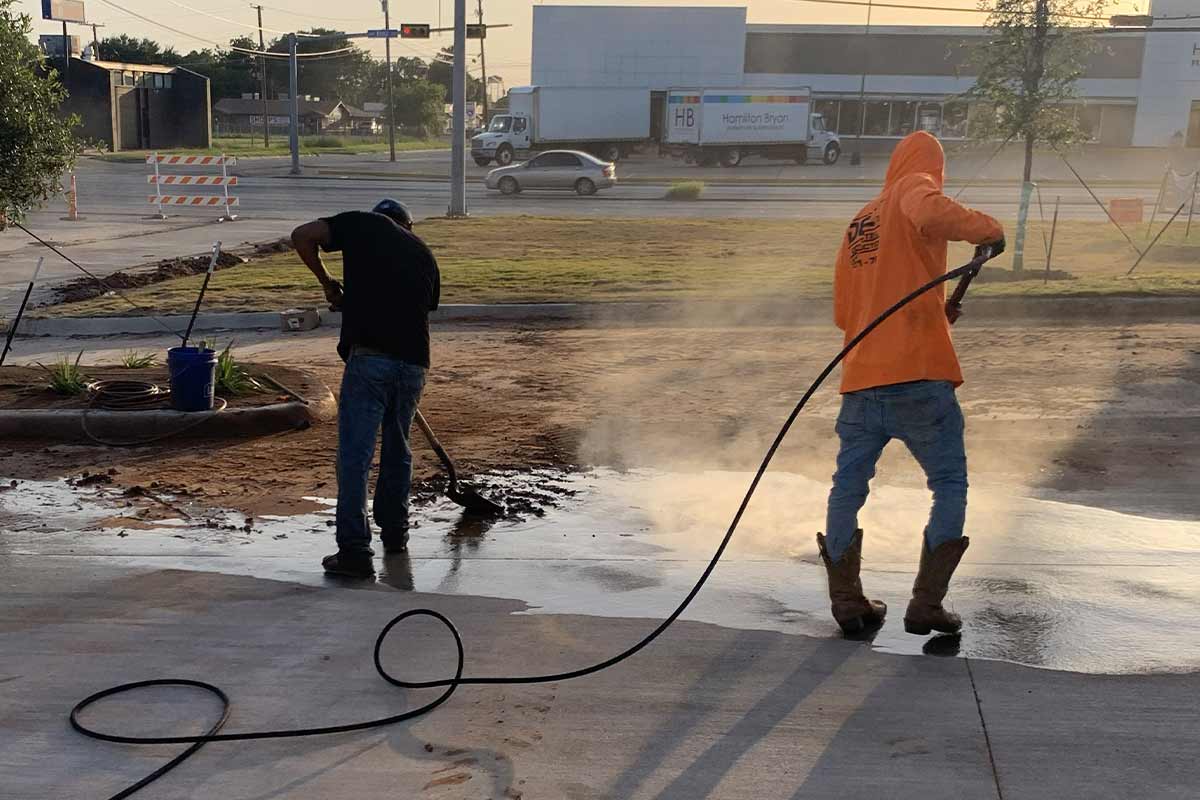
Parking lot pressure washing in Tulsa, OK does three jobs at once — appearance, safety where a surface has gone slick, and preparation before restriping. What comes up is oil and transmission staining, tire marks, gum, bird droppings and the general grime that builds on any commercial surface. It is done for appearance, for safety where a surface has become slick, and as surface preparation before restriping.
That last use is the one most property owners underestimate. Paint bonds to the surface it is applied to. A lot restriped over oil film and embedded dirt will lose its lines faster than the same lot restriped after a wash, which is why washing and striping are often quoted together.
We wash concrete and asphalt commercial surfaces. Each behaves differently under pressure, and asphalt in particular can be damaged by an over-aggressive approach, so the method is matched to the surface rather than applied uniformly.
Timing is worth planning. Washing is most often booked either ahead of a busy season, when appearance matters most, or immediately before restriping, when the goal is adhesion rather than looks. Properties that do both in one visit avoid paying twice to close the same lot. Restaurants and drive-throughs tend to need it most frequently because grease and gum accumulate faster there than anywhere else on a commercial property, while a low-traffic office lot can go considerably longer between washes without anyone noticing a difference.
Wash Water, Storm Drains and Discharge Compliance
Here is the part of pressure washing that almost nobody in this market talks about, and it is the reason to care who does the work.
Storm drains are not sewers. A storm drain does not lead to a treatment plant — it discharges, largely untreated, into local waterways. Wash water from a parking lot is not clean water: it carries oil, fuel residue, heavy metals from brake and tire wear, detergents, and sediment. Allowing that to run into a storm drain sends pollutants directly into the watershed.
This is the basis of the federal stormwater program administered by the Environmental Protection Agency under the National Pollutant Discharge Elimination System, which regulates what may enter municipal storm sewer systems. The City of Tulsa runs its own stormwater quality program covering discharges within the city.
The practical consequence for a commercial property owner is that wash water should be contained, collected, and disposed of appropriately — never run to the nearest inlet. That is a matter of method and equipment, not of intention, and it is worth asking any contractor how they handle it before they start. Not one pressure-washing competitor in the Tulsa search results mentions discharge at all.
Our Pressure Washing Process
- Assess the surface and the staining. Concrete or asphalt, how deep the oil has gone, where the gum and tire marks are concentrated — and the drainage layout, so we know where every inlet on the property sits before anything runs.
- Match the method to the surface. Pressure and technique are set by what is under them. Asphalt in particular can be damaged by an over-aggressive approach, so pressure and technique are set by what is underneath.
- Contain the wash water. Water is contained and collected so none of it reaches a storm drain — the federal stormwater program administered by the EPA under the National Pollutant Discharge Elimination System regulates what may enter municipal storm sewer systems, and the City of Tulsa runs its own stormwater quality program within the city.
- Wash in sections. Commercial lots are staged so part of the property stays open throughout, with early-morning, overnight or weekend scheduling where a retail or medical property needs it.
- Confirm dry before anything follows. Sections need a short drying period before traffic returns, and a longer one before paint — because paint bonds to the surface it lands on, and that is the whole reason to wash before restriping.
For a full list of our pavement marking services, visit our parking lot striping in Tulsa page.
Businesses We Serve


How it Works

GET A FREE ESTIMATE
Contact us today and we’ll have a quote to you in 24 hours

SCHEDULE AN INSTALLATION
We’ll have your installation scheduled in less than 7 days, without affecting your business hours

GET A PARKING LOT THAT POPS
For a budget-friendly price, you’ll get a parking lot that looks like new
We proudly work with:


We proudly work with:
Frequently Asked Questions About Parking Lot Pressure Washing in Tulsa, OK
What does pressure washing a commercial parking lot involve?
It involves assessing the surface, pre-treating heavy staining such as oil and gum, washing at a pressure and temperature matched to the surface, and managing the wash water so it does not run into storm drains. Concrete and asphalt are treated differently, since asphalt can be damaged by an over-aggressive approach. On a commercial property the work is usually staged in sections so the lot stays partly usable, and it is often combined with restriping.
Where does the wash water go?
It should be contained and collected, never released into a storm drain. Storm drains do not lead to treatment plants; they discharge largely untreated into local waterways, and parking lot wash water carries oil, fuel residue, brake and tire particles, detergents and sediment. The federal stormwater program administered by the EPA regulates what may enter municipal storm sewer systems, and the City of Tulsa operates its own stormwater quality program.
Will pressure washing remove oil stains completely?
Often substantially, rarely perfectly. How much lifts depends on how long the oil has been there, how deeply it has penetrated, and the surface type. Fresh staining on sealed concrete responds well. Oil that has soaked into porous asphalt over years has penetrated below the surface and no amount of surface cleaning reaches all of it. We give an honest assessment at the estimate. Promising a result the surface will not deliver helps nobody.
Should we pressure wash before restriping?
In most cases yes, and it is the most valuable reason to do it. Paint bonds to the surface it lands on, so a lot restriped over oil film, dust and embedded grime loses its lines noticeably faster than the same lot restriped after a wash. Because we do both, the two can be scheduled as a single mobilization, which keeps the lot out of service for a shorter total period.
How often should a commercial parking lot be washed?
There is no fixed interval, and it depends far more on the property than the calendar. Restaurants and drive-throughs accumulate grease and gum quickly. Car dealerships and medical properties wash more often because appearance is part of the offer. A low-traffic office lot may go considerably longer. The practical trigger is visible: staining that a customer notices on approach, or a surface that has started to feel slick.
Can you wash the lot without closing it?
Usually yes. Commercial lots are washed in sections so part of the property stays open throughout, and many retail and medical properties schedule the work early morning, overnight or on a weekend so there is no impact at all. Tell us your hours when you request the estimate and the sequence will be planned around them. Sections need a short period to dry before traffic returns, which is built into the staging.