Temporary Parking Lot Striping
In Dayton, OH
Event and Construction Markings
1-800-STRIPER® provides professional temporary parking lot striping in Dayton, OH — short-duration event markings, construction staging layouts, and overflow parking on grass, gravel, pavement, or any surface using removable water-based traffic paint for commercial properties across the Miami Valley.
1-800-STRIPER® of Dayton PROVIDes Temporary Striping Services NEAR YOU
Need Temporary Stripes?
Use temporary stripes to direct traffic and create parking areas at your special event or to keep construction sites safe without a long-term commitment. We paint on grass, gravel, pavement, or any other surface where temporary striping is needed.
Striping solutions for:
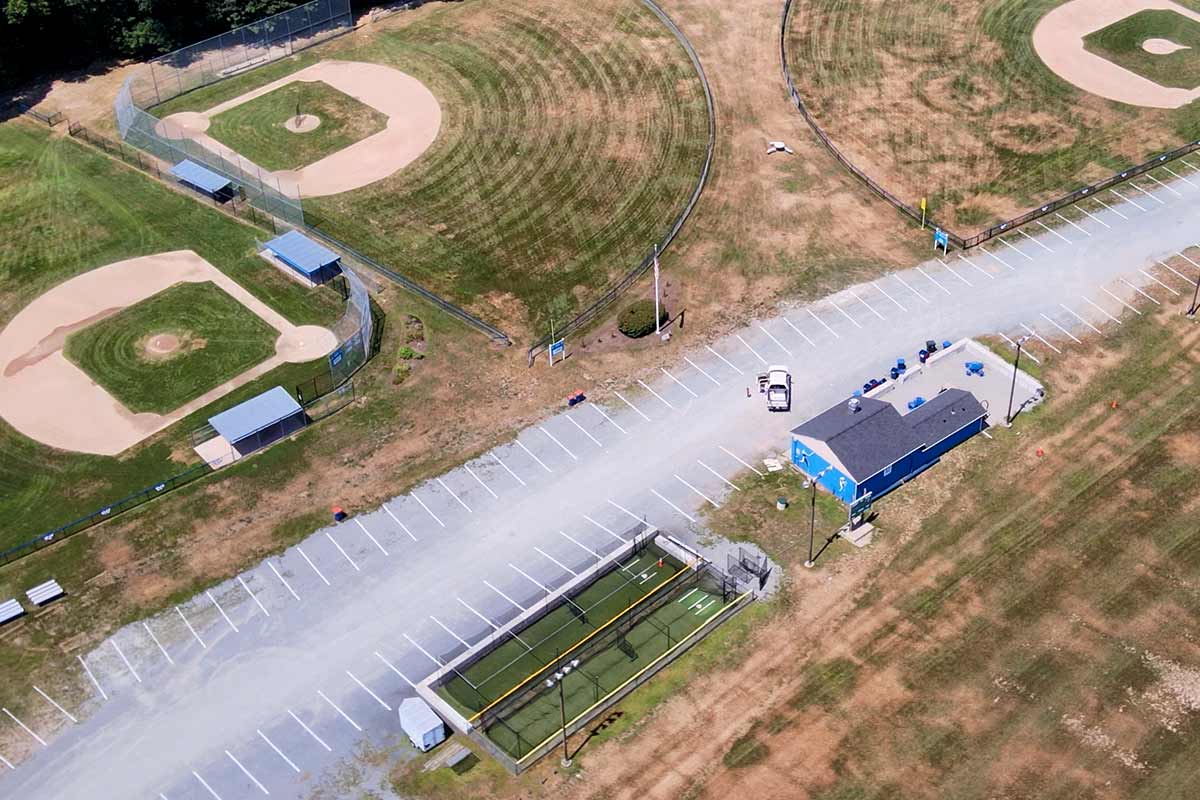
Temporary Parking Lot Striping in Dayton, OH
Not every parking layout needs to last. A festival runs one weekend. A construction phase reroutes traffic for six weeks. A stadium overflow field is used eight times a year and is pasture the rest of the time.
Marking those the way you would mark a permanent lot is the wrong answer twice over — it costs more than the use justifies, and it leaves lines on a surface that has to go back to being something else.
We do temporary striping across the Miami Valley for events, construction staging, seasonal overflow and short-term reconfigurations. The materials are chosen to last exactly as long as the need and then go away, and we mark surfaces that permanent striping equipment cannot handle at all.
Temporary Striping for Events, Construction, and Overflow Parking
Events. Festivals, fairs, concerts, sporting events, church gatherings, school functions and corporate campus days. The job is usually a field or an unmarked lot that has to absorb several hundred vehicles in an orderly way, with clear rows, aisles and exit routing so nobody parks themselves in.
Construction staging. Active job sites need contractor parking, material laydown boundaries, equipment zones and pedestrian routes that keep foot traffic out of vehicle paths — and all of it moves as the project phases change. Marking that gets rearranged three times over a project is exactly what temporary material is for.
Overflow and seasonal. Retail properties adding capacity for a holiday period. Campuses opening a grass field for a specific week. Facilities running a temporary layout while their main lot is resurfaced or sealcoated.
Interim layouts. When a permanent restripe is scheduled but the property cannot wait, temporary marking bridges the gap.
Surfaces We Stripe: Grass, Gravel, Pavement, and More
This is where temporary striping separates from everything else we do. Permanent traffic paint wants clean, cured, dry asphalt or concrete. Temporary marking does not have that luxury, because the surfaces that most need it are the ones nobody paved.
Grass and turf. Field parking for events, using marking material formulated for vegetation.
Gravel and stone. Construction lots, rural venues and industrial yards, where the challenge is that the surface itself moves.
Dirt and compacted earth. Staging areas and temporary access routes.
Asphalt and concrete. Standard pavement, using removable material rather than permanent paint where the layout is not meant to survive.
Sealcoated and freshly resurfaced. Interim layouts on surfaces that are not ready for permanent marking yet.
If you have a surface not on that list, call and describe it. We would rather tell you it will not hold a marking than take the job and leave you with a field of half-visible lines on event morning.
Removable Paint vs. Tape vs. Chalk
| Removable water-based paint | Marking tape | Chalk and powder | |
|---|---|---|---|
| Best for | Multi-week layouts, any surface including grass and gravel | Smooth pavement, indoor and covered areas | Single-day events, rehearsals, layout trials |
| Surface range | Widest — pavement, grass, gravel, dirt | Clean, smooth, dry surfaces only | Most surfaces, but weather-dependent |
| Durability | Weeks to months depending on traffic and weather | Good on the right surface; lifts on rough ones | Hours to days; rain ends it |
| Removal | Wears off, or is removed on request | Peeled up | Sweeps or washes away |
| Repositionable | No — repainted if the layout changes | Yes, within reason | Yes |
Most Miami Valley jobs land on removable paint, because most of them involve a surface tape will not stick to and a timeline chalk will not survive.
Our Temporary Striping Process
- Tell us the surface, the layout and the date. All three change the material choice.
- Site walk where the layout is not already drawn. We work out row spacing, aisle widths and traffic flow, including how vehicles get back out.
- Written scope covering material, expected duration, and whether removal is included or the marking is left to wear off.
- Schedule against your event or phase date, with enough margin for weather.
- Mark the layout, working from fixed reference points so rows stay straight on surfaces with no existing geometry to follow.
- Removal or refresh if the scope calls for it — including re-marking partway through a long construction phase.
Traffic Control on Private Property vs. Public Roadways
Temporary marking raises a scope question worth answering directly, because it is the one place people most often assume federal rules apply.
The Manual on Uniform Traffic Control Devices sets national standards for traffic control devices on public roads, and it has extensive provisions for temporary traffic control in work zones. Property owners reasonably assume those provisions govern their construction staging area.
Not across the parking area. 23 CFR 655.603(a) excludes “parking areas, driving aisles within parking areas, and private highway-rail grade crossings” from the definition the national standard applies to. A temporary layout on your parking area, or on a field the public cannot drive through freely, is not a public work zone, and MUTCD work-zone requirements are not binding there.
What that changes practically: you have far more latitude in how a private temporary layout is marked than you would on a roadway. What it does not change is that following recognizable conventions still makes the layout work better, because drivers arriving at your event have been trained by public roads and will read familiar arrows and lane markings faster than anything novel. If any part of your work touches a public right of way, that portion is a different question and a different authority.
For a full list of our pavement marking services, visit our parking lot striping in Dayton page.
Businesses We Serve




How it Works

GET A FREE ESTIMATE
Contact us today and we’ll have a quote to you in 24 hours

SCHEDULE A STRIPING
We’ll have your space restriped in less than 7 days, without affecting your business hours

GET A PARKING LOT THAT POPS
For a budget-friendly price, you’ll get a parking lot that looks like new
We proudly work with:


We proudly work with:

Frequently Asked Questions About Temporary Parking Lot Striping in Dayton, OH
How long does temporary striping last?
Weeks to a few months for removable water-based paint, depending on the surface, the traffic volume and the weather it sits through. Grass and gravel markings have a shorter useful life than markings on pavement, and a heavy Ohio rain shortens everything. Chalk and powder are a single-day material. Tell us the date range you need it to hold and we will match the material to it rather than the other way around.
Can you stripe grass or gravel?
Yes — that is a large share of the temporary work we do around Dayton. Event field parking is usually turf, and construction staging is usually gravel or compacted dirt. Both need material formulated for the surface rather than standard traffic paint, which is why permanent striping crews often decline these jobs. We also mark asphalt, concrete, sealcoated and freshly resurfaced surfaces where the layout is not meant to be permanent.
How is temporary striping removed?
Most of the time it is not removed at all — removable water-based paint is designed to wear away as traffic and weather work on it, which is exactly what you want on a field that goes back to being a field. Where a scope calls for active removal, we can include it. Marking tape is peeled up. Chalk sweeps or washes off. We will tell you which applies before the work goes in so there are no surprises afterward.
How fast can you mobilize for an event?
Faster than for permanent work, because temporary marking needs far less surface preparation and no long cure window. The practical constraints are our schedule and the weather forecast for your date. Call as early as you can — event work clusters around the same weekends across the Miami Valley, and the properties that book ahead get the window they want. Short-notice jobs are often possible, so ask rather than assume.
Will temporary marking damage the surface?
No, when the right material is matched to the surface. Removable water-based paint is formulated to break down and release rather than bond permanently, which is what makes it suitable for turf, gravel and dirt. Problems come from the opposite mistake — using permanent traffic paint on a surface meant to return to its original state. Tell us what the surface has to look like afterward and that answer drives the material selection.
Do you stripe construction staging areas?
Regularly. Active job sites need contractor parking, material laydown boundaries, equipment zones and pedestrian routes kept separate from vehicle paths — and all of it moves as the project phases. Temporary marking is built for exactly that, and we can re-mark partway through a long project as the layout changes.