
Temporary Parking Lot Striping
In Raleigh, NC
Event and Construction Markings
1-800-STRIPER provides professional temporary parking lot striping in Raleigh, NC — short-duration event markings, construction phasing layouts, and overflow parking on grass, gravel, pavement, or any other surface using removable marking materials for commercial properties across Wake, Johnston, and Harnett counties.
1-800-STRIPER of Raleigh PROVIDes Temporary Striping Services NEAR YOU
Need Temporary Stripes?
Use temporary stripes to direct traffic and create parking areas at your special event or to keep construction sites safe without a long-term commitment. We paint on grass, gravel, pavement, or any other surface where temporary striping is needed.
Striping solutions for:
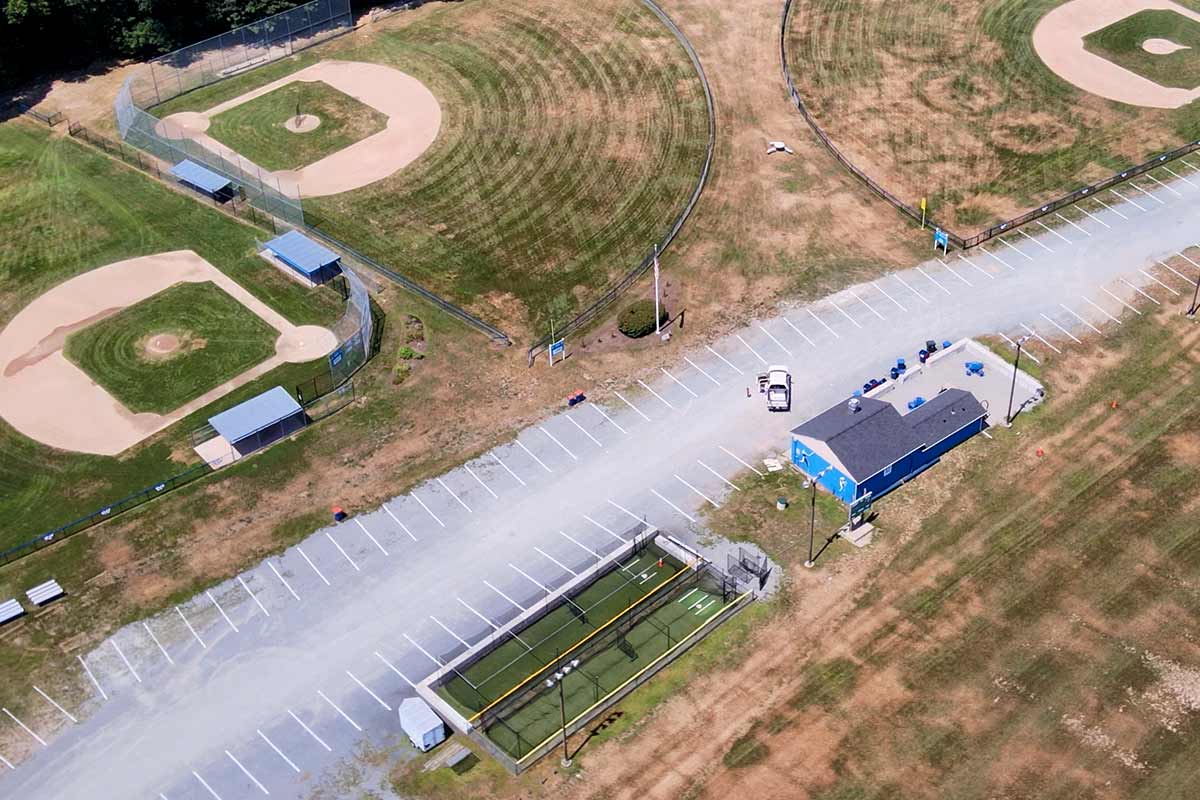
Temporary Parking Lot Striping in Raleigh, NC
Temporary striping exists for situations where permanent lines would be wrong: a layout you need for one weekend, a field that becomes a parking lot twice a year, a construction site whose traffic pattern changes every six weeks. The point is that it comes off, or wears off on a known schedule, without leaving a lot full of ghost lines — a different material choice and a different set of expectations from a permanent restripe.
Event Parking and Overflow Lots
Festivals, fairs, race days, church and school events, seasonal retail overflow. The job is nearly always the same shape: take an area that is not normally a parking lot, turn it into one for a defined period, and make it legible to drivers who have never been there. Rows, aisles, directional arrows, entry and exit markers, and a clearly marked accessible section near the entrance — laid out so the flow works when the space is full, not when it is empty.
Construction Phasing and Staged Lot Closures
On an active construction or renovation site the parking layout is not one layout, it is a sequence of them. A section closes, traffic re-routes, contractor parking moves, the fire lane has to stay clear through all of it.
Temporary markings let you re-stripe the affected zone at each phase change instead of committing to a permanent layout you will have to grind out later. When the work finishes and the final configuration is known, that is the point to lay permanent lines down once.
Marking Grass, Gravel, and Unpaved Surfaces
An overflow field or a gravel yard can be marked. It behaves differently from pavement and it is worth knowing how before you plan the event.
| Surface | How the marking behaves | Ends by |
|---|---|---|
| Grass | Sits on the blade rather than bonding | Growth and mowing |
| Gravel / compacted stone | Coverage depends on how tight the surface is | Weather and vehicle movement |
| Asphalt / concrete | Most control, longest life | Planned removal or wear |
On grass, markings sit on the blade rather than bonding to a surface, so they stay legible for a defined period and then grow out — which is usually exactly what you want. On gravel and compacted stone, coverage depends on how tight the surface is; a well-compacted lot marks far more cleanly than loose stone. In both cases we mark the aisles, the boundaries, and the flow rather than trying to outline every individual space, because on an unpaved surface the row is what drivers actually follow.
Marking Pavement and Concrete Temporarily
On asphalt and concrete the surface is stable, so markings can be removable or short-life by design. That is the right approach when a permanent layout is coming but not settled — a tenant fit-out that may move the entrance, a lot awaiting a resurfacing date, a trial of a new traffic flow. Mark it temporarily, live with it for a season, then make it permanent once you know it works.
How Long Temporary Markings Last
Service life depends on the surface and the traffic, not on a number we can quote blind. Markings on grass last through an event and disappear with growth and mowing. On gravel, weather and vehicle movement do the work. On pavement, a temporary marking lasts far longer than most people want — which is why removal is worth planning before the first line goes down. Tell us the window and we will match the approach to it.
Removal and Site Restoration
The end of the job is part of the job. Before we mark anything we agree what happens afterwards: markings left to wear off, actively removed, or replaced by a permanent layout. That conversation is what separates a temporary installation from a permanent one you regret — a lot covered in half-faded event lines from three seasons ago is the outcome we plan against.
For a full list of our pavement marking services, visit our parking lot striping in Raleigh page.
Businesses We Serve




How it Works

GET A FREE ESTIMATE
Contact us today and we’ll have a quote to you in 24 hours

SCHEDULE A STRIPING
We’ll have your space restriped in less than 7 days, without affecting your business hours

GET A PARKING LOT THAT POPS
For a budget-friendly price, you’ll get a parking lot that looks like new
We proudly work with:


We proudly work with:


Frequently Asked Questions About Temporary Parking Lot Striping in Raleigh, NC
Can you mark grass and gravel, or only pavement?
Grass, gravel, pavement, concrete, and effectively any other surface a vehicle can park on. Each behaves differently: grass markings sit on the blade and grow out on their own, which is usually what you want for a one-weekend event. Gravel depends on compaction — a tight, well-rolled surface marks cleanly, loose stone much less so. Pavement gives the most control and the longest life.
How long will temporary markings stay visible?
Long enough for the window you tell us about, which is why we ask about it first. On grass, an event and the following mow or two. On gravel, weather and vehicle traffic set the pace. On pavement a temporary marking generally outlasts the need for it, so we plan the end state before we start.
Do the markings have to be removed afterwards?
Not always, and it is a decision to make up front. Grass and gravel markings normally clear themselves. On pavement you have three routes: leave them to wear, remove them actively, or roll them into the permanent layout you were going to lay anyway. We will tell you which is realistic for your surface at the estimate.
We are running a festival on a field that is not normally a parking lot. Where do you start?
With the flow, not the spaces. How cars enter, where they queue, how they exit when everyone leaves at once, and where accessible parking sits relative to the entrance. The rows and aisles follow from that. A field laid out row-by-row without thinking about the exit works beautifully until the event ends.
Our site is under construction and the layout changes every few weeks. Can you work with that?
That is one of the main reasons this service exists. Each phase gets marked for the traffic pattern it actually needs, with the fire lane kept clear throughout, instead of committing to a permanent layout you will have to remove. When the final configuration is settled, that is the moment to lay permanent lines — once.