Warehouse Line Painting
In St. Louis, MO
OSHA-Compliant Safety Markings
1-800-STRIPER provides professional warehouse line painting in St. Louis, MO — OSHA-compliant aisle lines, pedestrian walkways, and safety zone markings per OSHA 29 CFR 1910.22 requirements using durable epoxy and traffic paint for industrial facilities across the St. Louis metro.
1-800-STRIPER® of St Louis PROVIDes Warehouse Floor Markings Services NEAR YOU
Want your indoor space to operate more efficiently?
Warehouse and interior markings ensure clear traffic lanes, organized storage zones, and designated spaces designed to help your business operate safely and efficiently.
Benefits:
Warehouse Line Painting in St. Louis
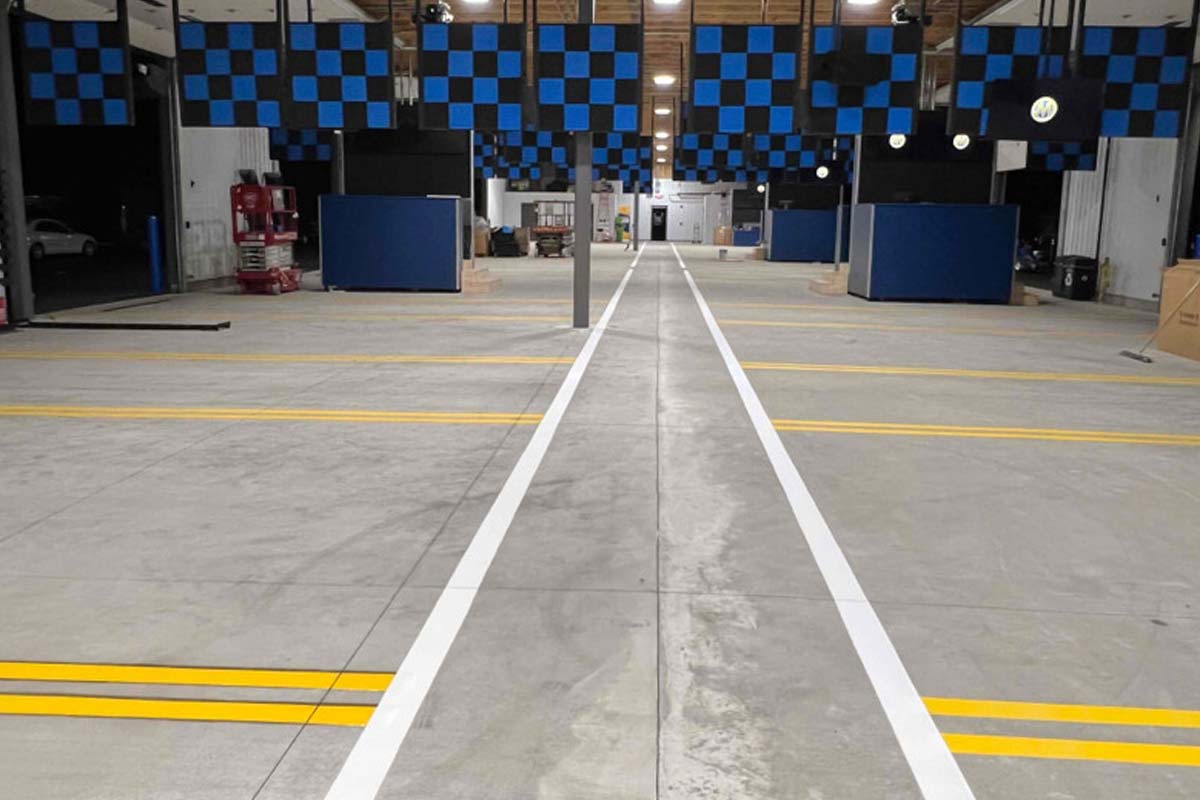
Clear floor markings keep a warehouse safe and running. 1-800-STRIPER of St. Louis paints and refreshes aisle lines, pedestrian walkways, safety zones, and floor markings for warehouses, distribution centers, and factories across the metro. We mark interior concrete floors to OSHA and ANSI standards so forklifts, foot traffic, and storage stay separated and organized.
Warehouse line painting (also called warehouse floor marking, factory floor marking, or industrial floor striping) is about safety first. Marked aisles tell forklifts where to drive, walkways tell people where it’s safe to walk, and color-coded zones flag hazards, equipment, and storage. When those lines fade, the whole system breaks down — and so does compliance.
OSHA-Compliant Marking Standards
Federal OSHA standards drive warehouse floor marking:
- OSHA 29 CFR 1910.22 requires aisles and passageways to be kept clear and in good repair, with safe clearances marked where mechanical handling equipment operates.
- OSHA 29 CFR 1910.144 sets the safety color code — red for fire and danger, yellow for caution and physical hazards.
- ANSI Z535.1 defines the full safety color standard that most facilities follow for consistency.
The common color convention we mark to:
| Color | Use |
|---|---|
| Yellow | Aisles, traffic lanes, work cells, physical-hazard boundaries |
| White | Equipment, workstations, fixtures, general storage |
| Red | Fire equipment, emergency stops, defective-material areas |
| Green | First-aid stations, safety equipment |
| Blue | Informational, materials awaiting inspection |
| Black/yellow stripes | Caution areas exposed to special hazards |
Marking to a consistent color code isn’t just compliance — it’s how a new forklift operator or visitor instantly understands your floor.
What We Mark
We handle the full floor-marking scope:
- Forklift and traffic aisles — straight, durable lines that define lanes and keep equipment in its path.
- Pedestrian walkways — bordered, clearly colored paths that separate people from equipment.
- Safety and hazard zones — markings around machinery, electrical panels, eyewash stations, and fire equipment.
- Storage and staging — outlined areas for racking, pallets, inbound/outbound staging, and quality-hold.
- Floor labels and stencils — directional arrows, numbering, and legends.
Our Marking Process
- Plan the layout. We map your aisles, walkways, zones, and storage with your operations team so the markings match how the floor actually works.
- Choose the system. For high-traffic concrete we recommend durable epoxy or MMA; for lighter-duty areas, industrial traffic paint. We match the coating to your floor and forklift load.
- Prep the concrete. We clean and, where needed, profile the surface so the marking bonds — prep is what makes floor markings last.
- Apply and cure. We lay sharp, straight lines and stencils in the right colors, then let them cure before traffic returns.
- Phase the work. We schedule around your shifts to keep the operation moving.
We focus on striping-grade floor marking — the lines, walkways, and zones that keep your facility compliant and safe, not full floor coatings.
Organized Floor Marking and Lean Operations
Floor marking is the backbone of an organized warehouse. Facilities that run lean or 5S programs use color-coded marking to define everything: forklift lanes, pedestrian walkways, work cells, inbound and outbound staging, quality-hold areas, and equipment footprints. When every zone has a marked boundary, a new operator or visitor can read the floor at a glance, and material stays where it belongs.
Consistent color coding is what makes the system work. Following the OSHA 1910.144 safety color code and ANSI Z535.1, yellow defines aisles and work cells, white marks equipment and storage, red flags fire and emergency areas, and blue or green call out information and safety stations. Mixing colors arbitrarily defeats the purpose — so we mark your whole floor to one coherent standard. Beyond aisles and zones, we mark loading docks, dock-door numbering, battery-charging stations, and hazardous-material storage outlines. In factories and plants, the same color discipline applies to production lines and machine-clearance boundaries, keeping people clear of moving equipment per OSHA 1910.22.
Choosing the Right Marking System
Not every floor needs the same coating. The right system depends on traffic and surface:
- Epoxy and MMA coatings bond hard to concrete and resist forklift abrasion — the durable choice for high-traffic aisles and main thoroughfares.
- Industrial traffic paint goes down fast and cures quickly, ideal for lighter-duty zones, staging outlines, and areas you expect to re-mark as the layout evolves.
- Pre-formed tape suits facilities that re-configure frequently, though painted lines hold up better under heavy forklift wear.
Whatever the system, durability comes down to surface preparation. Concrete has to be clean and, for epoxy and MMA, profiled so the coating bonds mechanically instead of sitting on the surface. Skipping prep is the number-one reason warehouse markings peel within months — so we clean and prep every surface before a single line goes down. We phase the work around your shifts, marking section by section so production keeps moving while the new lines cure. Whether you’re laying out a brand-new distribution center floor or refreshing faded lanes in an existing plant, we plan the marking around how your facility actually operates and leave you with a floor that reads clearly to every operator and passes safety audits.
For a full list of our pavement marking services, visit our parking lot striping in St. Louis page.
Businesses We Serve




How it Works

GET A FREE ESTIMATE
Contact us today and we’ll have a quote to you in 24 hours

SCHEDULE A STRIPING
We’ll have your space restriped in less than 7 days, without affecting your business hours

GET A PARKING LOT THAT POPS
For a budget-friendly price, you’ll get a parking lot that looks like new
We proudly work with:


We proudly work with:

Frequently Asked Questions About Warehouse Line Painting in St. Louis, MO
What color should warehouse aisles be?
Yellow is the standard for aisles, traffic lanes, and physical-hazard boundaries under the OSHA 1910.144 safety color code and ANSI Z535.1. White typically marks equipment and storage; red marks fire and emergency areas. We mark your floor to a consistent color code so the layout reads clearly to every operator.
Does OSHA require warehouse floor markings?
OSHA 1910.22 requires aisles and passageways to be kept clear and marked with appropriate clearances where mechanical handling equipment is used. While OSHA doesn’t dictate one exact stripe width, marked aisles and walkways are how facilities meet the clear-passage requirement — and how they pass safety audits.
What kind of paint holds up on a warehouse floor?
For high-traffic concrete under forklift loads, durable epoxy or MMA coatings last longest because they bond hard and resist abrasion. For lighter-duty areas, industrial traffic paint works well and goes down faster. We match the system to your floor type and traffic so the markings stay sharp instead of wearing off in months.
How do you prep a concrete floor before marking?
Prep is what makes floor markings last. We clean the surface thoroughly and, where the coating requires it, profile the concrete so the paint or epoxy bonds mechanically rather than just sitting on top. Skipping prep is the main reason warehouse lines peel — so we don’t skip it.
Can you mark our floor without shutting down the warehouse?
Usually, yes. We phase the work around your shifts and schedule, marking section by section so the operation keeps moving. Fast-curing systems let us reopen aisles quickly. We’ll plan the sequence with your team so the floor stays productive while we work.
Do you mark pedestrian walkways and safety zones too?
Yes — walkways and safety zones are core to warehouse marking. We border pedestrian paths in a distinct color to separate people from forklift traffic, and we mark zones around machinery, electrical panels, fire equipment, and first-aid stations per the OSHA and ANSI color conventions. Clear separation of people and equipment is the whole point.