
Parking Lot Layout Design
In St. Louis, MO
Customized Parking Lot Layouts
1-800-STRIPER provides professional parking lot layout design in St. Louis, MO — custom-engineered layouts that maximize parking capacity, ensure ADA compliance per the 2010 ADA Standards for Accessible Design, and meet MUTCD pavement marking specifications for commercial properties across the St. Louis metro.
1-800-STRIPER® of St Louis PROVIDes New Layouts Services NEAR YOU
Are you ready to create a great first impression?
A proper parking lot layout with clear markings is critical for any business that serves the public. Let us help you make a great first impression with an attractive, well-organized, and safe parking lot.
Benefits:
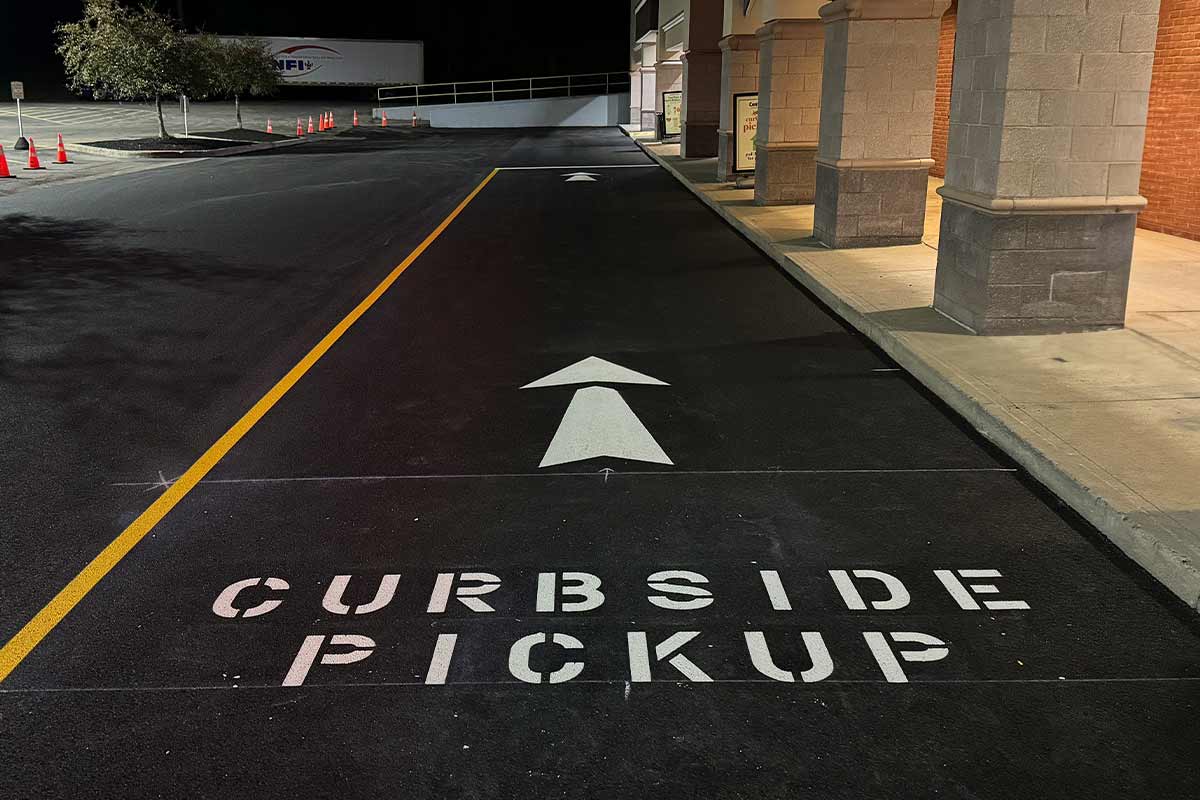
Parking Lot Layout Design in St. Louis
A well-designed parking lot does three things at once: it fits the most usable stalls into your space, keeps traffic moving safely, and meets accessibility and fire-code requirements. 1-800-STRIPER of St. Louis designs and stripes layouts for new lots, expansions, and full redesigns across the metro — whether you’re building from bare asphalt or rethinking a lot that no longer works.
Good layout is geometry. Stall angle (90°, 60°, or 45°), aisle width, and traffic direction together decide how many cars you can park and how smoothly they move. Angled stalls are easier to enter and need narrower aisles; 90° stalls pack in more cars where space allows. We model the trade-offs for your lot and your tenants.
What a Compliant Layout Includes and Our Design Process
Every layout we design accounts for the rules that govern commercial lots:
- Accessible parking — the right number of accessible and van-accessible spaces for your total stall count, sized and placed per the U.S. Access Board’s Chapter 5 parking guidance (§502) and the 2010 ADA Standards, with spaces on the shortest accessible route to the entrance. Missouri’s Section 301.143 reinforces this for every commercial lot.
- Drive aisles and fire access — aisles wide enough for two-way flow and fire-apparatus access, with fire lanes marked where the local code requires them.
- Traffic flow — directional arrows, stop bars, and crosswalks following MUTCD conventions so drivers and pedestrians know where to go.
- Capacity — the maximum usable stalls your dimensions allow without crowding aisles.
Our process:
- Site assessment. We measure the lot, note entrances, obstacles, drainage, and your building’s accessible entrance.
- Design. We lay out stalls, aisles, accessible spaces, and flow to balance capacity with compliance.
- Review. We walk the plan with you so it fits how your customers and tenants actually use the lot.
- Stripe. We mark the approved layout with durable traffic paint and crisp, accurate lines.
Why Stall Angle and Aisle Width Matter
The layout decision that drives capacity most is stall angle. Each option trades parking density against ease of use:
- 90-degree (perpendicular) stalls pack the most cars into a given area and allow two-way traffic, but they need the widest drive aisles — generally around 24 feet — so drivers can turn in from both directions.
- 60-degree angled stalls are easier to enter at speed and need narrower aisles, at a modest cost in total count. They suit one-way circulation.
- 45-degree stalls are the easiest to pull into and need the narrowest aisles, but fit the fewest cars per row.
The right choice depends on your lot’s shape, your traffic volume, and whether you can run one-way or two-way aisles. We model the trade-offs so you see the real numbers before committing.
Beyond capacity, a professional layout protects you on compliance. Accessible spaces have to meet U.S. Access Board §502 dimensions and sit on the shortest route to your entrance, fire lanes have to stay clear for emergency access, and traffic markings have to follow MUTCD conventions. Getting the geometry right the first time avoids costly re-striping later — and a lot that’s confusing or non-compliant from day one almost always costs more to fix than to design well up front.
For a full list of our pavement marking services, visit our parking lot striping in St. Louis page.
Businesses We Serve




How it Works

GET A FREE ESTIMATE
Contact us today and we’ll have a quote to you in 24 hours

SCHEDULE AN INSTALLATION
We’ll have your installation scheduled in less than 7 days, without affecting your business hours

GET A PARKING LOT THAT POPS
For a budget-friendly price, you’ll get a parking lot that looks like new
We proudly work with:


We proudly work with:


Frequently Asked Questions About Parking Lot Layout Design in St. Louis, MO
How many parking spaces can I fit in my lot?
It depends on your square footage, stall angle, and required aisle widths. Ninety-degree stalls maximize count where you have room for wide two-way aisles; angled stalls fit tighter spaces and ease traffic. We measure your lot and model the options so you can see the real capacity trade-offs before any paint goes down.
How many accessible spaces does my lot need?
The 2010 ADA Standards set the minimum by total space count — for example, 1 accessible space for lots up to 25 stalls, scaling up from there, with at least 1 in every 6 accessible spaces built van-accessible. We calculate the exact requirement for your stall count and place the spaces on the closest accessible route to your entrance.
Can you redesign an existing parking lot?
Yes. We redesign lots that have outgrown their layout — adding stalls, improving flow, fixing non-compliant accessible parking, or converting space for new uses. We work from your current pavement, so a redesign is often as simple as a fresh layout and restripe rather than new construction.
Do you handle ADA compliance in the layout?
Compliance is built into every design. We size and place accessible spaces, access aisles, and signage per the U.S. Access Board §502 guidance and Missouri’s Section 301.143, and we route accessible parking to the shortest path to your entrance.
What information do you need to design my parking lot?
The lot dimensions, your building’s entrances, and how the space gets used — retail turnover, employee parking, loading, and so on. If you have a survey or site plan, that helps, but we can measure on site. From there we design a layout that fits the most usable stalls while meeting accessibility and traffic standards.