
Bollard Installation
In Sarasota, FL
Safety and Security Bollards
1-800-STRIPER provides professional bollard installation in Sarasota, FL — installing concrete-filled steel bollards, decorative cast-iron bollards, and removable security posts to protect storefronts, fuel pumps, and pedestrian zones per ASTM F2656 anti-ram specifications for commercial properties across Sarasota and Manatee counties.
1-800-STRIPER® of Sarasota PROVIDes Bollard Installation Services NEAR YOU
Want to prevent accidents and protect your property?
Bollards provide physical protection for your customers and your property.
Safety and security:
Bollards create a physical barrier between vehicles and pedestrians, protecting people in walking areas from accidental or intentional vehicle intrusions.
Bollards act as a protective barrier around storefronts, gas stations, and other vulnerable areas, minimizing the risk of costly damage from vehicle impacts.
Strategic Placement Locations:
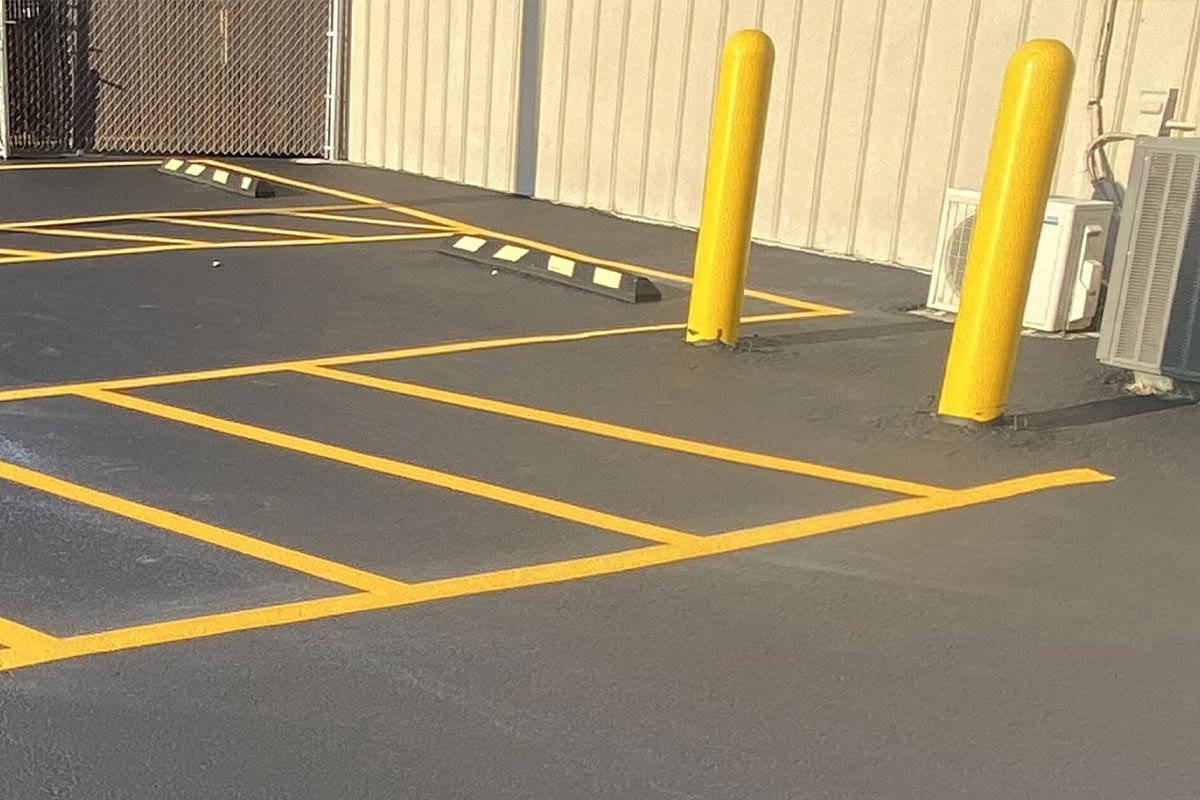
When commercial properties need bollards
Bollards are standard at storefronts facing the parking lot, around fuel pumps, at pedestrian entries, near outdoor seating, and at any utility or transformer enclosure that needs vehicle-impact protection. Sarasota commercial properties typically install bollards after a vehicle-into-storefront incident, which is a more common occurrence at retail and quick-service restaurants than property managers expect. Insurance carriers increasingly require bollards at storefront-facing parking on properties they cover.
ASTM F2656 governs anti-ram performance ratings. The standard tests bollards against specific vehicle weights and impact speeds and assigns a rating (M30, M40, M50) based on penetration distance. For most Sarasota commercial properties, M30-rated bollards (15,000-pound vehicle at 30 mph, less than 1 meter penetration) are the typical spec for storefront protection.
Bollard type comparison
| Type | Anti-ram rating | Cost | Best use |
|---|---|---|---|
| Concrete-filled steel (Schedule 40 or 80) | ASTM F2656 M30/M40 | Baseline | Storefront, fuel pump |
| Decorative cast-iron sleeve over steel core | ASTM F2656 (core dependent) | Higher | Architectural sites |
| Removable security post | Visual deterrent only | Higher | Fire lane access, loading docks |
| Retractable hydraulic | ASTM F2656 M30+ (when up) | Highest | High-security |
| Plastic / polymer (visual marker) | None | Lower | Traffic delineation only |
The bollard type comparison table is the structured content element.
Anchor depth and footing requirements
ASTM F2656-rated bollards require concrete footings 24 to 48 inches deep depending on impact rating, with the bollard set in the footing and the surrounding pavement restored. The footing dimensions and rebar specification come from the manufacturer’s installation detail for the specific impact rating. We pull the manufacturer’s footing detail during the estimate and coordinate any pavement saw-cutting and patch repair as part of the install scope.
For removable security bollards, the sleeve sets in concrete with the bollard locking in and out via a barrel-key mechanism. They are standard at fire lane entries that need occasional fire-truck access, loading docks, and event setups. Removable bollards do not carry the same anti-ram rating as fixed bollards because the locking mechanism is the failure point, but they do provide visual deterrent and casual-vehicle stopping force.
Decorative options for architectural sites
Decorative cast-iron sleeves wrap the concrete-filled steel core for a more architectural appearance. Common at downtown Sarasota retail, Lakewood Ranch Main Street, and resort properties on the barrier islands. The cast-iron sleeve is purely aesthetic. Impact protection comes from the structural core inside. A decorative-only bollard (cast iron without a structural core) provides visual cue but not vehicle-impact protection and does not carry an ASTM F2656 rating.
We coordinate with property managers and architects on sleeve selection and finish color. Powder-coated steel is a common alternative when the architectural goal is more contemporary than the cast-iron look. Same structural core, different visual treatment.
Storefront and fuel-pump protection priorities
Storefront bollards usually install at 4-foot intervals along the building face directly across from the parking row. Spacing tighter than 4 feet creates a visual barrier that customers find unfriendly; wider than 4 feet leaves enough gap that a vehicle could squeeze through. Mounting height: 36 to 42 inches is standard for visual deterrent; 30 inches is the minimum that still stops a typical passenger vehicle.
Fuel-pump bollards protect both the pump infrastructure and the underground tank piping. Quick-service restaurant and convenience-store properties along US-41 and I-75 frontage typically install four bollards per pump island, set on 6-foot centers around the pump perimeter. Fire-code requirements for fuel storage facilities add specific bollard placement requirements that we pull from the local jurisdiction during the estimate.
For a full list of our pavement marking services, visit our parking lot striping in Sarasota page.
Businesses We Serve




How it Works

GET A FREE ESTIMATE
Contact us today and we’ll have a quote to you in 24 hours

SCHEDULE AN INSTALLATION
We’ll have your installation scheduled in less than 7 days, without affecting your business hours

GET A PARKING LOT THAT POPS
For a budget-friendly price, you’ll get a parking lot that looks like new
We proudly work with:


We proudly work with:


Frequently Asked Questions About Bollard Installation in Sarasota, FL
When do I need bollards on my commercial property?
Bollards are standard at storefronts facing the parking lot, around fuel pumps, at pedestrian entries, near outdoor seating, and at any utility or transformer enclosure that needs vehicle-impact protection. Sarasota commercial properties typically install bollards after a vehicle-into-storefront incident — a much more common occurrence at retail and quick-service restaurants than property managers expect. ASTM F2656 governs anti-ram performance ratings.
Steel-filled vs. concrete-only bollards — which to choose?
Concrete-filled steel bollards (the standard Schedule 40 or Schedule 80 steel pipe with concrete fill) carry the ASTM F2656 anti-ram rating and stop a 15,000-pound vehicle at impact speeds up to 30 mph depending on size. Solid-concrete bollards without steel reinforcement crack on impact and don’t carry the ASTM rating. Decorative cast-iron bollard sleeves can wrap the concrete-filled steel for a more architectural appearance.
How deep do bollards need to be anchored?
ASTM F2656-rated bollards require concrete footings 24 to 48 inches deep depending on impact rating, with the bollard set in the footing and the surrounding pavement restored. Removable security bollards use a sleeve set in concrete with the bollard locking in and out via a barrel-key mechanism. We pull the manufacturer’s footing detail for the specified anti-ram rating during the estimate.
Are decorative bollards still rated for impact protection?
Decorative cast-iron sleeves are aesthetic — the impact protection comes from the concrete-filled steel core inside. A decorative-only bollard (cast iron without a structural core) provides visual cue but not vehicle-impact protection and does not carry an ASTM F2656 rating. For storefront and fuel-pump protection we recommend the structural core; the cast-iron sleeve is optional architectural treatment over the top.
Can bollards be made removable for delivery access?
Yes. Removable security posts use a steel sleeve cast into the concrete footing and a top section that locks in place via a barrel key or spring-loaded pin. They are standard at fire lane entries that need occasional fire-truck access, loading docks, and event setups. Removable bollards do not carry the same anti-ram rating as fixed bollards because the locking mechanism is the failure point, but they do provide visual deterrent and casual-vehicle stopping force.