Wheel Stop Installation
In South Denver, CO
Concrete and Rubber Parking Stops
1-800-STRIPER provides professional wheel stop installation in South Denver, CO — anchoring concrete and recycled-rubber wheel stops at stall heads to protect sidewalks, storefronts, and accessible routes per the 2010 ADA Standards Section 502.7.
1-800-STRIPER® of South Denver PROVIDes Wheel Stops Services NEAR YOU
Need to protect vehicles or walls from accidental damage?
Wheel stops (also called parking blocks) protect your property, enhance safety, and improve parking lot organization.
Benefits:
Wheel stops prevent vehicles from parking too far into a space or overextending into other spots, pedestrian walkways, and other areas, while also helping with vehicle alignment. They can prevent damage to buildings, curbs, or landscaping. Wheel stops also serve as clear visual cues for proper parking and are sometimes used on slopes to prevent cars from rolling.
Wheel Stop Installation in South Denver, CO
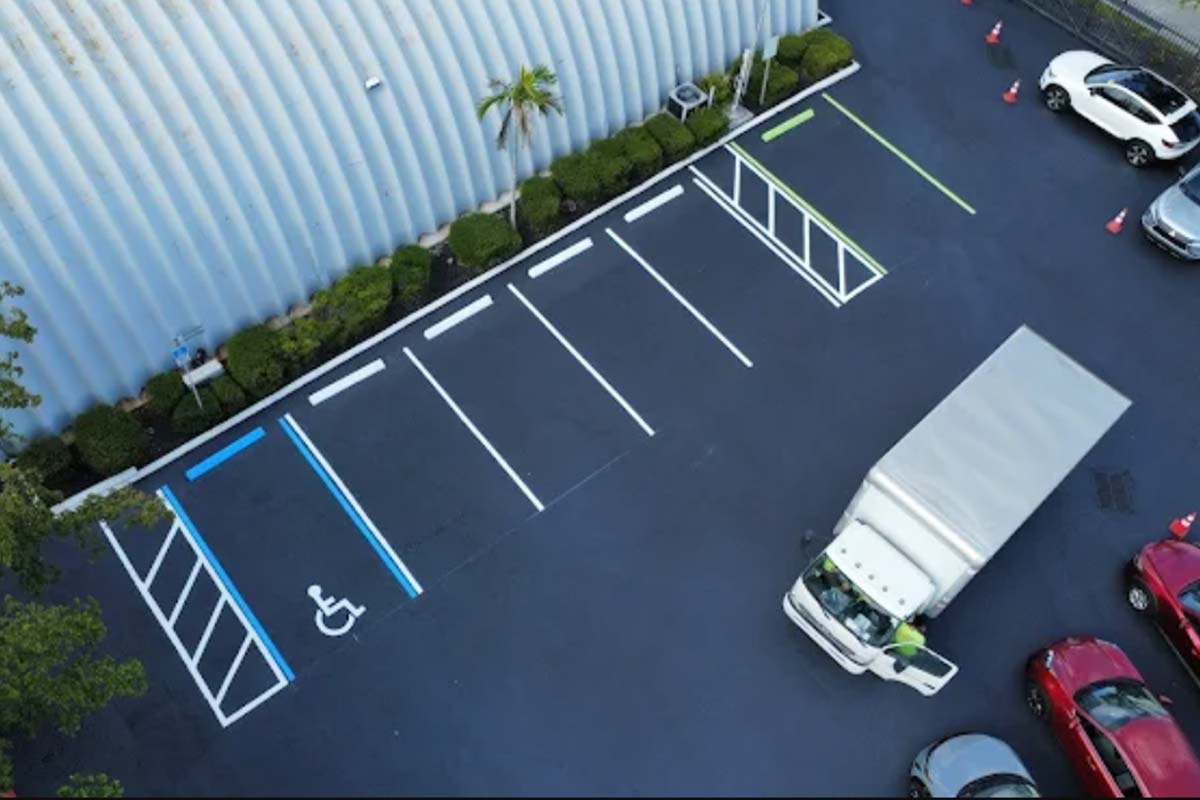
Wheel stops are the low barriers at the head of a parking stall that keep a vehicle from rolling or pulling too far forward. They protect sidewalks, storefronts, landscaping, and pedestrians from vehicle overhang and stop cars short of walls, columns, and adjacent spaces. 1-800-STRIPER of South Denver supplies and installs wheel stops for retail, office, medical, and industrial properties across the south Denver metro and the Colorado Springs area. We set new wheel stops on a fresh layout, add them to an existing lot, and replace units that have cracked or heaved. Choosing the right material and anchoring them properly is what keeps a wheel stop in place through years of impacts and Colorado winters, so we match the product to the use and fix each unit securely to the pavement.
Materials and Anchoring
Wheel stops come in a few materials, and the right choice depends on the traffic and the look you want. Precast concrete is the traditional heavy-duty option — solid and stable, though it can crack over time and is heavier to handle. Recycled-rubber and plastic-composite stops are lighter, resist cracking and corrosion, will not chip like concrete, and are often made from recycled material, which appeals to properties with sustainability goals. Whatever the material, anchoring is what matters: a wheel stop that is not pinned down becomes a hazard the first time a truck nudges it. We anchor each unit to the pavement with steel pins or the manufacturer’s specified hardware so it holds position under repeated contact.
Protecting Accessible Routes
Wheel stops do real work at accessible spaces, where vehicle overhang can block the very route a wheelchair user needs. When a car pulls too far into an accessible stall, its front end can intrude on the access aisle or the sidewalk beyond, narrowing the accessible route below what the 2010 ADA Standards require. Section 502.7 of the Standards addresses vehicle overhang so parked cars do not reduce the clear width of the accessible route. Placing wheel stops correctly at accessible spaces keeps that route clear and usable. We position and anchor stops at accessible stalls with that clearance in mind, so the barrier that protects your sidewalk also protects your accessibility.
Our Wheel Stop Installation Process
Setting a wheel stop that stays put comes down to placement and anchoring.
- Confirm the layout and mark where each wheel stop belongs at the head of the stall.
- Position units with clearance in mind at accessible spaces, so vehicle overhang does not intrude on the access aisle or the accessible route.
- Anchor each unit to the pavement with steel pins or the manufacturer’s specified hardware so it holds position under repeated contact.
- Check that every stop is secure and correctly aligned before the lot returns to use.
For a full list of our pavement marking services, visit our parking lot striping in South Denver page.
Businesses We Serve




How it Works

GET A FREE ESTIMATE
Contact us today and we’ll have a quote to you in 24 hours

SCHEDULE AN INSTALLATION
We’ll have your installation scheduled restriped in less than 7 days, without affecting your business hours

GET A PARKING LOT THAT POPS
For a budget-friendly price, you’ll get a parking lot that looks like new
We proudly work with:


We proudly work with:

Frequently Asked Questions About Wheel Stop Installation in South Denver, CO
What are wheel stops made of?
The common materials are precast concrete, recycled rubber, and plastic composite. Concrete is the traditional heavy-duty choice — very stable, but heavier and prone to cracking and chipping over years of impact and freeze-thaw. Recycled-rubber and plastic-composite stops are lighter, resist cracking and corrosion, hold their color, and are frequently made from recycled material, which suits properties with sustainability goals. Each performs well when anchored properly. We help you pick based on your traffic, climate exposure, and appearance preferences — rubber and composite are increasingly popular in Colorado lots because they shrug off the freeze-thaw cycle that cracks concrete.
How are wheel stops anchored to the pavement?
Wheel stops are fixed to the pavement with anchors driven through pre-formed holes in the unit — typically steel spikes or pins on asphalt, and expansion anchors or rebar pins on concrete. The anchoring keeps the stop from shifting or becoming a hazard when it gets bumped, so it is not optional. We follow the manufacturer’s specified hardware for the material and set each unit tight to the surface. On concrete we drill and anchor; on asphalt we drive pins deep enough to hold against repeated contact. A properly anchored stop stays exactly where it was placed.
Do wheel stops help with ADA compliance?
They can, when they are used to control vehicle overhang at accessible spaces. If a car pulls too far forward in an accessible stall, its overhang can intrude on the access aisle or sidewalk and narrow the accessible route below what the 2010 ADA Standards allow. Section 502.7 of the Standards addresses that overhang. A correctly placed wheel stop keeps vehicles back so the accessible route stays clear and usable. Wheel stops are one tool among several for protecting accessible routes, and we position them at accessible spaces with that clearance in mind rather than as a generic add-on.
Concrete or rubber — which should I choose?
It comes down to durability priorities, weight, and appearance. Concrete is rugged and stable and has a traditional look, but it is heavy and tends to crack and chip over years of impact and freeze-thaw — a real factor in Colorado. Recycled-rubber and composite stops are lighter, will not crack or corrode, keep their high-visibility color, and are often made from recycled material. For many Front Range lots, rubber or composite is the lower-maintenance choice because it handles the winter freeze-thaw cycle that shortens concrete’s life. We will walk you through the trade-offs for your specific property and traffic.
Where should wheel stops be placed?
Wheel stops go where vehicle overhang would cause a problem — in front of sidewalks, storefronts, landscaping, walls, columns, and utility equipment, and at accessible spaces where overhang could block the accessible route. They are also used where two rows of parking meet to stop cars from creeping into the opposing stall. They are not needed in every space; over-placing them can actually create trip hazards. We assess your lot and place stops where they protect people and property and improve parking discipline, rather than installing them indiscriminately across the whole lot.
Can you replace broken or heaved wheel stops?
Yes, and replacement is a common request in Colorado because the freeze-thaw cycle cracks concrete stops and can heave anchors loose over the winters. A broken or dislodged wheel stop is a trip hazard and a vehicle hazard, so replacing it promptly matters for safety and liability. We remove the failed units, patch or clean the anchor points, and install new stops — often in recycled rubber or composite, which resist the cracking that took out the originals. We can replace a few damaged stops or re-outfit an entire lot, and we anchor the new units to stay put.