
Bollard Installation
In South Denver, CO
Safety and Security Bollards
1-800-STRIPER provides professional bollard installation in South Denver, CO — setting impact-protection bollards at storefronts, drive aisles, and walkways to shield pedestrians and buildings from vehicle contact for commercial properties across the south Denver metro.
1-800-STRIPER® of South Denver PROVIDes Bollard Installation Services NEAR YOU
Want to prevent accidents and protect your property?
Bollards provide physical protection for your customers and your property.
Safety and security:
Bollards create a physical barrier between vehicles and pedestrians, protecting people in walking areas from accidental or intentional vehicle intrusions.
Bollards act as a protective barrier around storefronts, gas stations, and other vulnerable areas, minimizing the risk of costly damage from vehicle impacts.
Strategic Placement Locations:
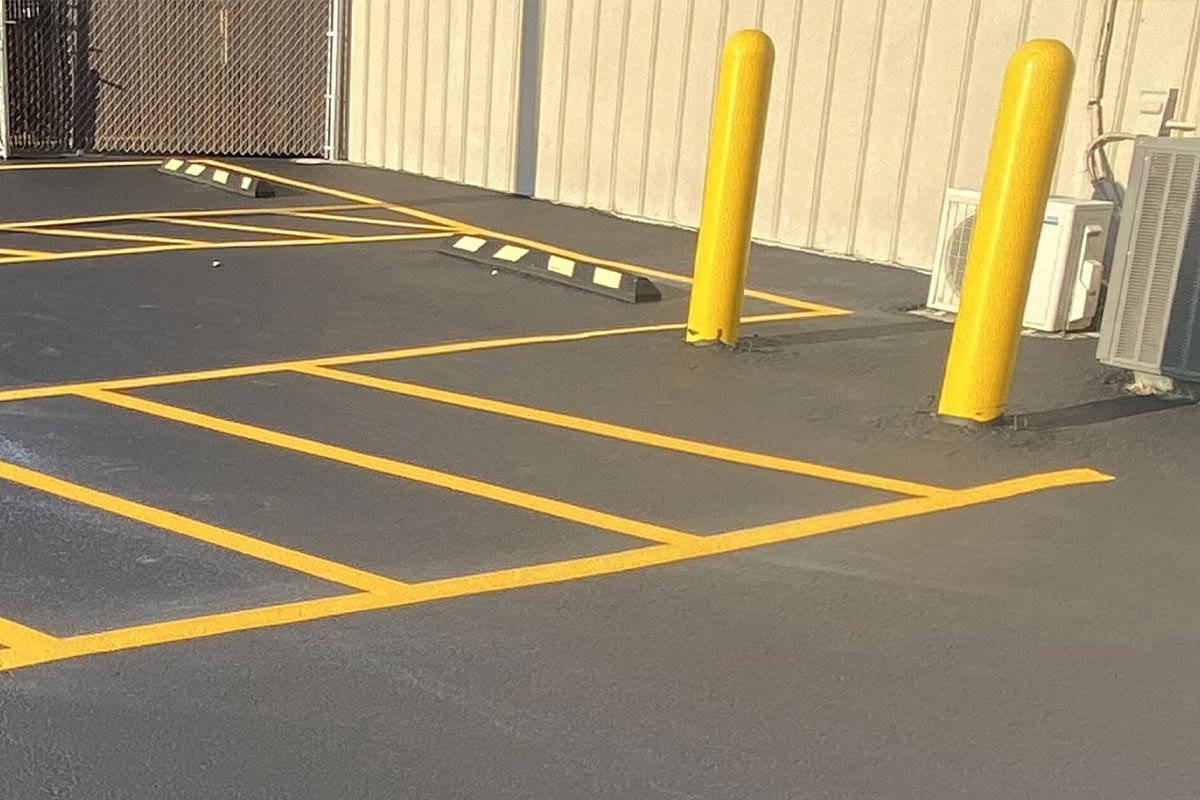
Bollard Installation in South Denver, CO
Bollards are the sturdy vertical posts that protect buildings, people, and equipment from vehicle impact. Set in front of a storefront, a drive-through, or a fuel or utility installation, they stop a vehicle from jumping a curb or an accelerator mistake from turning into a crash through the glass. 1-800-STRIPER of South Denver installs protective bollards for retail centers, restaurants, storefronts, and industrial properties across the south Denver metro and the Colorado Springs area. We install new bollards where a property needs impact protection and replace units that have been hit or corroded. Good bollard installation is mostly about what you cannot see — how deep the post is set and how it is anchored — because that is what determines whether a bollard actually stops a vehicle or just marks a spot.
Where Bollards Protect Property
Bollards earn their place at the points where vehicles and vulnerable targets meet. Storefront glass and entrances are the classic case, where a bollard line prevents a vehicle from entering the building. Drive-throughs use them to protect order points, menu boards, and pickup windows. Fuel dispensers, propane cages, electrical transformers, gas meters, and fire risers all need protection from careless backing and turning. Pedestrian areas — outdoor seating, walkways, ATM and kiosk locations — use bollards to separate people from traffic. Loading docks and building corners take repeated low-speed hits that bollards absorb instead of the structure. We survey your property for these exposure points and place bollards where the risk actually is.
Impact-Protection Standards
Bollards are engineered products, and the standards behind them describe how they perform under impact. ASTM F3016 covers the testing of impact-protection devices at the low speeds typical of a parking lot, and ASTM F2656 covers the higher-speed crash testing used for security barriers around sensitive sites. These standards define the reference framework for what different bollards are built to withstand. The right bollard for a job depends on what it is protecting and the speeds involved — a storefront in a low-speed lot has different needs than a security perimeter. We help you match the bollard type and installation to the exposure, and set each one at the depth and anchoring the application calls for so it performs as intended.
Our Bollard Installation Process
Good bollard installation is mostly about what you cannot see — the depth and the anchoring — so we work in that order.
- Survey the property for exposure points where vehicles and vulnerable targets meet — storefronts, drive-throughs, fuel and utility installations, and pedestrian areas.
- Match the bollard type and installation to the exposure and the speeds involved, referencing the ASTM F3016 and F2656 frameworks for what a device is built to withstand.
- Set each post at the depth and anchoring the application calls for, since that is what determines whether a bollard stops a vehicle or just marks a spot.
- Fill and finish the bollard, and confirm it is plumb and secure.
For a full list of our pavement marking services, visit our parking lot striping in South Denver page.
Businesses We Serve




How it Works

GET A FREE ESTIMATE
Contact us today and we’ll have a quote to you in 24 hours

SCHEDULE AN INSTALLATION
We’ll have your installation scheduled in less than 7 days, without affecting your business hours

GET A PARKING LOT THAT POPS
For a budget-friendly price, you’ll get a parking lot that looks like new
We proudly work with:


We proudly work with:


Frequently Asked Questions About Bollard Installation in South Denver, CO
What is a bollard and what does it protect?
A bollard is a sturdy vertical post installed to stop or redirect vehicles and protect people, buildings, and equipment from impact. In a commercial setting, bollards guard storefront glass and entrances, drive-through order points, fuel dispensers, utility equipment like transformers and gas meters, and pedestrian areas such as outdoor seating. They turn a driver’s mistake — a misjudged pull-in or a pedal error — into a stopped vehicle instead of a crash through a wall. The protection comes from a strong post properly set into the ground, which is why installation depth and anchoring matter so much.
Where are bollards typically installed?
At the points where a vehicle could hit something valuable or dangerous. The most common locations are in front of storefront glass and entrances, around drive-through order and pickup points, at fuel dispensers and propane cages, and around electrical transformers, gas meters, and fire risers. Bollards also protect pedestrian zones like outdoor dining and walkways, and they shield loading-dock corners and building columns from repeated low-speed contact. We survey a property to find its real exposure points — where the lot’s geometry puts vehicles on a path toward people or structures — and place bollards there rather than scattering them.
What standards govern impact bollards?
Two ASTM standards frame how impact bollards are evaluated. ASTM F3016 addresses the testing of impact-protection devices at the low speeds typical of a parking lot, which is the relevant reference for most storefront and drive-through protection. ASTM F2656 covers higher-speed crash testing used for security barriers around sensitive facilities. These standards describe the performance framework manufacturers test their products against. The right choice depends on what you are protecting and the speeds involved, so we match the bollard type and its installation to your specific exposure rather than treating every location as the same problem.
How deep are bollards set and how are they anchored?
It depends on the bollard type and what it is protecting, but a bollard’s strength comes largely from how it is embedded. Fixed protective bollards are commonly set into a drilled or excavated footing and secured — often a steel pipe embedded in concrete, sometimes filled with concrete itself — so the post resists impact rather than snapping or tipping. Surface-mounted and removable bollards use base plates anchored to the pavement for lighter-duty or flexible applications. We determine the appropriate installation method for your site so each bollard is set to do its job.
Can bollards be removable or decorative?
Yes. Beyond fixed protective posts, bollards come in removable and retractable versions for openings that need to allow occasional vehicle access, and in decorative styles or with architectural covers that dress up a storefront while still providing protection. Many properties combine functions — a protective steel post inside a decorative sleeve, for example, gives you both curb appeal and impact resistance. Removable bollards suit fire lanes and service access points that must open sometimes but stay controlled otherwise. We can install fixed, removable, or decorative bollards depending on whether the priority is maximum protection, flexible access, or appearance.
Do storefronts need bollards by code?
It depends on the jurisdiction and the specific use, so there is no single across-the-board rule. Some local building and fire codes require protective posts around particular hazards — fuel dispensers, gas meters, and certain equipment are common examples — and some retailers adopt bollards as a standard safety measure regardless of code. Storefront protection against vehicle incursion is often driven by insurance and risk management as much as by code. Rather than assert a blanket requirement, we look at what your property and jurisdiction call for and recommend protection where it reduces a real risk to people and structures.