Warehouse Line Painting
In South Denver, CO
OSHA-Compliant Safety Markings
1-800-STRIPER provides professional warehouse line painting in South Denver, CO — striping aisle lines, pedestrian walkways, forklift routes, and safety zone markings per OSHA 29 CFR 1910.176(a) for industrial and distribution facilities.
1-800-STRIPER® of South Denver PROVIDes Warehouse Floor Markings Services NEAR YOU
Want your indoor space to operate more efficiently?
Warehouse and interior markings ensure clear traffic lanes, organized storage zones, and designated spaces designed to help your business operate safely and efficiently.
Benefits:
Warehouse Line Painting in South Denver, CO
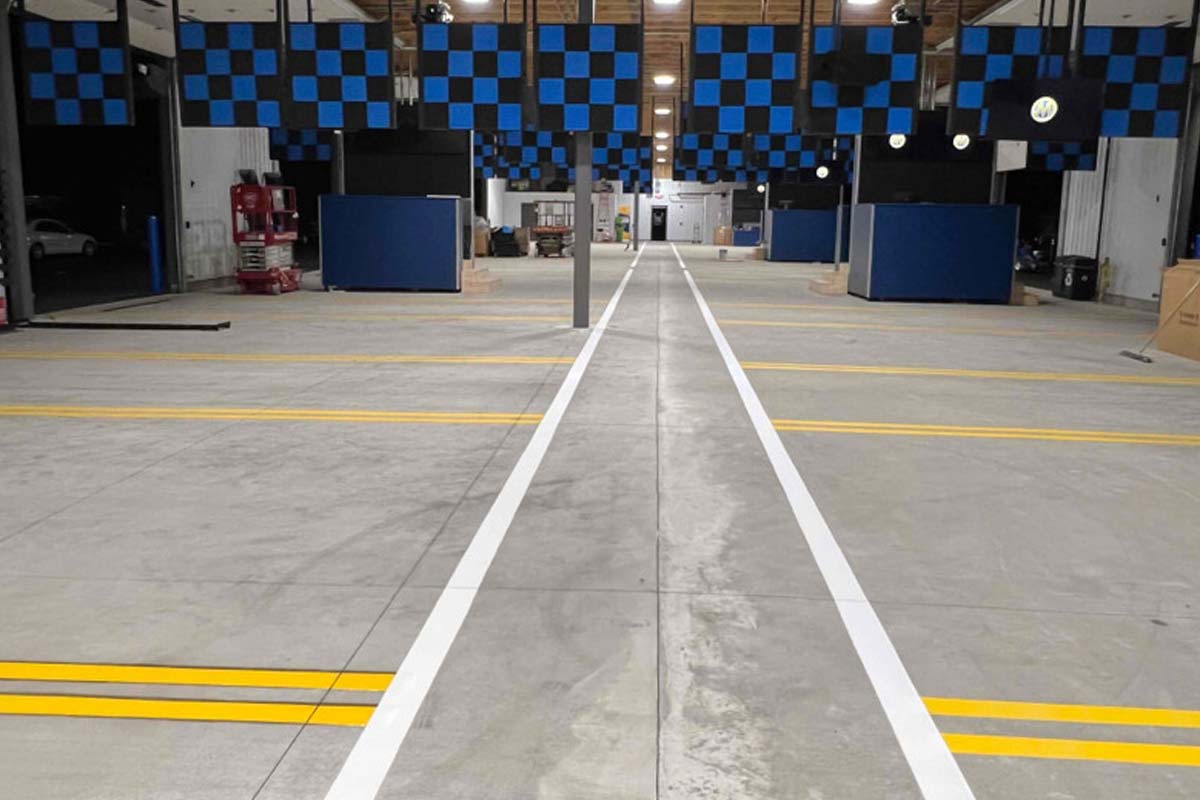
Warehouse line painting marks the floor of an industrial building so people, forklifts, and inventory each have a defined place. Clear aisle lines, pedestrian walkways, forklift routes, and staging or hazard zones keep a busy facility organized and cut the risk of a pedestrian-equipment collision. 1-800-STRIPER of South Denver stripes distribution centers, manufacturing plants, and cold-storage facilities across the south Denver metro and the industrial corridors toward Colorado Springs. Because warehouse floors take constant forklift traffic and pallet drag, we use coatings built for that wear rather than standard parking-lot paint. Whether you are marking a new building, reorganizing a floor plan, or refreshing worn lines, we lay out the markings to match how your operation actually moves.
OSHA Aisle and Walkway Marking
Federal safety rules require permanent aisles and passageways in a workplace to be kept clear and marked. The governing provision is OSHA 29 CFR 1910.176(a), which states that permanent aisles and passageways shall be appropriately marked where mechanical handling equipment is used. What the rule does not do is dictate a specific line color or width — that detail is left to the employer, which is why consistency and good design matter more than any single number. We mark aisles wide enough for your equipment to pass safely and lay them out so pedestrian and forklift paths are visually distinct. Well-marked aisles also make housekeeping and inspection easier, since anything encroaching on a striped aisle is immediately obvious.
Floor-Marking Color Conventions
Although OSHA does not mandate specific floor-marking colors, most facilities follow a widely used convention so markings mean the same thing across a site. OSHA 29 CFR 1910.144 does set color rules for physical hazards — red for fire equipment and danger, yellow for caution and physical-hazard areas — and the voluntary ANSI Z535.1 safety-color standard rounds out the palette many plants adopt. In practice, that often means yellow for aisleways and general boundaries, red or another accent for fire and emergency equipment, and distinct colors for staging, hold, and quality zones. We help you pick a consistent scheme and apply it throughout, so a new hire reads the floor the same way a ten-year employee does.
Coatings for Industrial Floors
Warehouse floors punish paint that was never meant for them, so coating choice drives how long your lines last. High-traffic aisles and forklift turn zones wear far faster than a parking lot, and the wrong product powders or peels within months. Depending on the surface and the traffic, we use durable traffic-grade paints or tougher epoxy-based coatings that bond to sealed concrete and resist abrasion, tire scuffing, and cleaning chemicals. Surface prep is half the job: concrete has to be clean and dry for the coating to grip, so we prepare the floor before we mark it. Matching the coating to the traffic keeps you from repainting the same aisle every year.
Our Warehouse Marking Process
We plan the layout before touching the floor, because a warehouse grid has to match the way material moves, not just look tidy.
- Walk the facility with your team to map racking, dock doors, work cells, and pedestrian routes.
- Lay out aisles, walkways, and zones that reflect how traffic actually moves through the building.
- Mask and apply markings in sequence — scheduling around your operation, including nights and weekends — so sections of the floor stay usable and downtime stays low.
- Confirm every line, symbol, and zone boundary is sharp and correctly placed after the coating cures.
The finished floor gives operators and pedestrians clear, consistent guidance shift after shift.
Facilities We Serve
The southern Denver and Colorado Springs corridor is dense with warehousing, light manufacturing, and distribution, and each type of facility marks its floor differently. Distribution and fulfillment centers need clear pick aisles, dock-staging lanes, and pedestrian crossings that keep foot traffic away from forklifts. Manufacturing plants add work-cell boundaries, tool and cart locations, and quality-hold zones. Cold-storage and food facilities need coatings that tolerate wash-downs and temperature swings. We tailor the layout and the coating to the building and the operation, from a single high-traffic aisle refresh to a full-floor marking plan for a newly built distribution center.
For a full list of our pavement marking services, visit our parking lot striping in South Denver page.
Businesses We Serve




How it Works

GET A FREE ESTIMATE
Contact us today and we’ll have a quote to you in 24 hours

SCHEDULE A STRIPING
We’ll have your space restriped in less than 7 days, without affecting your business hours

GET A PARKING LOT THAT POPS
For a budget-friendly price, you’ll get a parking lot that looks like new
We proudly work with:


We proudly work with:

Frequently Asked Questions About Warehouse Line Painting in South Denver, CO
Does OSHA require aisle markings in a warehouse?
Yes. OSHA 29 CFR 1910.176(a) requires that permanent aisles and passageways be appropriately marked wherever mechanical handling equipment such as forklifts is used. The rule is about keeping those routes defined and clear so people and equipment do not conflict. It does not spell out a particular line color or width, which leaves the design to the employer — but the marking itself is expected. In practice, a facility that runs forklifts without marked aisles is an easy finding during an inspection, so clear, durable aisle lines are basic compliance as well as good safety practice.
What color should floor markings be?
OSHA does not require a specific color for aisle lines, so facilities follow convention for consistency. OSHA 29 CFR 1910.144 does set safety colors for hazards — red for fire-related equipment and danger, yellow for caution and physical-hazard areas — and the voluntary ANSI Z535.1 standard extends the palette many plants use. A common scheme marks general aisles and boundaries in yellow, fire and emergency equipment in red, and uses separate colors for staging, hold, and quality zones. We help you set one scheme and apply it across the whole floor so every color carries a clear meaning.
How wide should marked aisles be?
There is no single mandated aisle width; the right dimension depends on your equipment. OSHA 29 CFR 1910.176(a) calls for sufficient safe clearances for equipment and people rather than a fixed number, so a facility running wide reach trucks needs wider aisles than one with walk-behind pallet jacks. The practical approach is to size aisles for your largest routine load plus a safety margin, and to keep pedestrian walkways separated from forklift lanes. We measure your equipment and traffic during layout and mark aisles that give operators room to maneuver without clipping racking or people.
Epoxy or traffic paint — which lasts longer under forklift traffic?
Epoxy-based coatings generally outlast standard traffic paint in high-abuse areas because they bond hard to sealed concrete and resist abrasion, tire scuffing, and cleaning chemicals. Traffic-grade paint is faster to apply and reinstate and works well in lighter-traffic zones. The deciding factors are how heavy the forklift traffic is, whether the floor gets washed, and how much downtime you can give the coating to cure. We match the product to the zone — a tougher coating in the main forklift aisles, a faster paint where traffic is light — so you are not repainting constantly.
Can you mark the floor while we keep operating?
In most cases, yes. We sequence the work zone by zone and mask off small areas at a time so the rest of the floor keeps running, and we schedule around your shifts — including nights and weekends — when that limits disruption. The main constraint is cure time: a freshly coated aisle has to set before forklifts cross it, and epoxy coatings need longer than paint. We plan the sequence with your operations team so each section reopens on schedule and you never lose the whole floor at once.
What areas of a warehouse should be marked?
The core markings are aisles and passageways, pedestrian walkways, and forklift routes, since those are the paths where people and equipment interact. Beyond that, most facilities mark staging and shipping lanes, hazard and equipment zones, quality-hold and quarantine areas, and the floor locations of fire extinguishers, eyewash stations, and electrical panels that must stay clear. A consistent color scheme ties it together. We walk your operation to identify which zones matter for your workflow and safety program, then lay out a marking plan that reflects how the building actually runs.