Thermoplastic Striping
In South Denver, CO
Long-Lasting Pavement Markings
1-800-STRIPER provides professional thermoplastic striping in South Denver, CO — applying long-life, retroreflective pavement markings for high-traffic lots that stand up to Colorado’s freeze-thaw cycles and high-altitude UV, meeting AASHTO M249 material specifications.
1-800-STRIPER® of South Denver PROVIDes Thermoplastics Services NEAR YOU
Want to reduce the maintenance requirements for your parking lot?
Thermoplastic pavement markings are a durable, weather and vehicle-resistant striping option for your parking lot or facility.
You can utilize them for stop bars, ADA stalls, no-parking zones, directional arrows, crosswalks, or your entire parking lot.
Benefits:
Thermoplastic Striping in South Denver, CO
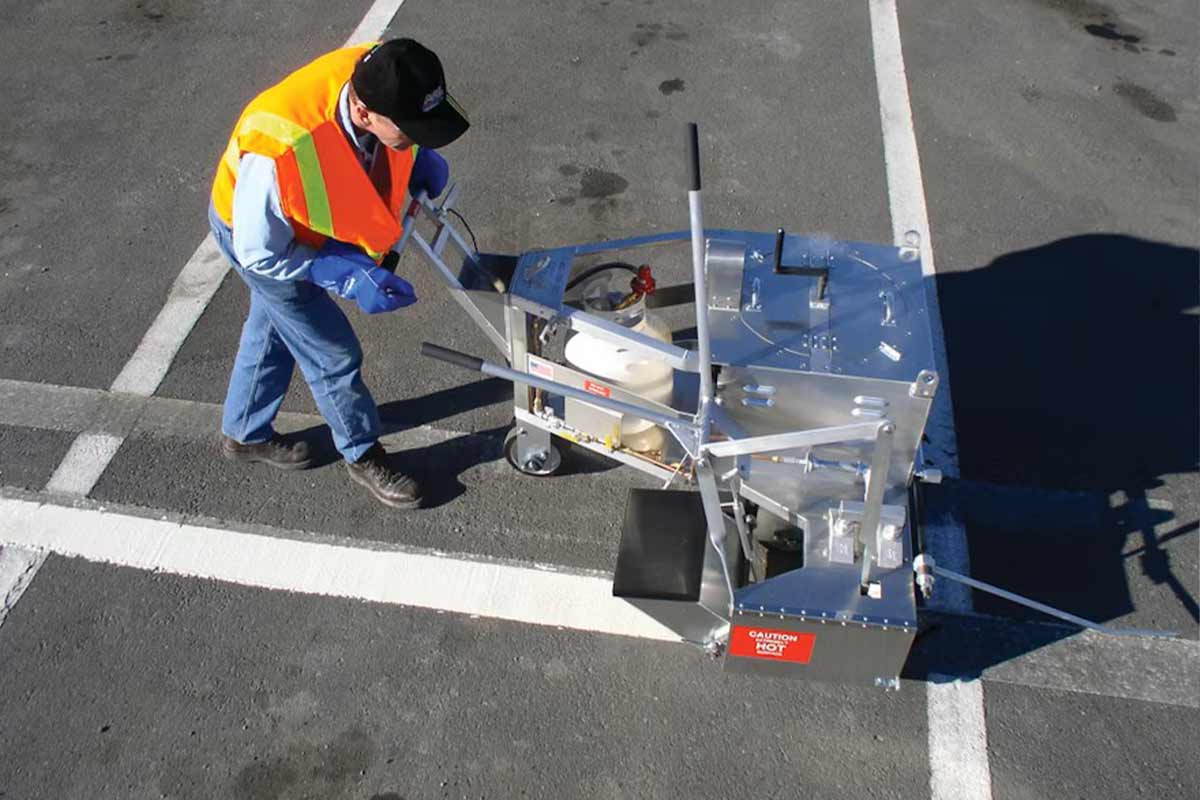
Thermoplastic striping lays down long-life pavement markings that outlast ordinary traffic paint by years. The material is applied hot and bonds into the pavement surface as it cools, forming a thick, durable marking with glass beads that make it retroreflective at night. 1-800-STRIPER of South Denver applies thermoplastic markings for high-traffic commercial lots, roadway-style drive aisles, crosswalks, and directional arrows across the south Denver metro and the Colorado Springs area. Thermoplastic costs more up front than paint, so it earns its place where durability and night visibility matter most — the busiest lanes, stop bars, and pedestrian crossings that would otherwise need frequent repainting. For lots that take heavy wear, the longer service life often makes thermoplastic the more economical marking over time.
Thermoplastic vs Paint
The choice between thermoplastic and traffic paint comes down to durability, cost, and where the marking lives. Traffic paint is less expensive per application, dries fast, and is easy to reinstate, which makes it the right tool for standard stall lines and markings that get refreshed on a normal cycle. Thermoplastic costs more to install but lasts far longer, resists abrasion from constant tire contact, and holds its retroreflectivity, so it shines in high-traffic drive aisles, crosswalks, stop bars, and arrows. On a busy lot, paying more once for thermoplastic in the high-wear zones can beat repainting the same lines every year with standard paint. We help you decide which markings justify thermoplastic and which are better served by paint.
Thermoplastic advantages: much longer service life, strong retroreflectivity from embedded glass beads, and high abrasion resistance in heavy traffic. Traffic-paint advantages: lower upfront cost, fast drying, and easy touch-up. The economical answer depends on traffic volume and how often a marking would otherwise need repainting.
Performance in Colorado’s Climate
Colorado’s conditions are exactly where a durable marking proves its worth. Markings on the Front Range face intense high-altitude ultraviolet light that fades pigment and a freeze-thaw cycle that stresses everything bonded to the pavement, along with winter plowing that scrapes raised markings. Thermoplastic’s thickness and hard bond stand up to abrasion and tire wear better than paint, and its embedded glass beads keep it visible at night and in the wet-and-dark conditions that follow a snow melt. Thermoplastic material follows the AASHTO M249 specification. The Colorado Department of Transportation sets its own pavement-marking specifications for state highways, and while those highway specs do not govern a private parking lot, they reflect the same durability logic that makes thermoplastic a strong choice for high-wear commercial surfaces in this climate.
How We Apply Thermoplastic
Thermoplastic goes down hot and bonds into the pavement, so surface preparation and sequencing matter.
- Prepare the pavement to a clean, sound surface, because thermoplastic bonds into the pavement itself rather than sitting on top like paint.
- Heat the thermoplastic material to its application temperature.
- Apply it to the marked lines with embedded glass beads that make the markings retroreflective at night.
- Let the material cool and bond into a thick, durable line, then inspect each marking for a clean, sharp edge.
For a full list of our pavement marking services, visit our parking lot striping in South Denver page.
Businesses We Serve




How it Works

GET A FREE ESTIMATE
Contact us today and we’ll have a quote to you in 24 hours

SCHEDULE AN INSTALLATION
We’ll have your installation scheduled restriped in less than 7 days, without affecting your business hours

GET A PARKING LOT THAT POPS
For a budget-friendly price, you’ll get a parking lot that looks like new
We proudly work with:


We proudly work with:

Frequently Asked Questions About Thermoplastic Striping in South Denver, CO
What is thermoplastic striping and how is it different from paint?
Thermoplastic is a pavement-marking material applied hot, which bonds into the pavement surface as it cools to form a thick, durable line — quite different from traffic paint, which dries as a thin film on top of the pavement. Thermoplastic markings contain glass beads that make them retroreflective, so they shine back at headlights at night. The result is a marking that lasts far longer and stays more visible than paint, at a higher upfront cost. Thermoplastic follows the AASHTO M249 material specification and is used where durability and night visibility matter most.
How long does thermoplastic last compared with paint?
Thermoplastic markings typically last several times longer than standard traffic paint, which is the main reason to choose them. A thermoplastic marking bonds thick and hard into the pavement and resists the tire abrasion that wears paint away, so in a high-traffic lane it can hold up for years where paint might need annual refreshing. Actual life depends on traffic volume, plowing, and sun exposure. The longer service life is what can make thermoplastic more economical over time in high-wear areas, even though it costs more to install than paint does per application.
Does thermoplastic hold up to Colorado’s freeze-thaw and UV?
It holds up well, which is part of why it suits the Front Range. Colorado’s intense high-altitude ultraviolet light fades ordinary paint pigment quickly, and the freeze-thaw cycle plus winter plowing stress every marking. Thermoplastic’s thickness and hard bond resist abrasion and tire wear better than paint, and its embedded glass beads keep it reflective through the wet, dark conditions that follow snowmelt. No marking is immune to plow blades on raised lines, but in high-traffic commercial settings thermoplastic generally outlasts paint by a wide margin in this climate, which is exactly where its higher upfront cost pays off.
Is thermoplastic more reflective at night?
Yes. Thermoplastic markings contain glass beads embedded in the material that reflect vehicle headlights back toward the driver, a property called retroreflectivity. That makes thermoplastic lines, arrows, and crosswalks noticeably more visible at night and in wet conditions than standard paint, which loses contrast in the dark. The reflectivity is built into the material rather than added as a separate step, and it lasts as long as the marking wears evenly. For crosswalks, stop bars, and drive aisles where nighttime and wet-weather visibility matter for safety, that retroreflectivity is a major reason owners choose thermoplastic.
Where is thermoplastic worth the extra cost?
Thermoplastic earns its higher price in the highest-wear and highest-visibility parts of a lot — the main drive aisles that take constant tire contact, crosswalks and stop bars where pedestrian safety matters, and directional arrows that guide traffic. In those spots, the durability and night reflectivity justify the cost, and the longer life can beat repainting paint every year. Standard stall lines in lower-traffic areas are usually fine in traffic paint. A common approach uses thermoplastic for the high-traffic and safety-critical markings and paint elsewhere, which balances cost against durability. We help you target thermoplastic where it pays off.
Can thermoplastic be applied over existing paint?
It is best applied to a clean, sound pavement surface rather than over old paint, because thermoplastic needs to bond to the pavement itself to perform and last. Existing paint, dirt, and oil interfere with that bond, so surface preparation is part of the job — we clean the surface and remove or account for old markings before applying thermoplastic. On a lot with heavy paint buildup, that prep determines whether the new markings hold. We handle the preparation so the thermoplastic bonds properly and delivers the long life it is meant to.