
Temporary Parking Lot Striping
In SW Houston, TX
Event and Construction Markings
1-800-STRIPER provides professional temporary parking lot striping in SW Houston, TX — short-duration event markings, construction-phase layouts, and overflow parking on grass, gravel, pavement, or any surface using removable water-based traffic paint.
1-800-STRIPER of SW Houston PROVIDes Temporary Parking Lot Striping Services NEAR YOU
Need Temporary Stripes?
Use temporary stripes to direct traffic and create parking areas at your special event or to keep construction sites safe without a long-term commitment. We paint on grass, gravel, pavement, or any other surface where temporary striping is needed.
Striping solutions for:
Temporary Parking Lot Striping in SW Houston, TX
Sometimes a property needs parking that will not exist next month. A festival, a graduation, a revival, a rodeo weekend, a construction phase that swallows half the lot, a tenant move-in, a seasonal sales event — all of them need vehicles organized, and none of them justify permanent paint.
We lay out and mark temporary parking across Fort Bend, Brazoria, Harris and Galveston counties for churches, schools, event venues, retail centers, contractors, municipalities and property managers. The work is planned to come back up when the need ends, on whatever surface the parking is actually happening on.
Event and Overflow Parking on Any Surface
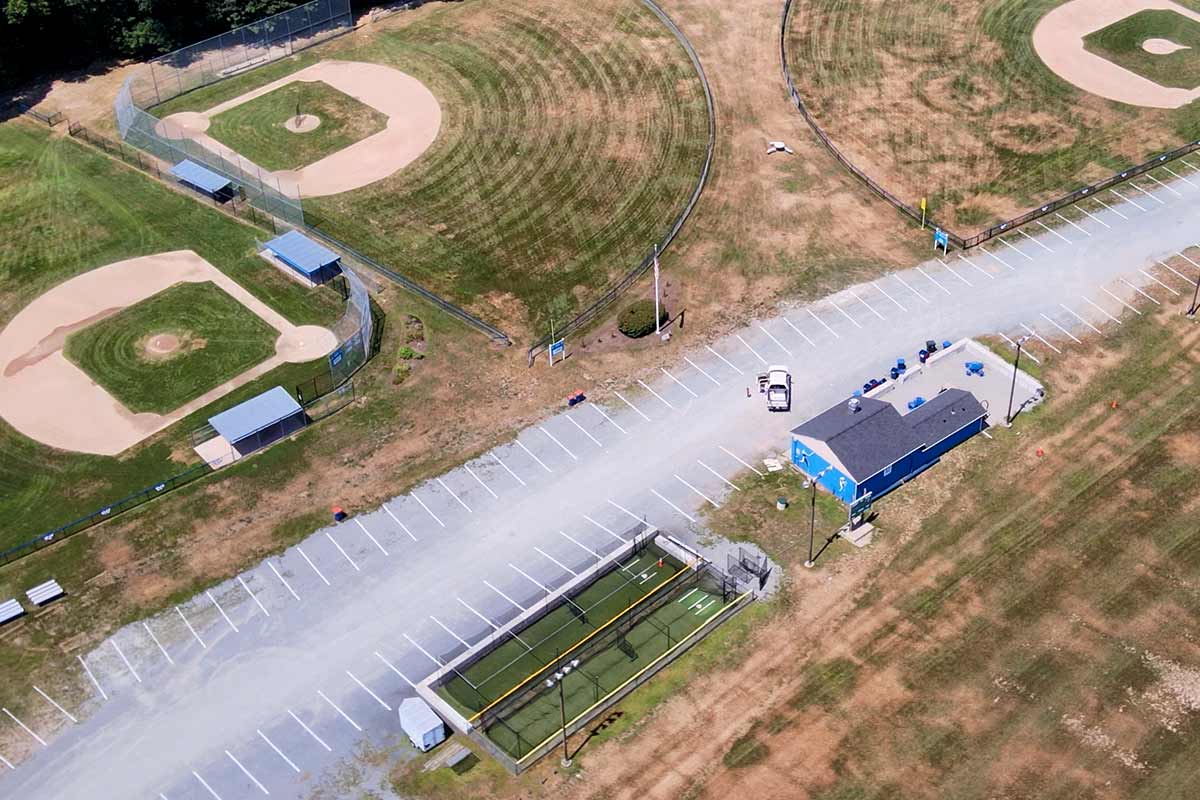
Overflow parking rarely happens on finished pavement. It happens on the grass field behind the building, the gravel lot next door, the graded pad that has not been paved yet, or the back half of a lot that is normally something else.
We mark on all of them — grass, gravel, pavement, or any surface the parking is going on. Each behaves differently: turf takes a marking that sits on the blade and needs re-marking if it is mown mid-event, gravel needs a heavier application and wider lines to read at all against a broken surface, and compacted dirt or crushed base sits somewhere between the two. Finished asphalt and concrete are the easy cases.
What we lay out is the same regardless of surface: stall rows, drive aisles, entry and exit routing, one-way flow, pedestrian paths from the parking area to the venue, accessible spaces and their access aisles, and reserved or staff areas.
Construction-Phase and Interim Layouts
A renovation or expansion usually takes the parking before it takes the building. Interim layouts keep a property trading through that.
The work covers phase-by-phase parking plans that shift as the job moves, interim accessible parking when the permanent spaces are inside the work zone, contractor and delivery staging separated from customer parking, temporary fire lane routing where the permanent one is obstructed, and pedestrian routes around the work area.
The distinguishing feature of construction-phase marking is that it changes. A layout that has to be re-marked three times over a six-month job is a normal outcome, not a failure, and it is planned that way from the start rather than treated as rework.
Removable Paint and How It Comes Back Up
Temporary marking uses water-based removable traffic paint rather than the durable products used on a permanent lot. It is designed to be legible for the period you need it and to come off without damaging what is underneath.
Removal depends on the surface. On pavement it is typically pressure washed off, sometimes with a cleaning agent, and the residue managed rather than washed to the nearest inlet. On grass it weathers and mows out. On gravel it disappears as the surface is disturbed by use.
Longevity is the trade-off, and it is worth being clear-eyed about it. Removable paint is not durable paint. It is affected by rain, sun and traffic, and on a Gulf Coast summer weekend a heavy storm can take a meaningful bite out of a marking laid down two days earlier. For anything running longer than a season, permanent striping with a planned change is usually the better answer, and we will say so.
Laying Out an Overflow Lot
- Walk the area with you. We look at the actual surface, the slope, the drainage, the access points and how vehicles will arrive.
- Set capacity and geometry. Stall size and angle are chosen for the surface and the vehicle mix; an event field with attendants parks tighter than a self-park lot.
- Plan circulation. Entry, exit, one-way routing and a way to empty the area under load — the part that decides whether the last hour is orderly.
- Place accessible parking. Accessible spaces and access aisles are located on the shortest route to the entrance, on the firmest available surface.
- Route pedestrians. Marked walking routes from the parking area to the venue, kept clear of the vehicle path.
- Mark it. Layout is chalked, checked and painted in removable material.
- Remove or refresh. We come back to take it up, or to re-mark it for the next phase.
For a full list of our pavement marking services, visit our parking lot striping in SW Houston page.
Businesses We Serve




How it Works

GET A FREE ESTIMATE
Contact us today and we’ll have a quote to you in 24 hours

SCHEDULE A STRIPING
We’ll have your space restriped in less than 7 days, without affecting your business hours

GET A PARKING LOT THAT POPS
For a budget-friendly price, you’ll get a parking lot that looks like new
We proudly work with:


We proudly work with:


Frequently Asked Questions About Temporary Parking Lot Striping in SW Houston, TX
Do you need a permit for temporary parking lot striping?
Marking your own surface generally does not require a permit. What can require one is the use — opening a field or an unpaved area to event parking, or changing traffic patterns onto a public street, may need approval from your city or county, and requirements differ across Fort Bend, Brazoria, Harris and Galveston counties. Large events often need a permit covering parking and traffic control as a whole. We recommend checking with your jurisdiction early, since approval timelines set the schedule.
Can you stripe on grass or gravel?
Yes — grass, gravel, pavement or any surface the parking is happening on. Each behaves differently. Turf marking sits on the blade and needs re-marking if the field is mown mid-event; gravel needs a heavier application and wider lines to read against a broken surface; compacted dirt and crushed base fall between them. We choose the application for the surface after walking it, because a marking that reads well on asphalt can be nearly invisible on loose gravel.
How long does temporary striping last?
Long enough for the event, and not much longer by design. Temporary parking lot striping uses removable water-based paint formulated to come back up, so it is deliberately less durable than permanent traffic paint and is affected by rain, sun and traffic. A single weekend is comfortable; several weeks is achievable on pavement in dry conditions; a Gulf Coast thunderstorm can noticeably degrade a fresh marking overnight. For anything running past a season, permanent striping is usually the better value and we will tell you so.
How is temporary striping removed?
It depends on the surface. On pavement, temporary parking lot striping is normally pressure washed off, sometimes with a cleaning agent, with the wash water contained and managed rather than sent to a storm inlet. On grass, it weathers and mows out over a few cuts. On gravel and compacted base it disappears as the surface gets disturbed by ordinary use. We can schedule removal as part of the job so the property returns to its normal state on a date you set.
Does a temporary lot still need accessible spaces?
Plan for it. Where you are providing parking for the public, accessible parking is part of providing it, and an event lot with no accessible spaces is a problem regardless of how long it exists. Practically, that means accessible spaces on the firmest, most level available surface, positioned on the shortest route to the entrance, with access aisles marked beside them and a route to the venue that does not require crossing soft ground. We lay that out first, not last.
Can you mark a construction-phase layout that changes as the job moves?
Yes, and that is how most construction parking actually works. We plan the layout in phases and re-mark as the work zone moves, so each stage has a defined parking area, defined circulation, interim accessible spaces where the permanent ones are inside the work zone, and separated contractor staging. Re-marking two or three times across a long job is expected rather than a fault, and pricing the job in phases from the start avoids surprises later.