Fire Lane Striping
In South Denver, CO
Code-Compliant Fire Lane Markings
1-800-STRIPER provides professional fire lane striping in South Denver, CO — marking fire lanes, curbs, and no-parking zones per International Fire Code Section 503 as adopted and enforced by local fire authorities across the south Denver metro and Colorado Springs.
1-800-STRIPER® of South Denver PROVIDes Fire Lane Striping Services NEAR YOU
Is your parking lot ready for first responders?
Our team is well-versed in local fire regulations and will parter with you to design a fire lane striping plan that creates unobstructed emergency access to protect your customers and property.
Core Services:
Fire Lane Striping in South Denver, CO
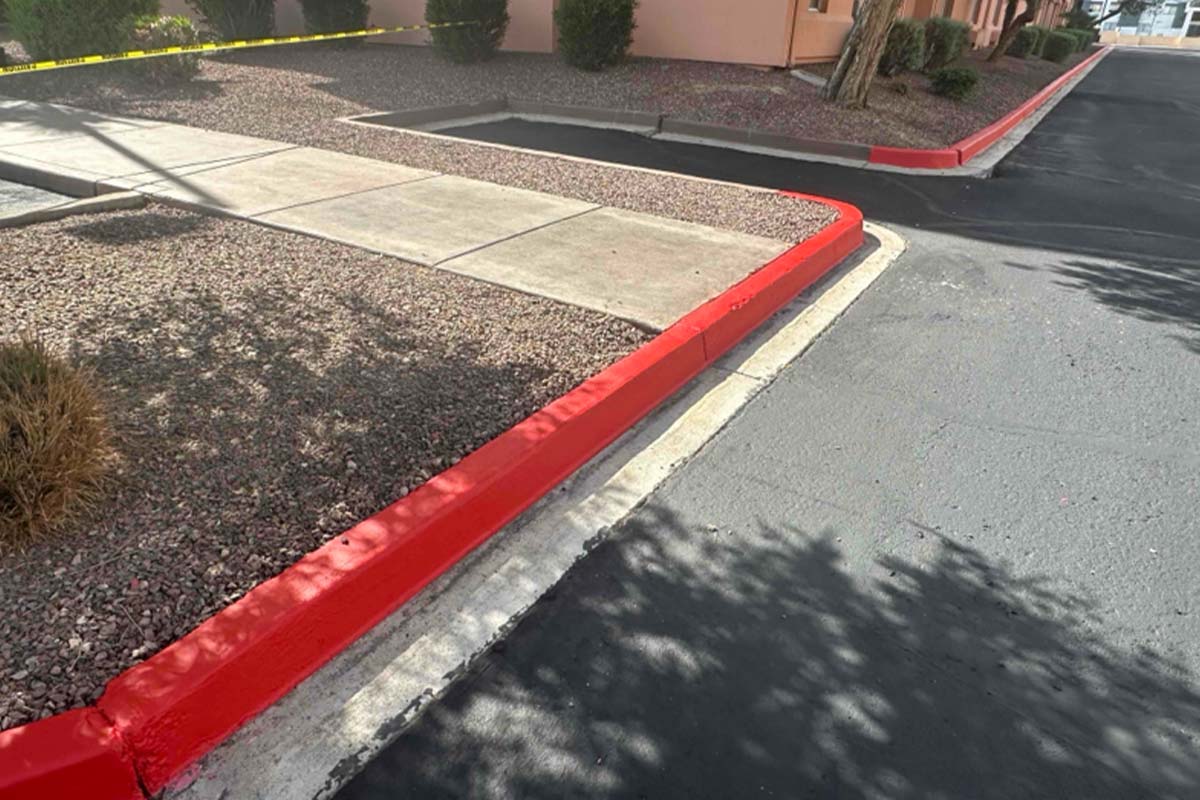
Fire lane striping marks the routes and zones that must stay clear for emergency vehicles on a commercial property. Red curbs, painted no-parking legends, and access-road markings tell drivers where they can never park, and they give the fire department the room it needs to reach a building. 1-800-STRIPER of South Denver marks fire lanes for retail centers, apartment communities, industrial sites, and institutional properties across the south Denver metro and the Colorado Springs area. Fire access is a life-safety issue and a code requirement, so the markings have to match what the local fire authority expects. We stripe fire lanes, paint curbs, and install the accompanying signage so a lot reads clearly to drivers and passes inspection with the authority having jurisdiction.
Fire Apparatus Access Requirements
Fire lanes exist so that fire trucks can reach and work around a building, and the requirements come from the fire code. The International Fire Code Section 503 governs fire-apparatus access roads — their required width, vertical clearance, and the marking and signage that keep them clear — and Colorado jurisdictions enforce it through their adopted fire codes. Denver, for example, applies its own fire code based on the International Fire Code, and southern jurisdictions such as Colorado Springs and El Paso County enforce the same family of requirements through their building and fire authorities. Because the authority having jurisdiction can set specific local details, we confirm the marking and signage your fire department requires before we stripe, so the finished lot satisfies the office that will actually inspect it.
Curb Marking and No-Parking Zones
The visible core of fire lane striping is the curb marking and the painted legend. Fire lanes are typically marked with red curb paint and NO PARKING FIRE LANE legends stenciled at intervals along the lane, so the restriction is obvious from any point. The exact color, wording, and spacing follow what the local authority having jurisdiction specifies, which is why we confirm those details rather than assume them. We paint curbs, stripe the access lanes, and add the legends so the zone is unmistakable. Clear, well-maintained fire-lane markings do double duty — they keep the access clear in an emergency and they give property management the standing to enforce no-parking rules day to day.
Local Fire Code Enforcement
Fire codes are enforced locally, and the office that inspects your property is the authority having jurisdiction — usually the fire marshal or fire department for your city or county. That local control matters across a service area as wide as the southern Denver region, because Denver, Douglas County, Colorado Springs, and El Paso County each administer fire access through their own authorities even though they draw on the same International Fire Code framework. A marking that satisfies one jurisdiction’s fire marshal should be confirmed against yours. We work to the standard your local authority applies, and where a property has been cited or is preparing for inspection, we mark the fire lanes to bring it into line with what that office requires.
How We Mark Fire Lanes
Because the details are set locally, we mark fire lanes in an order that keeps the finished lot inspection-ready.
- Confirm the marking and signage your fire department requires before we stripe, since the authority having jurisdiction can set specific local details.
- Paint the fire-lane curbs in the color the authority specifies, typically red.
- Stencil NO PARKING FIRE LANE legends at intervals along the lane so the restriction is obvious from any point.
- Install the accompanying upright signage that supports enforcement and towing.
- Verify the finished markings against what your local authority applies, so the lot satisfies the office that will inspect it.
For a full list of our pavement marking services, visit our parking lot striping in South Denver page.
Businesses We Serve




How it Works

GET A FREE ESTIMATE
Contact us today and we’ll have a quote to you in 24 hours

SCHEDULE AN INSTALLATION
We’ll have your installation scheduled in less than 7 days, without affecting your business hours

GET A PARKING LOT THAT POPS
For a budget-friendly price, you’ll get a parking lot that looks like new
We proudly work with:


We proudly work with:
Frequently Asked Questions About Fire Lane Striping in South Denver, CO
What does the fire code require for fire lanes?
The International Fire Code Section 503 governs fire-apparatus access roads — it sets requirements for their width, vertical clearance, and the marking and signage that keep them unobstructed. The core idea is that fire trucks must be able to reach and work around a building at all times, so designated fire lanes have to stay clear and be clearly marked. Colorado jurisdictions enforce these requirements through their adopted fire codes. Because the authority having jurisdiction can specify local details like curb color and legend spacing, we confirm your fire department’s requirements before striping so the markings pass inspection.
Who enforces fire lanes in the south Denver area?
Fire lanes are enforced by the authority having jurisdiction — typically the fire marshal or fire department for your city or county. Across the southern Denver region that means different offices depending on where the property sits: Denver, Douglas County, Colorado Springs, and El Paso County each administer fire access through their own authorities, even though they build on the same International Fire Code. That is why a fire-lane marking should be confirmed against your local authority rather than assumed. We work to the standard your jurisdiction applies so the finished markings satisfy the office that will inspect them.
What color and legend do fire-lane curbs use?
Fire lanes are most commonly marked with red curb paint and NO PARKING FIRE LANE legends stenciled at intervals along the lane, but the exact color, wording, and spacing are set by the local authority having jurisdiction. Some jurisdictions specify particular legend text, letter height, or spacing between markings. Because those details vary, we verify what your fire department requires before we paint rather than applying a generic pattern. The goal is a marking that is unmistakable to drivers and that matches exactly what your local fire authority will look for during an inspection.
How wide must a fire-apparatus access road be?
The International Fire Code Section 503 sets minimum widths and vertical clearances for fire-apparatus access roads so fire trucks can pass and operate, and the base requirement is an unobstructed width adequate for apparatus with additional width where needed for larger buildings. The authority having jurisdiction can require more based on the property. Because the specifics depend on your building and your local fire code, the width that applies to your lot is best confirmed with your fire authority. When we lay out or mark fire lanes, we keep the designated access route clear to the width your jurisdiction requires.
Do fire lanes need signs as well as curb paint?
Usually, yes. Most jurisdictions require upright NO PARKING FIRE LANE signage in addition to painted curbs and pavement legends, because signs are visible when a vehicle is already parked in the lane and they support enforcement and towing. The International Fire Code Section 503 addresses both marking and signage for fire-apparatus access roads, and the authority having jurisdiction specifies the sign type and placement. We install compliant fire-lane signage along with the curb and pavement markings so the restriction is clear from every angle and the property has the standing to keep the lane clear.
How often must fire-lane markings be repainted?
There is no universal repaint interval, but fire-lane markings have to stay clearly visible to remain enforceable, so they are refreshed once the red curb paint or the legends begin to fade. Colorado’s sun and winter plowing wear curb paint faster than markings that sit flat on the pavement, so fire lanes often need attention sooner than general striping. The practical test is legibility: if a driver or an inspector cannot immediately read the fire lane, it is due. We refresh fire-lane markings on the same maintenance cycle as the rest of your lot so they never lapse.