WAREHOUSE FLOOR MARKINGS
IN SALT LAKE CITY, UT
Indoor Line Striping for Warehouses and Facilities
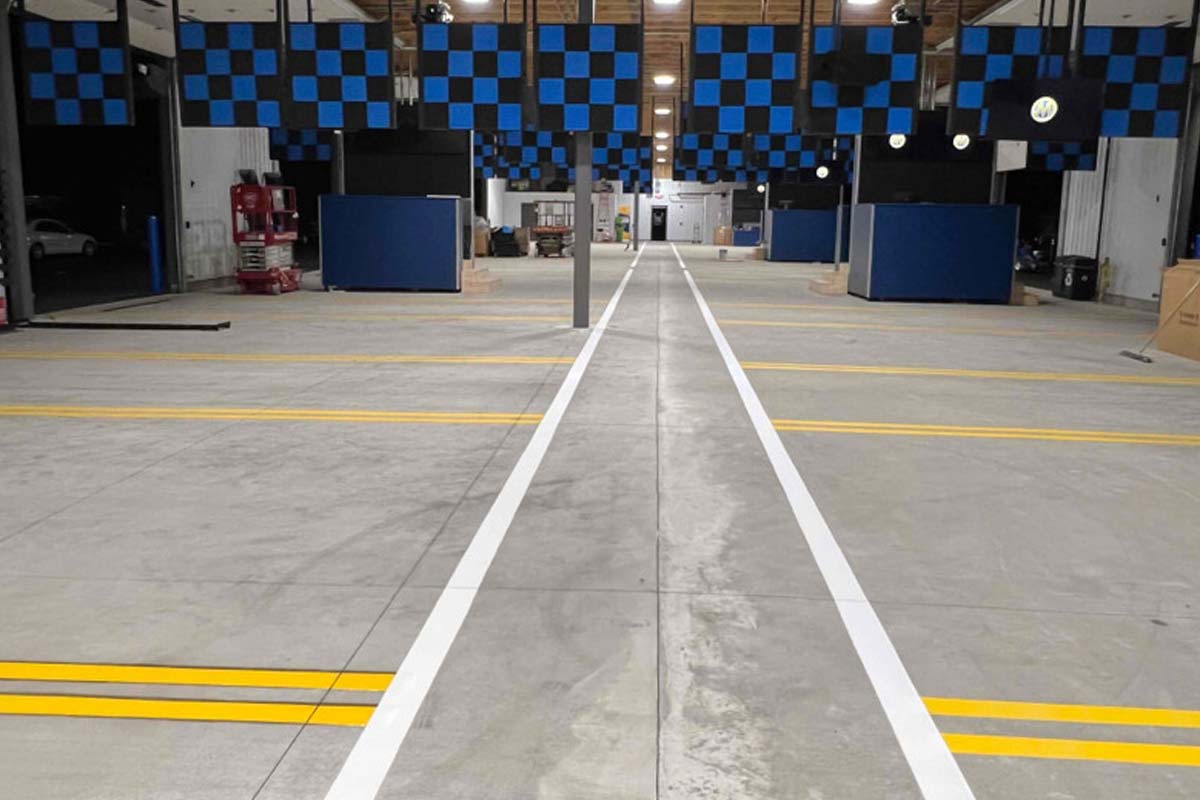
1-800-STRIPER® applies warehouse floor markings in Salt Lake City, UT — painting OSHA-compliant aisle lanes, hazard zones, and forklift paths for distribution centers and industrial facilities across the Salt Lake Valley. From precise warehouse striping to parking garage lines, we are committed to handling every job with dedication and attention to detail.
1-800-STRIPER® of Salt Lake City PROVIDes Warehouse Floor Markings Services NEAR YOU
Want your indoor space to operate more efficiently?
Warehouse and interior markings ensure clear traffic lanes, organized storage zones, and designated spaces designed to help your business operate safely and efficiently.
Benefits:
For a full list of our pavement marking services, visit our parking lot striping in Salt Lake City page.
Businesses We Serve




How it Works

GET A FREE ESTIMATE
Contact us today and we’ll have a quote to you in 24 hours

SCHEDULE A STRIPING
We’ll have your space restriped in less than 7 days, without affecting your business hours

GET A PARKING LOT THAT POPS
For a budget-friendly price, you’ll get a parking lot that looks like new
We proudly work with:


We proudly work with:

Frequently Asked Questions About Warehouse Floor Markings in Salt Lake City
Are warehouse floor markings required by OSHA?
OSHA standard 1910.22 requires that permanent aisles and passageways in warehouses be “appropriately marked.” The standard doesn’t specify exact colors or line widths, but requires that markings be clearly visible and consistently applied. Facilities with powered industrial trucks (forklifts) must mark pedestrian zones and vehicle traffic paths to prevent struck-by incidents — one of OSHA’s most frequently cited warehouse violations. In practice, most Salt Lake City warehouses follow ANSI/ASSP Z535 color guidelines alongside OSHA’s general duty requirements.
What do the different floor marking colors mean in a warehouse?
The ANSI standard color system used in most Utah warehouses: Yellow = traffic lanes, aisles, and pedestrian walkways. Red = fire safety equipment and emergency stop zones. Orange = hazardous or caution zones. Green = first aid, safety equipment, and exit routes. Blue = informational areas (equipment staging, storage). White = work cell boundaries and equipment locations. Red and white diagonal stripes = areas that must stay clear at all times (fire exits, emergency access). 1-800-STRIPER® applies the full color system to match your facility’s safety plan.
How should forklift lanes and pedestrian walkways be separated?
OSHA recommends a minimum 3-foot clearance between forklift traffic paths and pedestrian walkways. Standard practice in Salt Lake City warehouses is to mark forklift aisles in yellow with a separate pedestrian corridor, clearly distinguished by width and continuity. High-traffic crossing points should include diagonal hash lines or “LOOK” stenciling at pedestrian crossings. For facilities with frequent forklift and pedestrian interaction, a continuous marked pedestrian corridor — not just edge lines — significantly reduces near-miss incidents.
Should I use paint or floor marking tape for my warehouse?
Paint is the standard for permanent, high-traffic installations — properly applied traffic paint on sealed concrete lasts 2–4 years and holds up to forklift and pallet jack wear. Tape installs faster with zero dry time, but edges lift under repeated forklift wheel contact. It’s better suited for temporary layouts or areas subject to frequent reconfiguration. For most Salt Lake City warehouse facilities with established layouts, painted markings are the more durable and cost-effective long-term solution.
How often do warehouse floor markings need to be refreshed?
In active warehouses with daily forklift traffic, markings typically last 18–36 months before fading becomes a compliance or visibility concern. High-turn areas like receiving docks, main aisles, and pedestrian crossings wear faster than low-traffic storage zones. A good trigger: schedule a refresh when any safety-critical marking — pedestrian corridor, emergency exit path, hazard zone — drops below 50% visibility. Annual visual inspections after floor washing or equipment layout changes are best practice.
How much does warehouse floor marking cost in Salt Lake City?
A standard warehouse floor marking package for a mid-size facility (20,000–50,000 sq ft) in Salt Lake City typically runs ,500–,000 depending on linear footage, number of zones, stencil complexity, and floor condition. Small facilities or single-aisle refreshes can run 00–00. Facilities requiring full OSHA compliance packages with pedestrian corridors, hazard zones, equipment staging, and dock markings are quoted on square footage. Free estimates with a site visit — most SLC warehouses receive a quote within 24–48 hours.