
Parking Lot Pressure Washing
In Midwest Houston, TX
Surface Prep Before Restriping
1-800-STRIPER provides professional parking lot pressure washing in Midwest Houston, TX — removing dirt, oil stains, tire marks, and debris from lots, sidewalks, and loading docks while managing wash-water runoff under EPA stormwater (NPDES) requirements for commercial properties across Harris County.
1-800-STRIPER® of Midwest Houston PROVIDes Parking Lot Power Washing Services NEAR YOU
Need to blast away years of grime?
If your parking lot or parking garage looks dull and dirty, our professional crew can wash away grime, oil, stains, and slippery buildup to restore the appearance of your property.
Benefits:
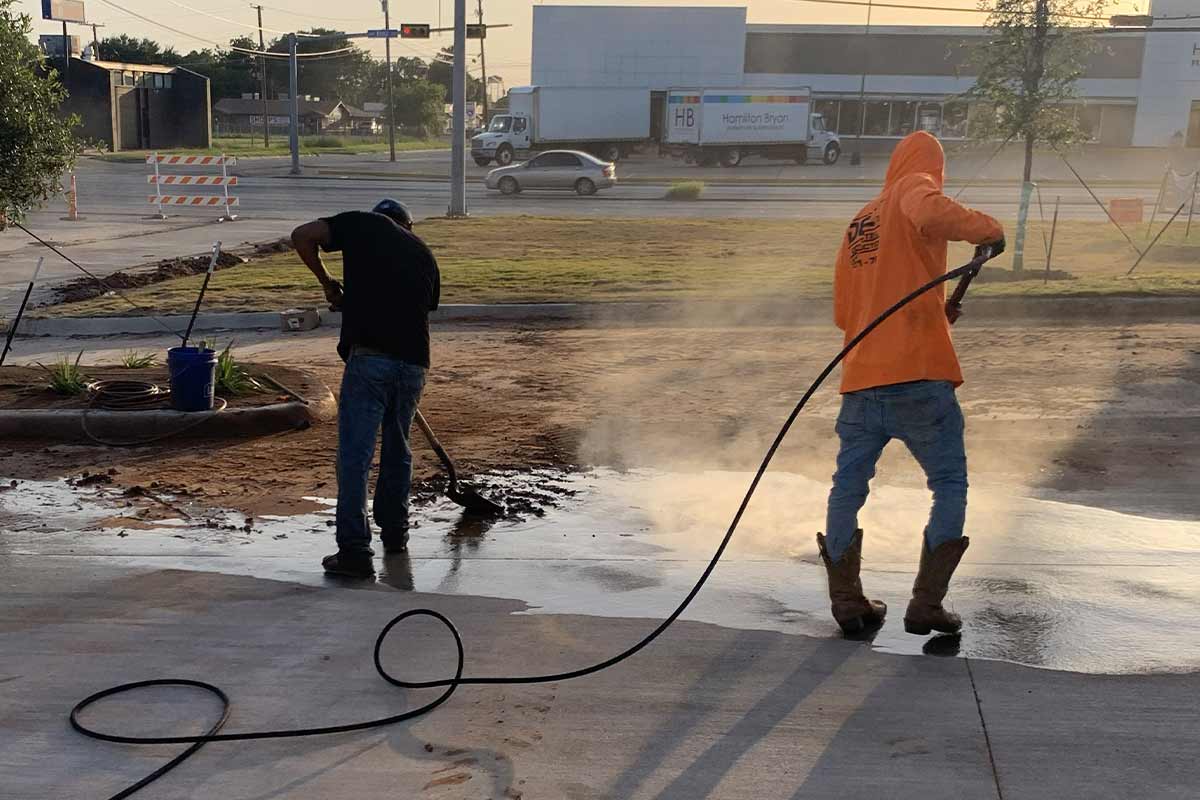
What Parking Lot Pressure Washing Removes
Pressure washing pulls a commercial lot back from grimy to clean: ground-in dirt and dust, oil and grease drips from parked cars, black tire scuffs, gum, bird droppings, and the mildew and algae that Houston’s heat and humidity grow on shaded pavement and north-facing walls. On the lot itself, it lifts the film that dulls the whole surface and makes even fresh striping look tired.
Some stains lift completely and some — a years-old oil saturation, for instance — soften and fade rather than vanish, and we will tell you which is which before we start rather than promise a like-new slab that the pavement cannot deliver.
Surfaces & Areas We Clean
We clean the whole commercial envelope, not just the parking field: the lot and drive aisles, sidewalks and entrance walkways, loading docks and ramps, dumpster pads and their aprons, and building exteriors and covered walkways where they meet the lot. Each surface takes a different approach — a delicate storefront walkway is not cleaned at the same pressure as a concrete dock pad — and we set the equipment and detergent to the surface so we clean it without etching or gouging it.
Dumpster pads and loading areas are usually the dirtiest and the ones a property manager most wants handled, because that is where grease, food waste, and staining collect.
Wash-Water Runoff & Stormwater Compliance
This is the part responsible operators get right and cut-rate crews ignore. Wash water from a parking lot carries oil, sediment, and detergent, and letting it run into a storm drain is a discharge problem. Houston prohibits non-stormwater discharges to its municipal storm sewer system under the City of Houston Code of Ordinances Chapter 47, Article XII; the state authority is the TCEQ TPDES stormwater program, which operates under the federal EPA NPDES framework.
In practice that means we manage the wash water rather than letting it sheet into the nearest inlet — controlling, containing, or directing it appropriately for the site so the cleaning does not create a stormwater violation. We frame this as runoff management, which is the operator’s real obligation, and we handle it as part of doing the job correctly.
Pressure Washing Before Restriping
Pressure washing is not only cleanup — it is the best surface prep there is before new paint. Traffic paint bonds to a clean, dry surface, and it will not hold on a lot coated in dust, oil film, or old residue. Washing the areas we are about to stripe lifts that film so the new lines key into the pavement and last, instead of peeling early off a dirty slab. When a customer books a restripe, a targeted wash of the marking areas is often the single thing that most improves how long the job lasts, which is why we frequently pair the two.
Our Pressure Washing Process
- Assess the surface and soiling. We identify the surfaces — lot and drive aisles, walkways, docks, dumpster pads — and the type of staining, from dirt and tire marks to oil and mildew, so each area gets the right treatment.
- Match pressure and method to the surface. We set the equipment, water temperature, and detergent to each surface so it cleans without etching concrete or lifting aggregate on aging asphalt.
- Contain and manage the wash water. We control, contain, or direct the runoff so it does not sheet untreated into a storm drain, following Houston’s stormwater rules (Code of Ordinances Chapter 47), TCEQ TPDES, and the federal EPA NPDES framework.
- Wash and rinse. We work through the lot, walkways, docks, and pads, lifting the film that dulls the surface and the staining that collects in the dirtiest areas.
- Confirm dry before striping. Where a restripe follows, we let the marking areas dry so the fresh paint bonds to a clean, dry surface.
For a full list of our pavement marking services, visit our parking lot striping in Midwest Houston page.
Businesses We Serve


How it Works

GET A FREE ESTIMATE
Contact us today and we’ll have a quote to you in 24 hours

SCHEDULE AN INSTALLATION
We’ll have your installation scheduled in less than 7 days, without affecting your business hours

GET A PARKING LOT THAT POPS
For a budget-friendly price, you’ll get a parking lot that looks like new
We proudly work with:


We proudly work with:
Frequently Asked Questions About Parking Lot Pressure Washing in Midwest Houston, TX
How often should a commercial parking lot be pressure washed?
Most commercial lots benefit from a wash once or twice a year, with high-traffic or food-adjacent properties — restaurants, grocery-anchored centers, dumpster and dock areas — needing it more often. Houston’s heat and humidity also grow mildew and algae on shaded pavement faster than a dry climate, which can push the cadence up. We can recommend a schedule based on your property and its traffic.
Will pressure washing damage my asphalt or concrete?
Not when it is done at the right pressure for the surface. Too much pressure can etch concrete or lift aggregate on aging asphalt, which is exactly why we match the equipment and technique to each surface rather than blasting everything at maximum. Done correctly, it cleans the pavement without harming it.
What do you do with the dirty wash water?
We manage it so it does not run untreated into a storm drain, because Houston prohibits non-stormwater discharge to its storm sewer system and the state regulates it through TCEQ. Depending on the site, that means containing, controlling, or directing the wash water appropriately. Handling the runoff correctly is part of the job, not an add-on.
Should I pressure wash before restriping?
Yes — it is the best prep you can do. Traffic paint only bonds to a clean, dry surface, so washing the marking areas first lifts the oil film and grime that would make fresh lines peel early. That is why we often pair a wash with a restripe, or at least clean the areas we are about to paint.
Do you use hot or cold water?
It depends on the job. Cold water at the right pressure handles general dirt and most staining, while heat helps break down heavy grease and oil on dock pads and drive-through lanes. We choose the method that suits the surface and the type of soiling rather than defaulting to one setting.
What stains can and cannot be removed?
Surface dirt, tire marks, gum, mildew, and most fresh oil and grease clean up well. Older stains that have soaked deep into porous asphalt — long-term oil saturation, for example — will usually lighten and fade rather than disappear completely. We are straight with you about what a given stain will do before we start so there are no surprises.