
Bollard Installation
In Midwest Houston, TX
Safety and Security Bollards
1-800-STRIPER provides professional bollard installation in Midwest Houston, TX — setting steel security bollards and safety posts to protect storefronts, entrances, ADA-accessible routes, and pedestrian walkways per ASTM F3016 and ASTM F2656 crash-rating standards.
1-800-STRIPER® of Midwest Houston PROVIDes Bollard Installation Services NEAR YOU
Want to prevent accidents and protect your property?
Bollards provide physical protection for your customers and your property.
Safety and security:
Bollards create a physical barrier between vehicles and pedestrians, protecting people in walking areas from accidental or intentional vehicle intrusions.
Bollards act as a protective barrier around storefronts, gas stations, and other vulnerable areas, minimizing the risk of costly damage from vehicle impacts.
Strategic Placement Locations:
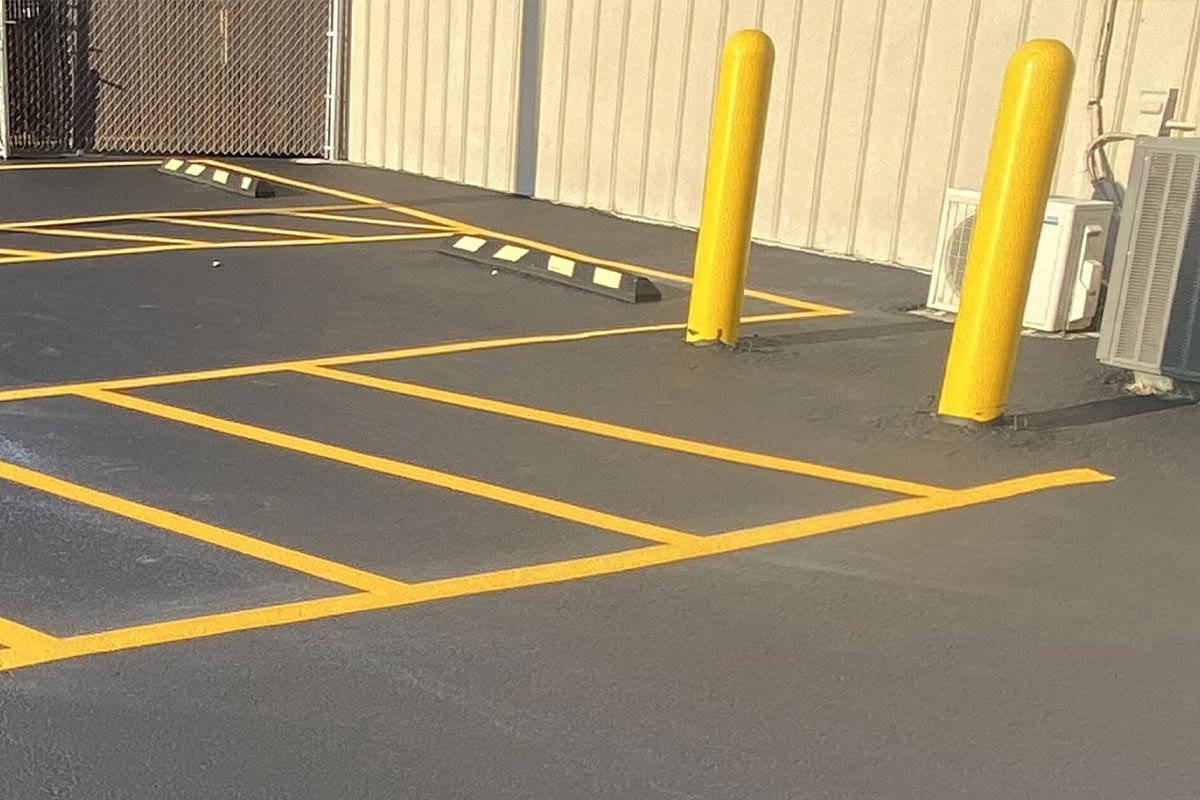
What Bollard Installation Includes
Bollards are the short, sturdy posts that stand between vehicles and the things you do not want vehicles hitting — storefront glass, entry doors, fuel dispensers, pedestrian walkways, and the accessible routes into a building. We supply and install them for three broad jobs: security bollards that stop or slow a vehicle, safety bollards that guide traffic and protect equipment, and protective posts around utilities and building corners.
The install is the part that determines whether a bollard actually does its job. A post set too shallow or anchored poorly looks the same as a properly installed one until the day a vehicle tests it — which is why the footing and anchoring matter as much as the bollard itself.
Crash-Rated vs Standard Bollards
Not every bollard is built to stop a car, and matching the type to the threat is the first decision. Standard safety bollards guide traffic, mark boundaries, and protect against low-speed bumps and cart traffic. Crash-rated bollards are engineered and tested to stop a moving vehicle, and there are two relevant standards. ASTM F3016 covers low-speed vehicle-impact resistance — the kind of protection a storefront or a walkway in a parking lot needs against an accidental hit. ASTM F2656 covers high-security anti-ram impact for perimeter and hostile-vehicle protection, the level used around sensitive facilities.
Most commercial storefronts are well served by low-speed protection to the F3016 range; a high-security site is a different specification. We help you pick the right level rather than over- or under-building the barrier.
Protecting Storefronts, Entrances & ADA Routes
The most common reason a property adds bollards is to stop the “storefront crash” — a driver hitting the gas instead of the brake and driving into the glass or the entrance. A line of properly installed bollards in front of the storefront turns that from a catastrophe into a scrape. The same logic protects entrances, drive-up windows, and the pedestrian walkways where people cluster.
Bollards also protect accessible routes — but they have to be placed so they do not block one. The ADA requires an accessible route to keep a minimum clear width (generally 36 inches of continuous clear space), so bollards along a route are spaced to preserve that clearance. We locate them to shield the route and the entrance without narrowing the path a wheelchair needs.
Bollard Types & Materials
Bollards come in several builds, and the right one depends on the job and the look you want:
- Steel pipe bollards, typically concrete-filled, are the workhorse for storefront and equipment protection — strong, simple, and repaintable.
- Concrete-filled steel adds mass and impact resistance over a hollow post.
- Removable and retractable bollards protect an area but drop or lift out when you need to open it for deliveries or emergency access.
- Decorative and covered bollards put an architectural sleeve over a structural post so the protection does not clash with the storefront.
We install all of these and match the material and finish to your property, whether the priority is raw stopping power or a look that fits a retail frontage.
Our Bollard Installation Process
- Assess and lay out. We identify what needs protecting, choose the bollard type and rating, and mark placement so the posts shield the target and preserve accessible clearances.
- Excavate the footing. We dig or core each location to the depth the bollard and surface call for.
- Set and anchor. We set the posts — embedded in a concrete footing or surface-anchored where appropriate — plumb and aligned, filling steel posts with concrete where specified.
- Finish. We cap, paint, or sleeve the bollards and confirm each is solid before we finish.
For a full list of our pavement marking services, visit our parking lot striping in Midwest Houston page.
Businesses We Serve




How it Works

GET A FREE ESTIMATE
Contact us today and we’ll have a quote to you in 24 hours

SCHEDULE AN INSTALLATION
We’ll have your installation scheduled in less than 7 days, without affecting your business hours

GET A PARKING LOT THAT POPS
For a budget-friendly price, you’ll get a parking lot that looks like new
We proudly work with:


We proudly work with:


Frequently Asked Questions About Bollard Installation in Midwest Houston, TX
What is the difference between crash-rated and standard bollards?
Standard safety bollards guide traffic and protect against low-speed bumps and cart contact. Crash-rated bollards are tested to stop a moving vehicle — ASTM F3016 covers low-speed impact resistance suitable for storefronts and walkways, while ASTM F2656 covers high-security anti-ram protection for perimeters. Most retail storefronts need the low-speed level; a high-security site is a heavier specification. We help you match the rating to the actual threat.
How deep are bollards set into the ground?
It depends on the bollard and its job, but effective protective bollards are typically embedded in a concrete footing well below the surface — the buried footing is what lets the post resist an impact instead of snapping off. Surface-mounted bollards exist for lighter duty and are anchored to the slab. We set the depth and footing to the protection level your site needs.
Do bollards actually protect a storefront from vehicle strikes?
Yes, when they are the right type and properly installed. A line of correctly footed bollards in front of a storefront is designed to stop or slow a vehicle before it reaches the glass or entrance, turning a potential drive-through crash into a contained impact. The protection depends entirely on the rating and the install, which is why the footing matters as much as the post.
Should I use steel, concrete-filled, or removable bollards?
Steel pipe bollards, usually concrete-filled, are the standard for storefront and equipment protection because they combine strength and simplicity. Removable or retractable bollards suit an opening you need to clear for deliveries or emergency access. Decorative sleeves fit a retail look over a structural post. We match the type to the job and the appearance you want.
How far apart should bollards be spaced?
Close enough to stop a vehicle from passing between them, but placed to keep required pedestrian and accessible clearances — an accessible route needs to keep its minimum clear width. The right spacing depends on what you are protecting and the traffic around it. We lay out the spacing so the barrier is effective and the walkways stay compliant.
Will bollards block accessible access?
Not when they are placed correctly. Bollards must preserve the clear width the ADA requires for an accessible route — generally 36 inches of continuous clear space — so we position them to protect the entrance and route without narrowing the path. Done right, they make the frontage safer for pedestrians and wheelchair users alike.