
Wheel Stop Installation
In Providence, RI
Concrete, Rubber and Plastic Wheel Stops
1-800-STRIPER provides professional wheel stop installation in Providence, RI — anchoring precast concrete, recycled-rubber, and heavy-duty plastic wheel stops at stall heads to protect sidewalks, storefronts, landscaping, and ADA accessible routes for commercial properties across Rhode Island and nearby Massachusetts.
1-800-STRIPER® of Providence PROVIDes Wheel Stop Installation Services NEAR YOU
Need to protect vehicles or walls from accidental damage?
Wheel stops (also called parking blocks) protect your property, enhance safety, and improve parking lot organization.
Benefits:
Wheel stops prevent vehicles from parking too far into a space or overextending into other spots, pedestrian walkways, and other areas, while also helping with vehicle alignment. They can prevent damage to buildings, curbs, or landscaping. Wheel stops also serve as clear visual cues for proper parking and are sometimes used on slopes to prevent cars from rolling.
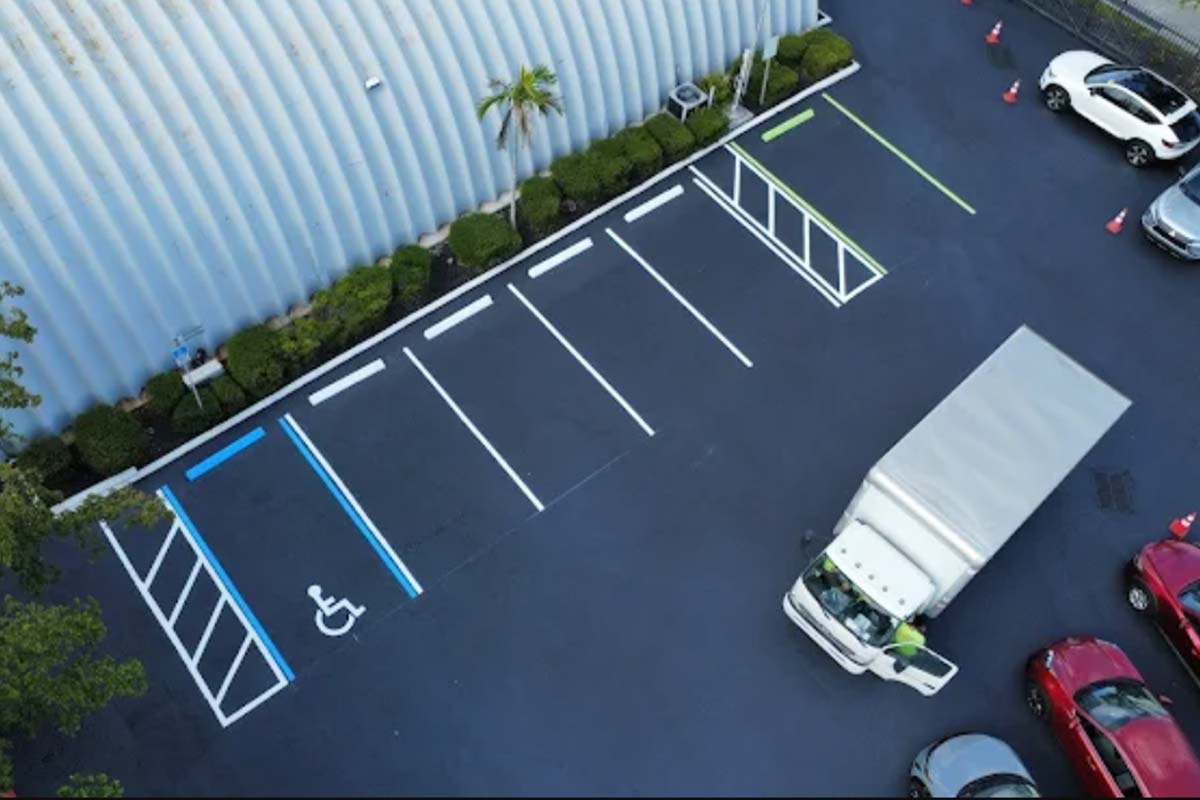
Wheel Stop Installation in Providence, RI
A wheel stop is a small piece of a parking lot that does an outsized job. Set at the head of a stall, it gives a driver a positive stop, keeps the front of the vehicle off the sidewalk, and stops bumpers from crushing landscaping, clipping the building, or drifting into the accessible route next door. On a well-run lot nobody notices them. On a lot without them, you see the evidence — chipped storefront brick, tire ruts in the mulch, cars nosed halfway across the walk.
We install wheel stops on retail centers, office parks, medical buildings, apartment complexes, schools, churches, and industrial sites across Rhode Island and the nearby Massachusetts towns we serve. Whether you need a handful at the accessible spaces or a stop at every stall in a new lot, it is the same job done to the same standard.
Where Providence Code Calls for Wheel Stops
Most wheel stops go in because an owner wants to protect something, but in Providence there is also a zoning rule that speaks to them directly. The Providence Zoning Ordinance, Section 1504 requires a landscaped strip along the edge of any parking lot that fronts a public street, and it calls for a minimum of six inches between the wheel stops or curbs and that landscape strip so a parked car’s bumper can overhang without crushing the plantings.
That is worth knowing for two reasons. If your lot fronts a street and carries a perimeter landscape strip, where you set the wheel stops is not arbitrary — the code fixes the gap. And on the accessible spaces, keeping vehicles from overhanging the access aisle or the route to the entrance is exactly what the federal 2010 ADA Standards ask for: the access aisle beside an accessible stall has to stay clear and marked so drivers do not park in it. A wheel stop set at the right depth is one of the simplest ways to hold that line. We will tell you which of your stalls the setback actually touches rather than selling you a stop for every space if you do not need one.
Concrete, Recycled Rubber, or Plastic
There is no single right material — it depends on the lot and how you want it to age, and in a Rhode Island winter that matters more than most people expect.
- Precast concrete is the heaviest and most permanent. It takes repeated contact well and looks substantial, which is why it is the default on high-turnover commercial lots. Its trade-off is weight and the fact that it can chip or spall over years of impact and freeze-thaw.
- Recycled rubber is lighter, will not crack or spall, shrugs off the freeze-thaw cycles a New England winter puts a lot through, and usually comes with molded-in high-visibility stripes. It is a strong choice where you want long service life and easy handling.
- Plastic composite is the lightest option and resists rot and corrosion, which suits it to spots where you may want to reconfigure the layout later.
Whatever the material, the stop has to be anchored so it stays put — a wheel stop that slides is worse than none, because drivers stop trusting it. We match the material and the anchoring to your surface and your traffic.
Our Wheel Stop Installation Process
- Walk the lot with you. We confirm which stalls need stops, where the perimeter setback applies, and where you simply want the protection.
- Mark the layout. Each stop is positioned square to the stall and set back far enough that the overhang clears the walk, wall, landscape strip, or building behind it.
- Anchor to the surface. On asphalt we pin with steel spikes or rebar driven through the stop into the base; on concrete we drill and set anchors so the stop cannot shift. The method follows the surface, not the other way around.
- Check the accessible spaces last. Stops at accessible stalls get a final look to make sure nothing intrudes on the access aisle or the route to the door.
- Clean up and walk it again. You see the finished work before we leave, not after.
For a full list of our pavement marking services, visit our parking lot striping in Providence page.
Businesses We Serve




How it Works

GET A FREE ESTIMATE
Contact us today and we’ll have a quote to you in 24 hours

SCHEDULE AN INSTALLATION
We’ll have your installation scheduled restriped in less than 7 days, without affecting your business hours

GET A PARKING LOT THAT POPS
For a budget-friendly price, you’ll get a parking lot that looks like new
We proudly work with:


We proudly work with:


Frequently Asked Questions About Wheel Stop Installation in Providence, RI
Does Providence require wheel stops in a parking lot?
In specific places, the zoning code speaks to them. Providence’s Zoning Ordinance, Section 1504, requires a landscaped strip along any parking lot that fronts a public street and calls for a minimum of six inches between the wheel stops or curbs and that strip so a bumper can overhang without crushing the plantings. Away from a street-facing landscape strip it is your call — most owners add stops to protect storefronts, walls, and accessible routes. We will tell you which of your stalls the code actually touches.
Concrete, rubber, or plastic wheel stops — which should I choose?
It depends on the lot. Precast concrete is the heaviest and most permanent and takes repeated contact well, but it can chip over years of impact and freeze-thaw. Recycled rubber is lighter, will not crack or spall, handles New England’s freeze-thaw winters, and usually has molded-in high-visibility stripes. Plastic composite is the lightest and resists corrosion. We will match the material to your traffic and surface.
How are wheel stops anchored?
To the surface underneath. On asphalt we drive steel spikes or rebar through the stop into the base; on concrete we drill and set anchors. The point is that the stop cannot slide — a wheel stop that shifts underfoot is worse than none, because drivers stop trusting it.
Do wheel stops help with ADA compliance?
They support it but do not replace it. A wheel stop at an accessible space keeps a vehicle from overhanging the access aisle or the route to the entrance, which under the 2010 ADA Standards has to stay clear and marked so drivers do not park in it. But the accessible space still needs its painted symbol and its post-mounted sign — a wheel stop is not a substitute for either.
Can you replace broken or missing wheel stops?
Yes, and it is common work. Concrete stops crack, anchors work loose, and plow crews knock stops out of line over a Rhode Island winter. We pull the damaged units, clean up the old anchors, and set new stops in the same footprint so your layout stays consistent.
Do wheel stops work on both asphalt and concrete?
Yes. The stop itself is the same — what changes is how it is anchored. Asphalt gets driven spikes or rebar; concrete gets drilled anchors. We use the method that holds for your surface.