Parking Lot Restriping
In Providence, RI
Restripe Existing Lines and Markings
1-800-STRIPER provides professional parking lot restriping in Providence, RI — refreshing faded lines, ADA stalls, fire lanes, and directional arrows using Sherwin-Williams Fast-Dry Traffic Paint and Graco LineLazer equipment for commercial properties across the Greater Providence metro area.
1-800-STRIPER of Providence PROVIDes Restriping Services NEAR YOU
Need to brighten up your faded parking lot?
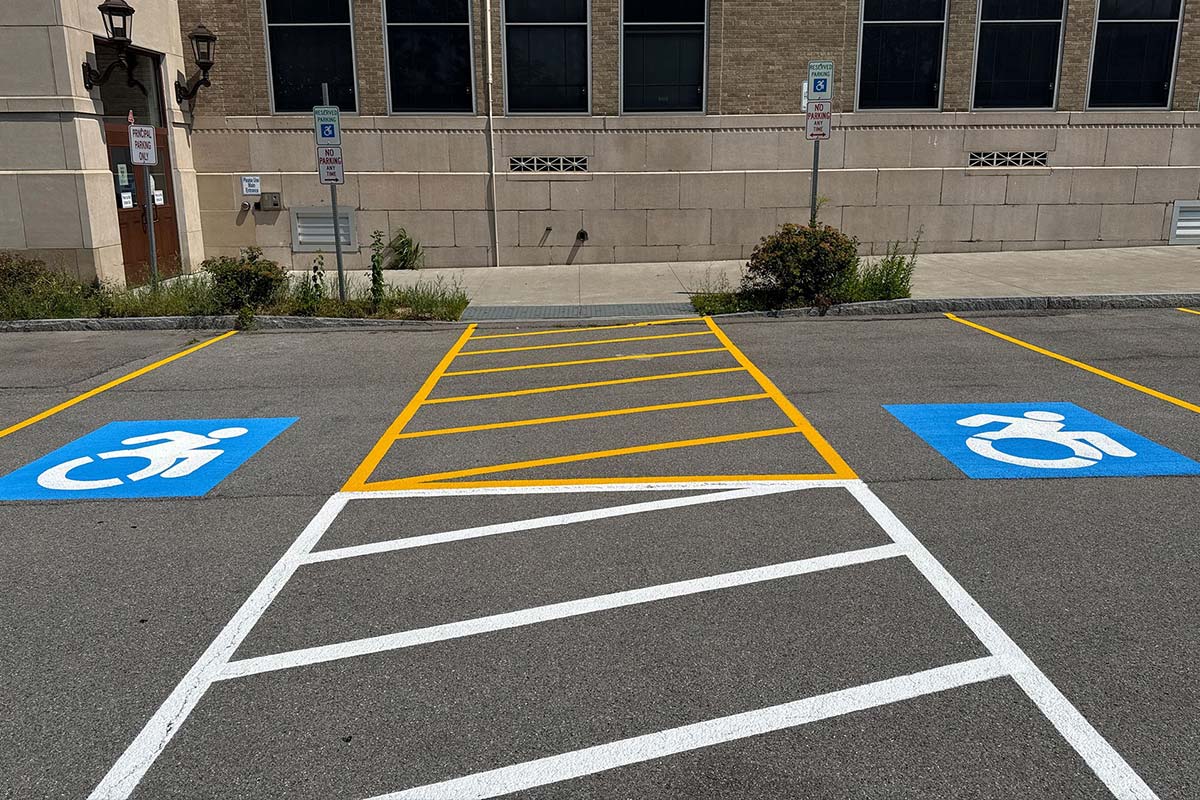
Keep your parking lot safe and attractive by restriping annually to freshen up lines and symbols that have faded from the sun, weather, and traffic. Nothing beats a fresh coat of paint!
Benefits:
When to Restripe a Providence Parking Lot
Most Providence commercial parking lots want restriping every 18 to 24 months. Three forces drive that cycle. New England UV during long summer days fades pigment in surface paint. Freeze-thaw cycles work water into pavement microcracks and lift paint at line edges. Winter road-salt residue tracked in by plows wears lines closest to drive aisles, where vehicle tires concentrate the abrasion. Lots with heavy commercial traffic, frequent snow-plow scrape, or coastal salt exposure cycle closer to 18 months. Sheltered properties with light tenant traffic and good drainage can stretch to 24.
Traffic Paint vs Thermoplastic — Choosing the Right Coating
Traffic paint is the standard for parking lots — Sherwin-Williams Fast-Dry Traffic Paint cures in 30 to 60 minutes and amortizes well over the 18-to-24-month New England restripe cycle. Thermoplastic lasts longer in service (3 to 7 years on stop bars and crosswalks) but costs three to five times as much per linear foot, requires specialized hot-melt application equipment, and is best suited to high-traffic stop bars, crosswalks, and arrows on busy commercial corridors. Most parking-field stripes go in traffic paint. High-wear hot spots on commercial entries and exits can move to thermoplastic for properties willing to pay the premium for service-life.
The New England Striping Season — April Through October
The New England restripe window runs April through October. The cleanest cure window inside that runs May through September, when daytime surface temperatures hold between 50°F and 95°F and overnight lows stay above freezing. Sherwin-Williams traffic paint cures in 30 to 60 minutes within that surface temperature band, which is what the manufacturer specifies for a clean-edged, durable line. Early spring is the busiest restripe window because property managers want lines crisp before peak summer traffic. Late October through March is closed: freezing pavement prevents traffic paint from bonding cleanly, and snow-plow operations destroy fresh stripes before they cure.
Crack-Fill, Pothole Repair, and Sealcoat Sequencing
Sequence matters. Crack-fill, pothole repair, and any sealcoat application have to be complete and fully cured before fresh stripes go down. Striping over an unrepaired surface wastes paint and forces a second restripe sooner than the surface itself would need it. Sealcoat applied after restriping covers the new lines, which means the paint has to be re-applied on top of the sealer, doubling the labor cost. Coordination with sealcoating and asphalt repair contractors keeps the trades sequenced cleanly: surface prep first, then crack-fill cure window (typically 24 to 48 hours), then sealcoat cure window (24 to 72 hours), then restripe within the same scheduling block.
| Step | Trade | Cure window |
|---|---|---|
| 1. Pothole patch | Asphalt repair | 24–72 hours |
| 2. Crack-fill | Crack-seal | 24–48 hours |
| 3. Pressure wash | Cleaning crew | 24 hours dry |
| 4. Sealcoat | Sealcoat crew | 24–72 hours |
| 5. Restripe | 1-800-STRIPER | 30–60 min cure |
MUTCD and Rhode Island DOT Pavement Marking Specifications
Commercial parking lots adjacent to public roads in Rhode Island fall under MUTCD pavement marking guidance for any traffic-control marking that interfaces with the public right-of-way. The Rhode Island DOT Standard Specifications reference MUTCD and add state-specific reflectivity, line width, and paint formulation requirements on properties along Route 1, Route 2, US-44, US-6, and the I-95/I-295 system. The applicable specification depends on the property’s road frontage classification — pulling that detail upfront lets crews apply matching stripe widths and paint reflectivity on customer-facing rows so the lot reads cleanly from public arterials.
Restripe Process from Survey to Sign-Off
Six steps run the restripe process. An on-site survey counts stalls, measures the lot, and checks ADA-stall placement against current code. A written estimate ships within 24 hours, listing each line type, structured-content element, and authority-required marking. Scheduling lands against the New England striping season window and the property’s operational calendar. Surface prep happens including any pre-stripe pressure wash. The restripe itself goes down using Sherwin-Williams Fast-Dry Traffic Paint applied with Graco LineLazer equipment. A walk-through with the property manager confirms line placement, stall count, and ADA compliance before sign-off and final invoice.
For a full list of our pavement marking services, visit our parking lot striping in Providence page.
Businesses We Serve




How it Works

GET A FREE ESTIMATE
Contact us today and we’ll have a quote to you in 24 hours

SCHEDULE AN INSTALLATION
We’ll have your installation scheduled in less than 7 days, without affecting your business hours

GET A PARKING LOT THAT POPS
For a budget-friendly price, you’ll get a parking lot that looks like new
We proudly work with:


We proudly work with:
Frequently Asked Questions About Parking Lot Restriping in Providence, RI
How often does a Providence parking lot need restriping?
Most Providence commercial parking lots want restriping every 18 to 24 months. New England’s combination of freeze-thaw cycles, winter road-salt residue, and high-UV summers wears traffic paint faster than mild inland markets but slower than humid-subtropical ones. Lots with heavy commercial traffic, frequent snow-plow scrape, or coastal salt exposure cycle closer to 18 months. Sheltered properties can stretch to 24 months between full restripe jobs.
Should I use traffic paint or thermoplastic for a restripe?
Traffic paint is the standard for parking lots — Sherwin-Williams Fast-Dry Traffic Paint cures in 30 to 60 minutes and amortizes well over the 18-to-24-month New England cycle. Thermoplastic lasts longer in service but costs three to five times as much per linear foot, requires specialized equipment, and is best suited to high-traffic stop bars, crosswalks, and arrows on busy commercial corridors. Most parking field stripes go in paint; high-wear hot spots can move to thermoplastic.
When is the best time to restripe in the New England season cycle?
The New England restripe window runs April through October. The cleanest cure window is May through September when daytime surface temperatures hold between 50°F and 95°F and overnight lows stay above freezing. Early spring is the busiest restripe window because property managers want lines crisp before peak summer traffic. Late October through March is closed: freezing pavement prevents traffic paint from bonding cleanly to the surface.
Should crack-fill or asphalt repair come before restriping?
Yes — sequence matters. Crack-fill, pothole repair, and any sealcoat application have to be complete and fully cured before fresh stripes go down. Striping over an unrepaired surface wastes paint and forces a second restripe sooner than the surface itself would need it. Coordination with sealcoating and asphalt repair contractors keeps the trades sequenced cleanly: surface prep first, then cure window, then restripe within the same scheduling block.
Do you restripe during the snow season?
No. New England pavement temperatures from late October through March stay too low for traffic paint to bond and cure properly, and snow-plow operations would destroy fresh stripes before they finish curing. Properties needing emergency stripe-refresh during the off-season usually wait until the first April thaw window, when daytime temperatures climb back above the 50°F surface threshold paint manufacturers specify.