ADA Parking Lot Striping
In Providence, RI
ADA-Compliant Accessible Parking
1-800-STRIPER provides ADA-compliant parking lot striping in Providence, RI — installing accessible spaces, van-accessible stalls, access aisles, ISA symbols, and required signage per the 2010 ADA Standards for Accessible Design and Rhode Island State Building Code SBC-1 Chapter 11.
1-800-STRIPER® of Providence PROVIDes ADA Compliance Services NEAR YOU
Need to make your property more accessible?
Upgrade your facility to become fully ADA compliant by partnering with us to create clear, accessible parking for all your visitors.
Our ADA Compliant line striping services include:
What ADA-Compliant Parking Lot Striping Includes
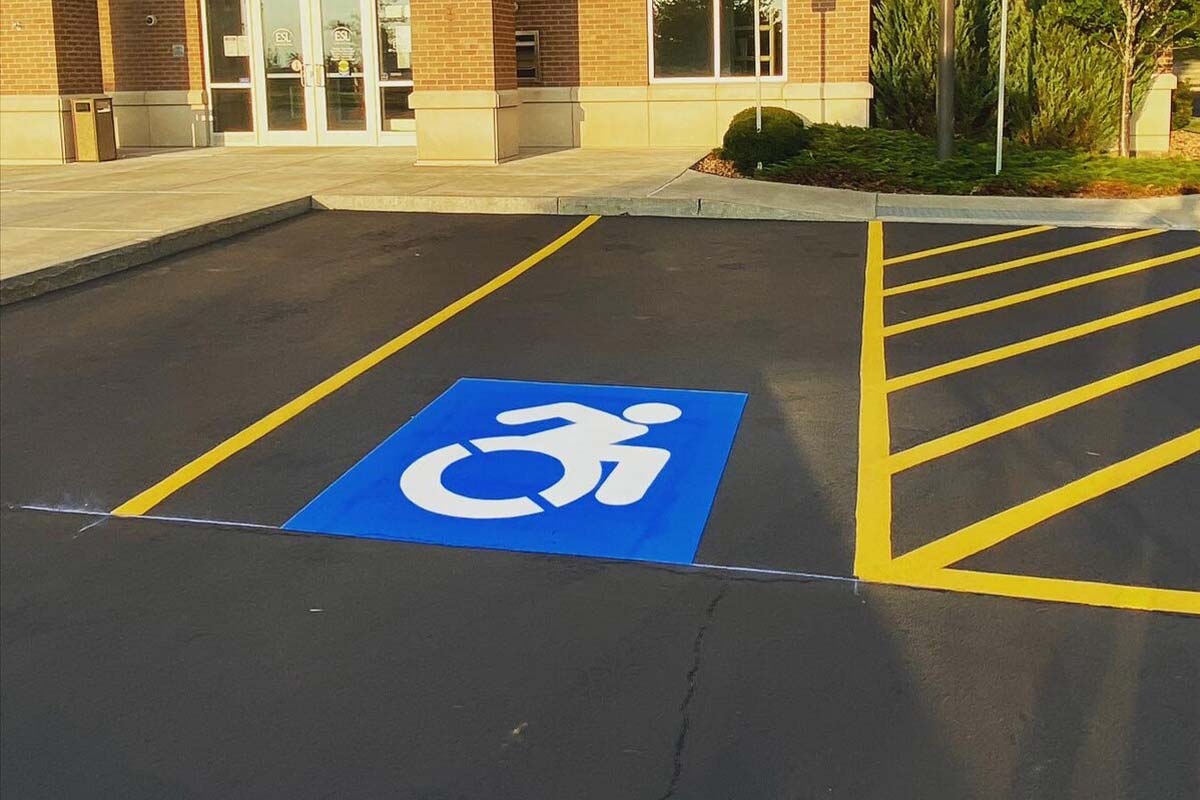
ADA-compliant striping is six elements working as a system, not six things you can pick from. Standard accessible spaces measure 96 inches wide (8 feet) with a 60-inch (5-foot) striped access aisle alongside. Van-accessible spaces measure 132 inches wide (11 feet) with a 96-inch (8-foot) access aisle, or alternatively 96 inches wide with the 96-inch aisle plus 8-foot vertical clearance overhead. The International Symbol of Accessibility goes on the surface in white-on-blue, oriented toward the access aisle. Vertical R7-8 reserved-parking signs mount adjacent to each space; van-accessible stalls add the “Van Accessible” plaque below R7-8. The accessible route from aisle to building entrance has to connect without curbs, steps, or other vertical obstacles.
How Many Accessible Spaces Your Providence Lot Needs
Required count scales with total parking. The 2010 ADA Standards lay out the table: a 25-stall lot needs 1 accessible space, 50 stalls needs 2, 100 stalls needs 4, 500 stalls needs 9. Lots above 500 add accessible spaces at a 2-percent ratio of total parking. At least 1 of every 6 accessible spaces has to be van-accessible — and small lots with only 1 accessible space have to make that one van-accessible. The on-site survey pulls the count for your specific stall total before the estimate goes out.
| Total stalls | Required accessible | Of which van-accessible |
|---|---|---|
| 1–25 | 1 | 1 |
| 26–50 | 2 | 1 |
| 51–75 | 3 | 1 |
| 76–100 | 4 | 1 |
| 101–150 | 5 | 1 |
| 151–200 | 6 | 1 |
| 201–300 | 7 | 2 |
| 301–400 | 8 | 2 |
| 401–500 | 9 | 2 |
| 501+ | 2% of total | 1 per 6 accessible |
Rhode Island State Building Code Chapter 11 Layered on Top
Rhode Island enforces the federal 2010 ADA Standards for Accessible Design through Rhode Island State Building Code SBC-1 Chapter 11. The Rhode Island Building Code Commission keeps the chapter updated through the State Building Office, syncing with the most current federal requirements while adding state-level enforcement authority on top. Local building officials in Providence, Cranston, Warwick, Pawtucket, and other Rhode Island cities sign off on certificates of occupancy, and that sign-off depends on accessibility compliance — walk-throughs flag deficient ADA stalls before any certificate issues. The Rhode Island Governor’s Commission on Disabilities reviews discrimination complaints alongside the U.S. Department of Justice on ADA Title III enforcement on commercial property.
ISA Symbol and Stall Line Specifications
The International Symbol of Accessibility is a standardized stencil. Crews never freehand the symbol. Placement sits centered in the parking space, oriented toward the access aisle, in white-on-blue per the ANSI A117.1 accessibility standard the federal ADA Standards reference. Stall lines and access-aisle hatching go down in Sherwin-Williams Fast-Dry Traffic Paint. Access-aisle hatching uses diagonal lines in the same color as the stall lines (typically blue per ISA convention, white where blue is unavailable). Standard stall lines run 4 inches wide; some higher-end commercial lots use double-line variants for visual definition.
When ADA Stalls Need Repainting in New England
ADA stalls in Providence usually want refresh every 18 to 24 months — same cycle as the rest of the lot, but with stricter visibility requirements per the 2010 ADA Standards. New England’s combination of summer UV and winter road-salt fades blue and white pigment faster than most other paint colors. A faded International Symbol of Accessibility can trigger an ADA compliance review when the symbol stops reading clearly from a moving vehicle approaching the access aisle, and faded R7-8 signage paint compounds the problem. Crews check ADA-stall paint condition during every regular striping visit and prioritize ADA refresh ahead of standard parking-field stripes when inspection shows uneven wear.
Common ADA Striping Mistakes We Catch on Re-Stripe Jobs
Three deficiencies show up regularly during audits of existing Providence-area lots. First: access aisles that are not striped at all — the stall is painted but the adjacent aisle is plain pavement, which fails the standard outright. Second: access aisles striped on the wrong side of a van-accessible space, blocking the wheelchair-lift deployment zone. Third: ISA symbols painted in non-standard colors (yellow on green, white on red) that read incorrectly to drivers searching for an accessible space. Survey-and-redesign catches all three before fresh paint goes down, so the re-stripe brings the lot fully into compliance instead of repainting the same deficiency.
ADA Striping for HOAs, Condo Associations, and Commercial Property Managers
HOAs, condo associations, property management companies, and direct commercial owners across Providence and Kent counties bring us in for ADA-stall installation and refresh. Documentation we provide for board review includes a scaled site plan with accessible-route highlighted, a stall-count summary verifying compliance against the table above, an SBC-1 Chapter 11 reference page, and an estimate that lists each ADA element line by line. That format moves through architectural-review committees on the first submission rather than bouncing back for revisions, which keeps your project on the original schedule.
For a full list of our pavement marking services, visit our parking lot striping in Providence page.
Businesses We Serve




How it Works

GET A FREE ESTIMATE
Contact us today and we’ll have a quote to you in 24 hours

SCHEDULE AN INSTALLATION
We’ll have your installation scheduled in less than 7 days, without affecting your business hours

GET A PARKING LOT THAT POPS
For a budget-friendly price, you’ll get a parking lot that looks like new!
We proudly work with:


We proudly work with:


Frequently Asked Questions About ADA Parking Lot Striping in Providence, RI
How many ADA-accessible spaces does my Providence property need?
The 2010 ADA Standards for Accessible Design and Rhode Island State Building Code SBC-1 Chapter 11 set required count by total parking. A 25-stall lot needs at least one accessible space; a 100-stall lot needs four; a 500-stall lot needs nine. At least one of every six accessible spaces has to be van-accessible (96-inch access aisle minimum). The on-site survey pulls the count for your specific stall total during the estimate.
Does Rhode Island law add anything beyond federal ADA requirements?
Yes. Rhode Island State Building Code SBC-1 Chapter 11 adopts and layers state-level accessibility requirements on top of the federal 2010 ADA Standards for Accessible Design. RI Gen Laws Title 39 governs parking enforcement. The Rhode Island Governor’s Commission on Disabilities reviews accessibility complaints. Local building officials in Providence, Cranston, Warwick, and other cities have direct enforcement authority on commercial properties during walk-throughs and certificate-of-occupancy inspections.
What does an ADA stall layout include?
A complete ADA stall covers the 96-inch standard space (or 132-inch van-accessible space), a striped 60-inch access aisle (96-inch for van-accessible) marked with diagonal hatching, the International Symbol of Accessibility painted on the stall surface in white-on-blue, a curb cut to an accessible route, and a vertical R7-8 reserved-parking sign. Van-accessible stalls add the “Van Accessible” plaque below R7-8.
What are the penalties for non-compliant ADA parking in Rhode Island?
Rhode Island treats accessible-parking violations through Title 39 enforcement and the State Building Code adoption of federal ADA requirements. Penalties can include civil fines, ADA Title III private-action exposure, and orders to bring the property into compliance. Specific dollar amounts vary by jurisdiction and prior history, so the focus stays on keeping the striping ADA-compliant — that way the question never comes up during a property walk-through.
How wide does the access aisle need to be?
Standard ADA-accessible spaces require a minimum 60-inch (5-foot) access aisle alongside the stall. Van-accessible spaces require a 96-inch (8-foot) access aisle. Aisles are striped with diagonal hatching in the same color as the stall lines (typically blue per ISA convention) and have to connect to an accessible route — usually a curb cut or sidewalk ramp, without any vertical obstacles in the path between the aisle and the building entrance.
How often do ADA stalls need to be repainted?
ADA stalls in Providence usually want refresh every 18 to 24 months — the same cycle as the rest of the lot, but with stricter visibility requirements per the 2010 ADA Standards for Accessible Design. New England UV and road-salt exposure fade blue and white pigment faster than most other colors. Faded ISA symbols can trigger compliance reviews if the symbol is no longer clearly readable from a moving vehicle approaching the access aisle.