Temporary Parking Lot Striping
In Allentown, PA
Event and Construction Markings
1-800-STRIPER provides professional temporary parking lot striping in Allentown, PA — short-duration event markings, construction-phase layouts, and overflow parking on grass, gravel, pavement, or any surface using removable water-based traffic paint for properties across the Lehigh Valley.
1-800-STRIPER of Allentown PROVIDes Temporary Parking Lot Striping Services NEAR YOU
Need Temporary Stripes?
Use temporary stripes to direct traffic and create parking areas at your special event or to keep construction sites safe without a long-term commitment. We paint on grass, gravel, pavement, or any other surface where temporary striping is needed.
Striping solutions for:
What temporary striping is for
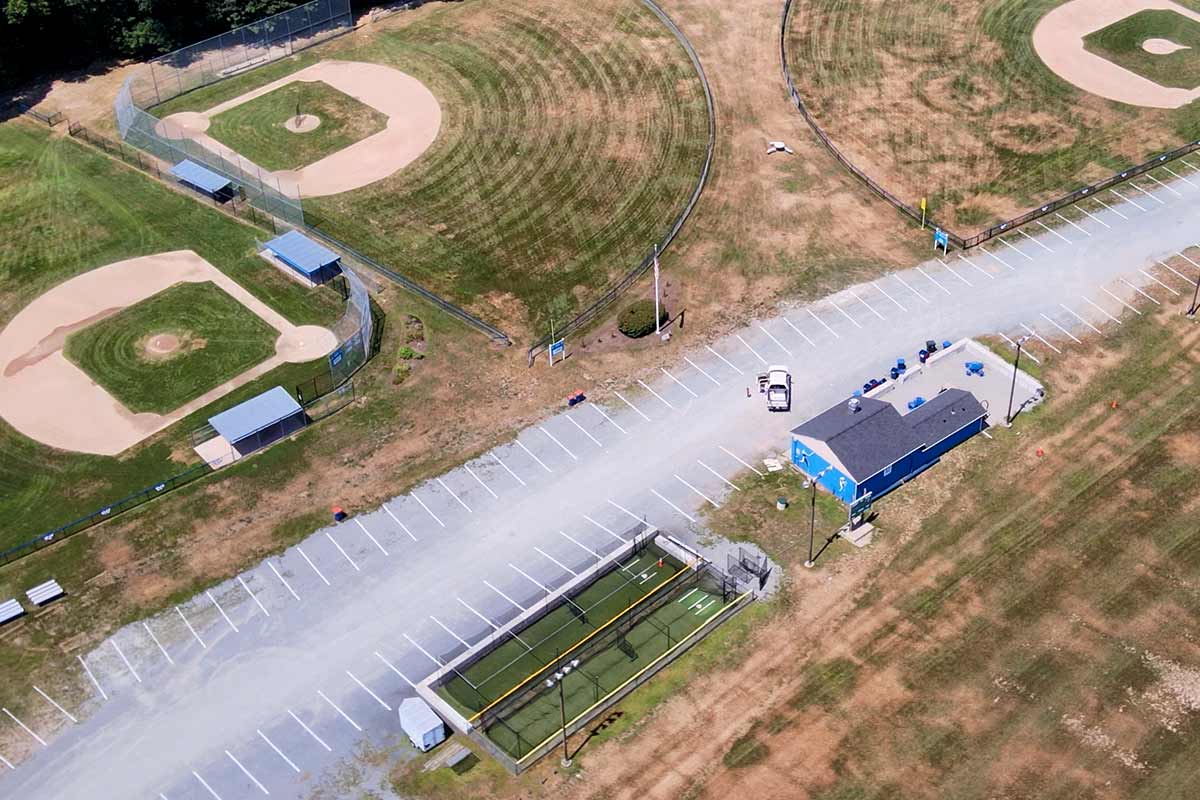
Temporary striping is line marking meant to be removed or to wear away, applied where a permanent layout would be wrong. Three situations account for most of the work in the Lehigh Valley.
Events. Festivals, markets, county fairs, school and church functions and stadium overflow need parking organized for days rather than years. Grass fields and gravel overflow lots get stall lines, lane arrows and accessible spaces laid out for the event and left to weather off.
Construction phasing. When a lot is resurfaced, expanded or partially closed, traffic still has to move through it. Temporary markings carry drivers through the working sequence — shifted aisles, contra-flow lanes, closed bays — and get repainted as the phase changes.
Seasonal and overflow. Retail and logistics properties across the Valley add capacity for a season and give it back afterwards. Seasonal stalls, trailer staging, and additional loading positions all fit this pattern.
Surfaces we mark
Grass, gravel, compacted stone, asphalt and concrete — any surface. This matters more than it sounds. Most striping contractors quote only on sound asphalt, because that is what permanent paint is formulated for. Event and overflow parking usually is not on asphalt at all, and marking a grass field or a gravel lot is a different job with different products and a different application rate. We do both.
Removability
The point of temporary marking is that it goes away cleanly. Removable water-based traffic paints are formulated for shorter service life than the fast-dry products used for permanent stalls, so they weather off over weeks-to-months depending on traffic, sun and rainfall rather than lasting years. On grass and gravel there is nothing to remove — the marking simply wears out. On asphalt and concrete, tell us the intended lifespan when you book, because a two-day event and a six-month construction phase call for different products.
How a temporary job is planned
- Scope the event or phase. Dates, expected vehicle count, and the surface you are working with.
- Lay out the plan. Stalls, aisle widths, entry and exit routes, accessible stalls near the entrance, and any fire-access lane the property already carries.
- Mark it. Applied ahead of the event or the phase change, sequenced so the property stays usable.
- Reset. Re-mark for the next phase, or let the temporary product weather off.
For a full list of our pavement marking services, visit our parking lot striping in Allentown page.
Businesses We Serve




How it Works

GET A FREE ESTIMATE
Contact us today and we’ll have a quote to you in 24 hours

SCHEDULE A STRIPING
We’ll have your space restriped in less than 7 days, without affecting your business hours

GET A PARKING LOT THAT POPS
For a budget-friendly price, you’ll get a parking lot that looks like new
We proudly work with:


We proudly work with:

Frequently Asked Questions About Temporary Parking Lot Striping in Allentown, PA
How long does temporary parking lot striping last?
It is designed not to last. Removable water-based products are formulated for a shorter service life than permanent fast-dry traffic paint, and how long they stay legible depends on traffic volume, sun exposure and rainfall rather than on a fixed number of weeks. Tell us the intended lifespan when you book — a weekend festival, a full show season and a six-month construction phase are three different specifications, and the wrong one either fades early or outstays its purpose.
Can you stripe a grass or gravel field for event parking?
Yes, and it is a large share of this work. Grass, gravel and compacted stone all take temporary marking, using products and application rates suited to a soft or loose surface rather than the fast-dry paints used on asphalt. Nothing needs removing afterwards — the marking wears off. This is the case most striping contractors decline, because they quote only on sound asphalt, so it is worth asking about explicitly when you call.
How fast does the paint dry before cars can park on it?
It depends on the product, the surface and the weather, not on a fixed clock. Warm, dry, moving air dries traffic paint quickly; cold or humid conditions slow it considerably, and a grass or gravel surface behaves differently from asphalt. For events the practical approach is to mark the day before rather than the morning of, which removes the question entirely. If the schedule is tight, say so when booking and the sequence gets planned around your gates opening.
Do temporary accessible stalls still have to meet accessibility requirements?
Treat them as if they do. The 2010 ADA Standards for Accessible Design govern accessible parking on sites subject to them, and a temporary event lot serving the public is not an obvious place to assume an exemption. In practice that means accessible stalls on the firmest, most level ground available, positioned on the shortest accessible route to the entrance, with access aisles marked and not used as parking. If you are unsure of the obligation for your specific event, ask the authority issuing your event permit.
What is the difference between temporary and permanent striping?
Product, expected life and intent. Permanent striping uses fast-dry traffic paints laid on a prepared, sound surface and is meant to stay legible for years under daily traffic. Temporary striping uses removable products, goes onto whatever surface the event or phase actually involves — often grass or gravel — and is meant to disappear. The layout work is similar; the specification is not. Asking for permanent paint on an event field is the common and expensive mistake.
Can you re-mark a lot as a construction phase changes?
Yes — phased re-marking is the normal pattern on a lot being resurfaced or expanded while it stays open. Each phase gets its own traffic pattern: shifted aisles, closed bays, temporary contra-flow, and revised entry and exit routes. The markings are applied to match the phase and replaced when it changes. Give us the phasing plan and the dates at the estimate stage so the sequence is priced and scheduled as one job rather than as a series of unplanned call-outs.