
Thermoplastic Striping
In Columbus, OH
Thermoplastic Pavement Markings
1-800-STRIPER® provides professional thermoplastic striping in Columbus, OH — long-service-life pavement markings for stop bars, crosswalks, directional arrows, and fire lanes applied at roughly 400°F per AASHTO M249 specifications for high-traffic commercial lots across Franklin County.
1-800-STRIPER® of Columbus PROVIDes Thermoplastics Services NEAR YOU
Want to reduce the maintenance requirements for your parking lot?
Thermoplastic pavement markings are a durable, weather and vehicle-resistant striping option for your parking lot or facility.
You can utilize them for stop bars, ADA stalls, no-parking zones, directional arrows, crosswalks, or your entire parking lot.
Benefits:
How It Works
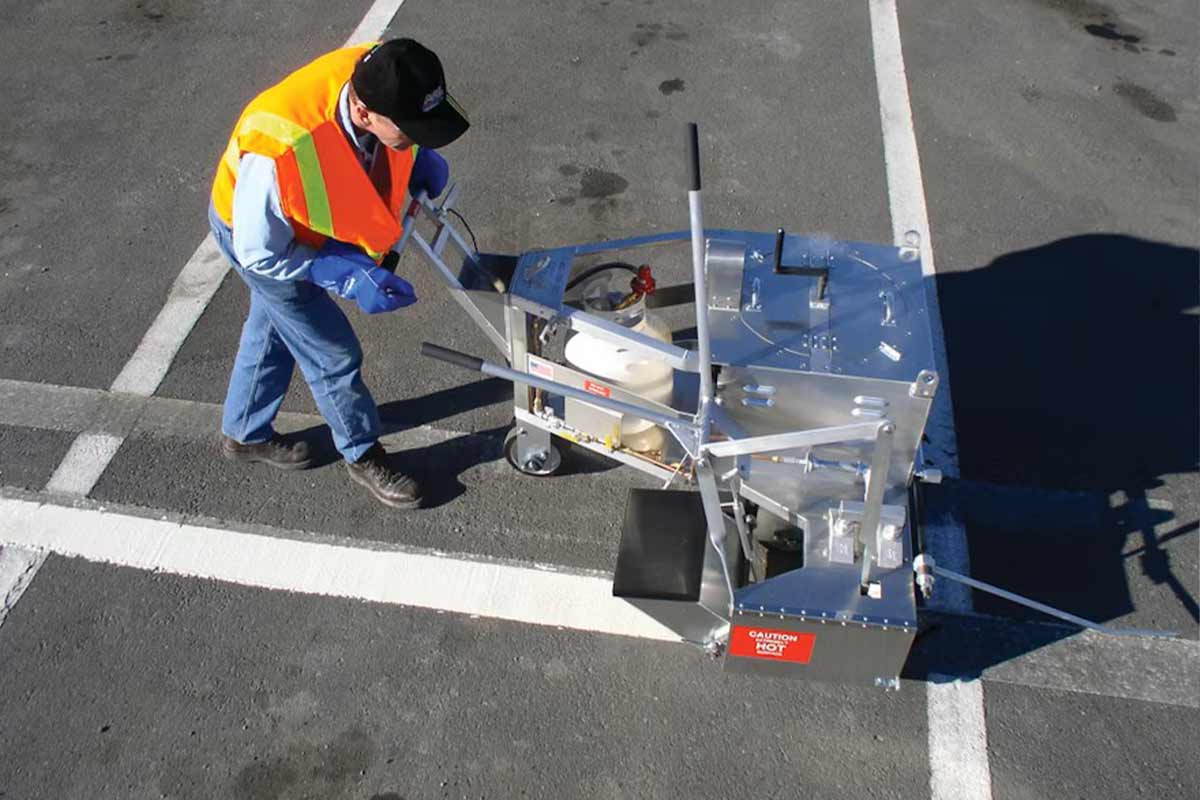
Thermoplastic is a specialized process, not a cold-paint swap. Our workflow:
- Specification review. We confirm thermoplastic is the right match for the location — high-traffic asphalt, stop bars, crosswalks, arrows, fire lanes — versus a 12-to-18-month cold-paint refresh that would be faster to schedule and sufficient for lower-volume stall lines.
- Weather and surface gating. We schedule application during warm, dry Central Ohio weather — typically late spring through early fall — because thermoplastic requires a dry pavement at or above roughly 50 degrees Fahrenheit ambient and surface temperature to bond reliably.
- Surface prep. We clean the pavement of dust, salt residue, and moisture, and address any oil or sealcoat compatibility issues before the hot material goes down.
- Hot application. We apply the thermoplastic material at the prescribed temperature, building to the 60-to-100-mil thickness standard for the marking category.
- Glass-bead embedding. We drop glass beads into the hot material so retroreflectivity is embedded in the line rather than applied as a separate coat.
- Cool-down return. Thermoplastic cools and sets to traffic within minutes, which allows staged sections of a Columbus commercial lot to reopen quickly after application.
The governing material specification for thermoplastic pavement markings, AASHTO M249, comes from the American Association of State Highway and Transportation Officials, the standards body every state DOT references when writing its own thermoplastic material requirements. Ohio Department of Transportation specifications build on AASHTO M249 for state-maintained roadways and serve as the quality baseline Columbus-area contractors reference on commercial projects.
Traffic Paint vs. Thermoplastic
| Attribute | Fast-dry water-based traffic paint | Thermoplastic |
|---|---|---|
| Application | Cold-sprayed, 15-20 mil film | Hot-applied at ~400°F, 60-100 mil |
| Service life on Columbus high-traffic asphalt | 12-18 months | 4-7 years |
| Retroreflectivity | Surface-applied beads | Beads embedded in hot material |
| Cure to traffic | 1-2 hours | Minutes after cool-down |
| Cold-weather application | Workable in marginal conditions | Needs ≥50°F ambient and surface |
| Best use | Stall lines, standard refresh cycles | Stop bars, crosswalks, arrows, fire lanes, high-plow zones |
Why Choose Us
Thermoplastic’s 4-to-7-year service life on Columbus high-traffic asphalt is a real advantage, but only on the right lines: stop bars, crosswalks, directional arrows, fire lane markings, entrance and exit drives, hospital and distribution-center access lanes. 1-800-STRIPER® of Columbus scopes thermoplastic where service life and retroreflectivity matter most, and specifies cold-applied traffic paint on the stall lines where the 12-to-18-month refresh cycle is the right match for traffic volume. We run thermoplastic application inside the stable Central Ohio weather window, usually May through early October, because laying thermoplastic on damp or cold pavement compromises the chemical bond that makes the method worth choosing in the first place. Between warm-weather windows we schedule cold-applied paint refresh on lines that need attention, and batch the next thermoplastic cycle for the following spring. For Columbus property owners deciding between a full thermoplastic conversion and continued cold-paint refresh, the breakeven case rests on traffic volume, plow exposure, and how long the marking needs to carry full retroreflectivity before the next refresh. We document the tradeoff for each in-scope line category instead of applying a one-size decision to the whole lot.
For a full list of our pavement marking services, visit our parking lot striping in Columbus page.
Businesses We Serve




How it Works

GET A FREE ESTIMATE
Contact us today and we’ll have a quote to you in 24 hours

SCHEDULE AN INSTALLATION
We’ll have your installation scheduled restriped in less than 7 days, without affecting your business hours

GET A PARKING LOT THAT POPS
For a budget-friendly price, you’ll get a parking lot that looks like new
We proudly work with:


We proudly work with:
Frequently Asked Questions About Thermoplastic Striping in Columbus, OH
What is thermoplastic striping?
Thermoplastic striping is a pavement marking method that uses a solid plastic resin compound heated to roughly 400 degrees Fahrenheit and extruded or sprayed onto the pavement, where it bonds to the surface as it cools. The resulting line is several times thicker than paint and embedded with reflective glass beads for night visibility. 1-800-STRIPER® of Columbus applies thermoplastic markings on commercial parking lots, roadways, and high-traffic lanes across Central Ohio where long-lasting, reflective markings are required.
How is thermoplastic striping different from traffic paint?
Thermoplastic is applied hot and bonds chemically with the asphalt, producing a raised marking 60 to 100 mils thick. Traffic paint is applied cold, cures as a thin film around 15 to 20 mils thick, and sits on top of the surface. Thermoplastic lasts significantly longer under traffic — often 4 to 7 years versus 12 to 18 months for paint — but requires specialized equipment and is typically reserved for heavily used traffic lanes, stop bars, crosswalks, and arrows.
Where is thermoplastic striping most effective?
Thermoplastic is most effective on high-traffic asphalt lanes, entrance and exit drives, stop bars, pedestrian crosswalks, directional arrows, and long-duration fire lane markings on Columbus commercial properties. It is also common on roadway pavement markings and large parking facilities like hospitals, stadiums, and distribution centers. For stall lines on a typical retail or office lot, traffic paint is usually the right choice — thermoplastic is specified where durability, retroreflectivity, and long refresh cycles justify the added method.
How long does thermoplastic striping last in Central Ohio?
Thermoplastic markings in Columbus typically last 4 to 7 years on high-traffic asphalt, compared with 12 to 18 months for standard traffic paint. Central Ohio’s freeze-thaw cycles, winter road salt, and snow-plow contact still wear thermoplastic faster than milder climates would, so plow-exposed lanes sit at the lower end of that range while sheltered drive aisles last longer. Retroreflectivity should be inspected each spring to confirm the glass beads still meet visibility standards.
Can thermoplastic striping be applied in cold Ohio weather?
Generally no — thermoplastic requires the pavement to be dry and warm, typically at least 50 degrees Fahrenheit ambient and surface temperature, so application is normally scheduled from late spring through early fall in Columbus. Attempting thermoplastic application during cold or damp Central Ohio winter weather compromises the chemical bond to the asphalt and shortens service life. For winter-season refresh needs, cold-applied traffic paint is the available option; thermoplastic work is scheduled back into the next warm-weather window.
When is thermoplastic worth choosing over traffic paint?
Thermoplastic is worth choosing when the location sees heavy traffic, repeated braking, or winter plow contact — entrance drives, stop bars, crosswalks, fire lane markings, and directional arrows on Columbus commercial properties all qualify. It is also worth considering for retroreflective roadway-style markings on large campuses or hospital access lanes. For routine stall lines on a typical office, retail, or medical lot, cold-applied traffic paint is usually the right match for the traffic volume and refresh cycle.