
ADA Parking Lot Striping
In Columbus, OH
ADA Compliant Parking Spaces, Access Aisles, and Unloading Zones
1-800-STRIPER® provides ADA-compliant parking lot striping in Columbus, OH — installing accessible spaces, van-accessible stalls, access aisles, ISA symbols, and required R7-8 signage per the 2010 ADA Standards for Accessible Design and Ohio Building Code Chapter 11.
1-800-STRIPER® of Columbus PROVIDes ADA Compliance Services NEAR YOU
Need to make your property more accessible?
Upgrade your facility to become fully ADA compliant by partnering with us to create clear, accessible parking for all your visitors.
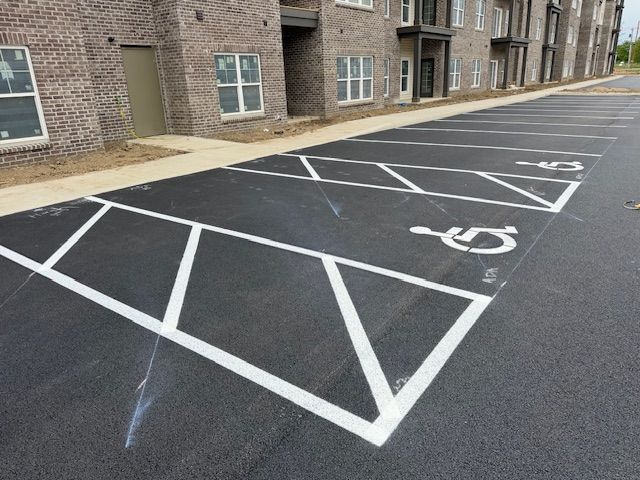
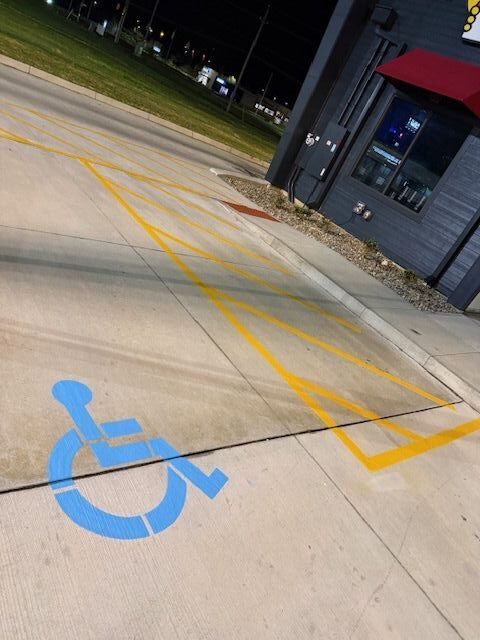
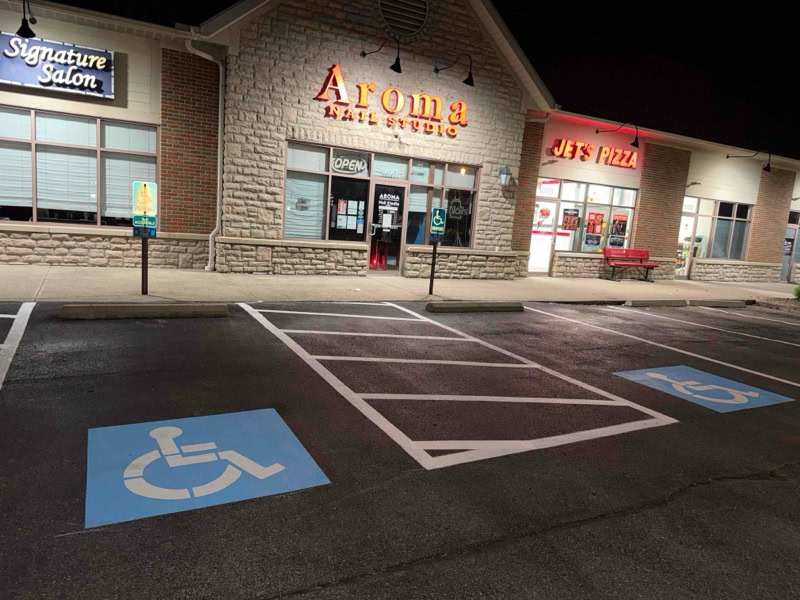
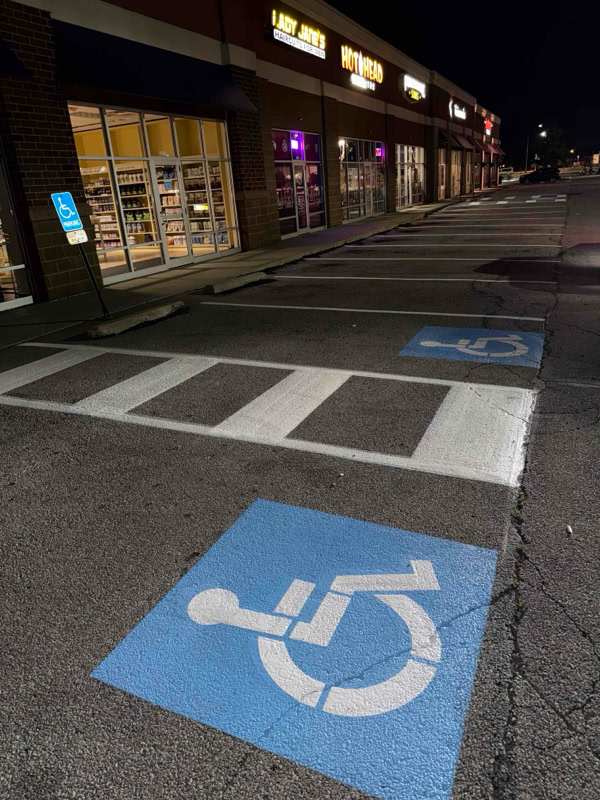
Our ADA Compliant line striping services include:
How It Works
Our ADA striping process is built around compliance verification, not paint application:
- On-site measurement. We verify stall width, access-aisle width, and slope against current ADA limits — 8-foot stalls with 5-foot aisles for cars, 8-foot aisles or 11-foot stalls for vans, and running slope no steeper than 1:48 in any direction of the accessible space.
- Accessible-route audit. We confirm the path from every accessible stall to the building entrance meets the clear-width and clear-path requirements, because a compliant stall that opens onto a non-compliant route is still a failure.
- Count verification. We confirm the total accessible space count against your lot size under the 2010 Standards table, and confirm that at least one of every six accessible spaces is designated van-accessible.
- Marking application. We stripe the diagonal-hatched access aisle in contrasting color, stencil the International Symbol of Accessibility in the stall, and repaint any worn border lines.
- Signage installation. We install the R7-8 sign at minimum 60-inch mounting height with a Van Accessible plaque on van-designated stalls, anchored below frost line to survive Central Ohio freeze-thaw.
- Compliance sign-off. We leave a written scope summary identifying the markings applied and the ADA citation each one maps to, giving property managers documentation for any future inspection or audit.
ADA Signage Specifications for Columbus Properties
Sign face, mounting height, and footing depth together decide whether an accessible-stall sign meets the 2010 ADA Standards for Accessible Design or only looks like it does. The R7-8 sign carries a white International Symbol of Accessibility on a blue field and must identify every accessible stall. Its bottom edge sits at least 60 inches above the finished surface so it stays visible when a full-sized vehicle is parked in the space. Van-accessible stalls require an additional “Van Accessible” plaque directly beneath the R7-8 face or integrated with it. Ohio requires these signs on permanent posts or fixtures, not painted on the pavement alone: a pavement-only marking disappears under snow cover during Central Ohio winters and fails the visibility standard during the months when access matters most. Post footings should be at least 24 inches deep, below the typical frost line, so freeze-thaw cycles do not lift, lean, or unseat the post. 1-800-STRIPER® of Columbus pairs every ADA striping refresh with a signage walk-through. Faded faces, leaning posts, missing Van Accessible plaques, and plow-damaged hardware all get caught and replaced on the same mobilization, so there is no gap between painted compliance and posted compliance.
Why Choose Us
Central Ohio weather is hard on ADA markings. Freeze-thaw cycles, winter road salt, and snow-plow contact wear the high-contrast blue and white paint and the reflective face of R7-8 signage faster than the 24-36 month refresh cycles common in milder climates. Columbus lots usually need visual inspection every spring after the final salt cycle, plus re-striping every 12 to 18 months to hold the clear-visibility standard the Department of Justice applies when assessing non-compliance. 1-800-STRIPER® of Columbus schedules accessible-space refresh cycles during the stable spring-through-fall paint window, late April through early October, when ambient and surface temperatures support long-term paint bond. We also coordinate with your existing parking maintenance so accessible markings, general stalls, fire lanes, and signage refresh happen on a single visit. That replaces three separate mobilizations, cuts operational disruption, and closes the compliance gap in one pass. For Columbus property owners who have not audited their accessible-parking scope in several years, we recommend a full walk-through before the next striping cycle: stall-count verification against current lot size, access-aisle width confirmation, signage height and plaque check, and accessible-route validation from stall to building entrance. Catching a pre-existing compliance gap during maintenance scoping is far less disruptive than resolving one surfaced by a Department of Justice complaint or private Title III lawsuit.
For a full list of our pavement marking services, visit our parking lot striping in Columbus page.
Businesses We Serve




How it Works

GET A FREE ESTIMATE
Contact us today and we’ll have a quote to you in 24 hours

SCHEDULE AN INSTALLATION
We’ll have your installation scheduled in less than 7 days, without affecting your business hours

GET A PARKING LOT THAT POPS
For a budget-friendly price, you’ll get a parking lot that looks like new!
We proudly work with:


We proudly work with:


Frequently Asked Questions About ADA Parking Lot Striping in Columbus, OH
What does ADA-compliant parking lot striping require in Ohio?
ADA-compliant striping in Ohio must meet the 2010 ADA Standards for Accessible Design, the ADA Accessibility Guidelines (ADAAG), and Ohio Building Code Chapter 11, which incorporates ICC A117.1 for accessible routes and parking. Requirements include properly dimensioned accessible stalls, striped access aisles with diagonal blue-and-white pattern, the International Symbol of Accessibility stencil in each stall, and code-compliant signage at the head of each space. 1-800-STRIPER® of Columbus handles full compliance assessment and marking for Central Ohio commercial properties.
How many ADA parking spaces does my Columbus parking lot need?
The required number depends on your total parking capacity per the 2010 ADA Standards. Lots with 1 to 25 total spaces need at least 1 accessible stall; 26 to 50 spaces need 2; and so on, scaling upward in a published table. Regardless of lot size, at least one of every six accessible spaces must be van-accessible. Columbus commercial properties serving the public — retail, medical, office, restaurants — must meet these counts to stay compliant.
What is the difference between an ADA space and a van-accessible space?
A standard ADA accessible stall requires a 60-inch access aisle (5 feet) for wheelchair transfer. A van-accessible stall requires either a wider 96-inch access aisle (8 feet) or an 11-foot stall width with a 5-foot aisle, to accommodate the side-deployed wheelchair lifts on accessible vans. Both types must be marked with the International Symbol of Accessibility, connect to an accessible route to the building entrance, and carry the required R7-8 and “Van Accessible” signage.
Can a Columbus property be penalized for non-compliant ADA striping?
Yes. Non-compliance can result in Department of Justice complaints, private ADA lawsuits under Title III, and — in Ohio — enforcement action referencing the Ohio Civil Rights Commission. Faded, missing, or incorrectly sized markings are not considered compliant even if the stalls were originally installed correctly. Routine audits of accessible-space visibility, signage, and aisle dimensions protect Columbus property owners from liability and preserve access for customers and employees.
How often should ADA striping be repainted in Central Ohio?
ADA markings in Columbus should be repainted every 12 to 18 months — faster than national guidance because Ohio freeze-thaw cycles, winter road salt, and snow-plow contact wear the high-visibility blue and white paint faster than milder climates. A visual inspection every spring, after the final salt cycle, confirms whether the International Symbol of Accessibility, access-aisle diagonals, and border lines still meet the clear-visibility standard required for compliance.
Does ADA striping apply to gravel parking lots in Ohio?
The ADA requires accessible spaces to have stable, firm, and slip-resistant surfaces. Gravel or unpaved lots must either pave or stabilize the designated accessible area — including the full stall, access aisle, and route to the building entrance — before compliant markings can be applied. In practice, ADA stall zones on predominantly gravel lots in Central Ohio are typically paved with asphalt or concrete panels first, then striped with reflective ADA markings.