Fire Lane Striping
In Durham, NC
Code-Compliant Fire Lane Markings
1-800-STRIPER provides professional fire lane striping in Durham, NC — marking compliant fire lanes, curbs, and no-parking zones per the North Carolina Fire Code for commercial properties throughout Durham, Orange, and Alamance counties.
1-800-STRIPER® of Durham PROVIDes Fire Lane Striping Services NEAR YOU
Is your parking lot ready for first responders?
Our team is well-versed in local fire regulations and will parter with you to design a fire lane striping plan that creates unobstructed emergency access to protect your customers and property.
Core Services:
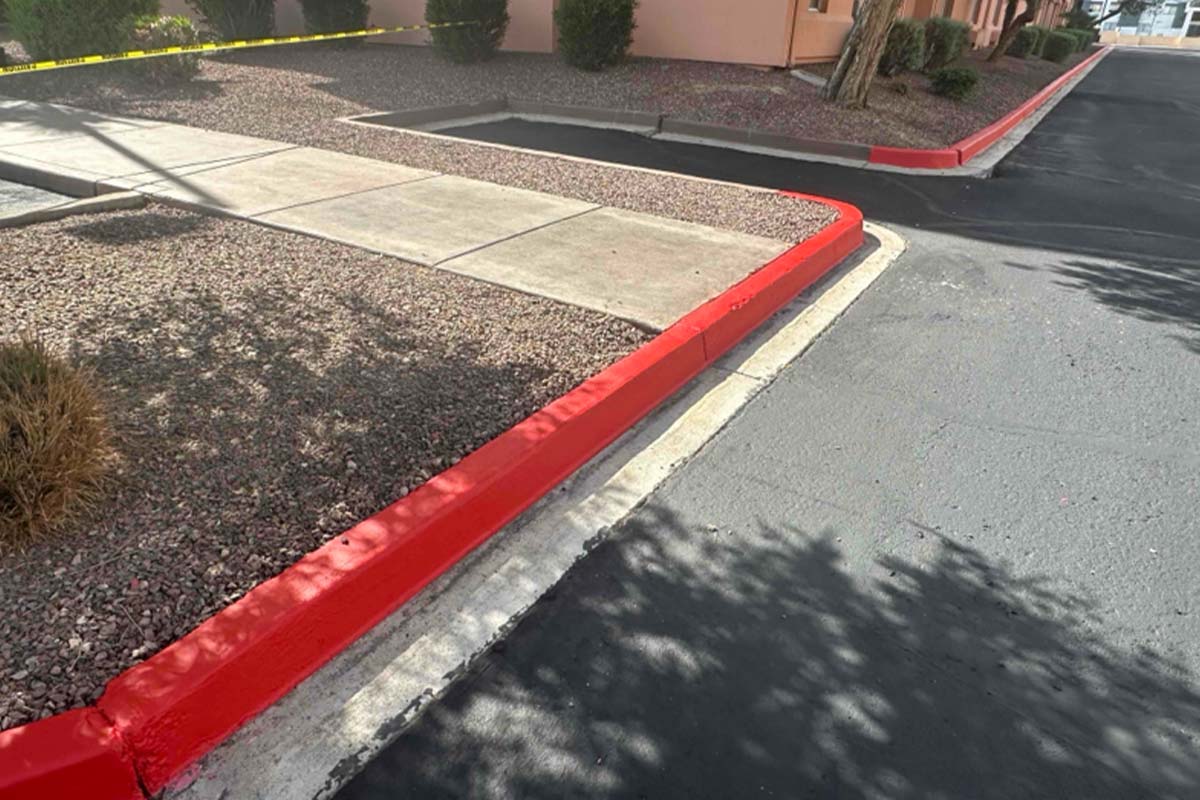
Fire Lane Striping in Durham, NC
A fire lane is the difference between an engine reaching your building and an engine stopping two hundred feet short of it. Marking one is straightforward work. Knowing *what* the marking has to say, and *who* decides, is where most property owners (and most striping contractors) get it wrong.
We mark fire lanes, curbs, and no-parking zones on commercial property across Durham, Orange, and Alamance counties, to whatever the authority having jurisdiction over your property requires. In the City of Durham, that authority is the fire marshal.
Fire Lane Requirements in North Carolina
The authority runs in a chain, and each link narrows the last:
- The North Carolina Fire Code — the state’s adopted fire code, based on the International Fire Code with North Carolina amendments, published by the North Carolina Building Code Council. Chapter 5 covers fire service features.
- Durham City Code § 46-84 — the ordinance by which the City of Durham adopts the state code and makes its provisions *”controlling within the limits of the city.”*
- The City of Durham Fire Marshal — the fire code official. The adopted code repeatedly leaves the form of a fire-lane designation to this office. Durham County covers unincorporated areas.
Two dimensions in the adopted code are actual numbers. NC Fire Code § 503.2.1 requires a fire apparatus access road to have an unobstructed width of *”not less than 20 feet”* and an unobstructed vertical clearance of *”not less than 13 feet 6 inches.”*
The marking rule is not a number at all. Section 503.3 requires that, *”where required by the fire code official, approved signs or other approved notices or markings that include the words NO PARKING—FIRE LANE”* be provided, and that *”the means by which fire lanes are designated shall be maintained in a clean and legible condition at all times.”*
That sentence mandates words. The code text sets no color, no stripe width, and no lettering interval. But read the adjective: *approved* signs, *approved* notices, *approved* markings. Approved by whom? The fire code official. The absence of a number in the code book does not make the marking a free choice on your property — it means the specification comes from the Durham fire marshal rather than from the code.
Markings, Curbs, and Fire Lane Notices
What we do on your property is paint: the fire lane itself, the curb, the no-parking zone, and the lettering the code calls for. We do not fabricate or install signs, and 1-800-STRIPER of Durham does not offer sign installation as a service. Where the code’s *”approved signs”* option is the route your fire marshal wants, that is a conversation with them and a sign vendor, not with us.
The maintenance duty is the one that catches owners. Section 503.3 does not require you to mark a fire lane once. It requires the designation to be maintained in a clean and legible condition at all times. A lane marked eight years ago and now scrubbed to a shadow by tires is not a marked lane in the code’s terms.
Getting Signed Off by the Durham Fire Marshal
- Ask the fire marshal’s office what they require, before anything is painted. Section 503.3 hands them the choice of form, so the answer is theirs to give, not ours to assume.
- Confirm the fire apparatus access road geometry — 20 feet of unobstructed width and 13 feet 6 inches of vertical clearance are the code minimums, and an overhang or a low canopy can put an otherwise compliant lane out of compliance.
- Agree the extent of the lane — where it starts, where it ends, and which curbs are included.
- Mark it, to the form the fire marshal specified, with the words NO PARKING—FIRE LANE where the designation requires them.
- Keep it legible. The duty is continuous. Put restriping the fire lane on the same schedule as the rest of the lot, not on a schedule of your own.
For a full list of our pavement marking services, visit our parking lot striping in Durham page.
Businesses We Serve




How it Works

GET A FREE ESTIMATE
Contact us today and we’ll have a quote to you in 24 hours

SCHEDULE AN INSTALLATION
We’ll have your installation scheduled in less than 7 days, without affecting your business hours

GET A PARKING LOT THAT POPS
For a budget-friendly price, you’ll get a parking lot that looks like new
We proudly work with:


We proudly work with:

Frequently Asked Questions About Fire Lane Striping in Durham, NC
Who decides where fire lanes go in Durham?
The City of Durham Fire Marshal, operating through the Fire Prevention Division. Durham City Code § 46-84 adopts the state fire prevention code and makes it controlling inside the city limits, and the adopted code names the fire code official as the authority who determines where a fire-lane designation is required and what form it takes. For property in unincorporated Durham County, the county is the relevant jurisdiction. Ask them before you paint, not after.
What code governs fire lanes in North Carolina?
The North Carolina Fire Code, which is the state’s adopted code based on the International Fire Code with North Carolina amendments. NFPA 1 is a model fire code — widely referenced, and legally binding only where a jurisdiction adopts it. In Durham the operative chain is the state fire code, adopted into the city code at § 46-84, administered by the city fire marshal. Chapter 5 of the state code, Fire Service Features, is where the fire apparatus access road and fire lane provisions live.
Is there a required color or stripe width for fire lane markings?
Not in the code, and this is where nearly every striping website will mislead you. The red stripe, the six-inch line, the lettering every twenty-five feet: those figures come from individual fire marshals’ handouts, not from NFPA 1 and not from the North Carolina Fire Code, whose adopted text carries no color and no dimension for a fire-lane marking. That is not the same as saying color is unregulated on your lot. Section 503.3 requires an *approved* marking, and the Durham fire marshal is who approves it. Ask them first; their answer is the specification.
What must a fire lane marking actually say?
The words NO PARKING—FIRE LANE. Section 503.3 of the adopted code requires that, where the fire code official requires it, “approved signs or other approved notices or markings that include the words NO PARKING—FIRE LANE” be provided for fire apparatus access roads. The mandatory content is the wording. The form — painted marking, posted notice, or sign — is the fire code official’s call. And the designation must be maintained in a clean and legible condition at all times, which makes legibility a standing obligation rather than a one-off job.
How wide must a fire apparatus access road be?
Not less than 20 feet of unobstructed width, with an unobstructed vertical clearance of not less than 13 feet 6 inches. Those are the two real dimensions in the adopted code, at § 503.2.1. The vertical clearance is the one that catches people — a canopy, a drive-through overhang, or a low branch can put an otherwise compliant lane out of compliance without a single line of paint changing. Wider figures circulate; confirm the requirement for your property with the fire marshal before you rely on any of them.
Can anyone park in a fire lane on private property?
No. A properly designated fire lane on private commercial property is enforceable, and the property owner has an interest in that being true — the lane exists so an engine can reach the building, and a blocked lane defeats it. The mechanics of enforcement in a given lot depend on how the lane was designated and by whom, which is another reason to have the fire marshal’s office specify the designation before you paint it rather than after.