
Temporary Parking Lot Striping
In Des Moines, IA
Event and Construction Markings
1-800-STRIPER® provides professional temporary parking lot striping in Des Moines, IA — short-duration event markings, construction-zone striping, and overflow parking layouts on grass, gravel, pavement, or any surface, marked and surfaced to the accessible-parking requirements the 2010 ADA Standards apply to temporary facilities.
1-800-STRIPER® of Des Moines PROVIDes Temporary Parking Lot Striping Services NEAR YOU
Need Temporary Stripes?
Use temporary stripes to direct traffic and create parking areas at your special event or to keep construction sites safe without a long-term commitment. We paint on grass, gravel, pavement, or any other surface where temporary striping is needed.
Striping solutions for:
Temporary Parking Lot Striping in Des Moines, IA
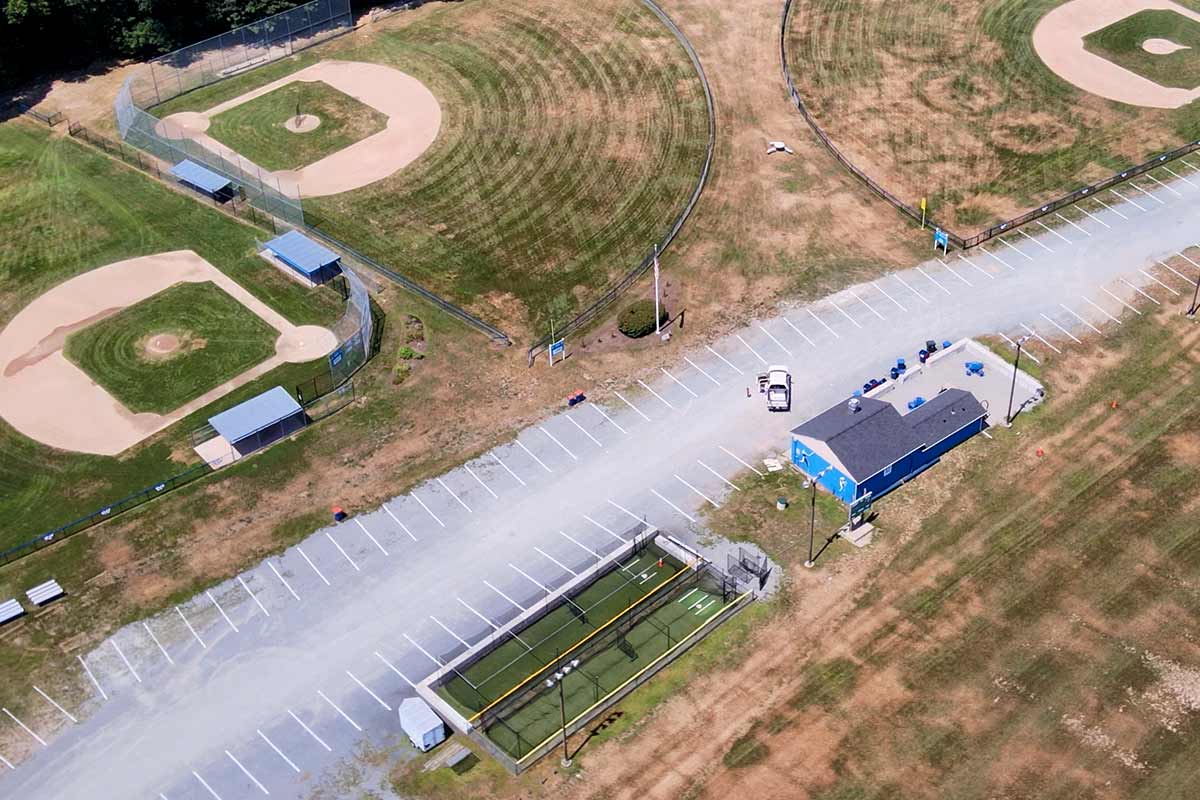
Temporary striping solves a problem permanent striping cannot: parking that has to exist for a weekend, a season or the length of a build, on ground that may not be pavement at all. Temporary parking lot striping in Des Moines, IA covers event lots, construction-zone parking and traffic routing, and overflow areas that carry load only part of the year. All of it marked so drivers can read the layout, and removable when the need ends.
Events, Construction Zones and Overflow Parking
Three situations, three different jobs.
Event parking. Absorbs a large arrival volume in a short window, so the layout prioritizes flow and clear direction over stall yield. Vehicles that cannot find the next row are what back traffic up onto the road.
Construction-zone parking. About separation — keeping worker parking, delivery routing and public access from crossing each other on a site whose geometry changes month to month.
Overflow parking. The simplest brief and the easiest to underestimate, because an overflow area still has to be navigable and still has to carry accessible spaces if it is open to the public.
Striping on Grass, Gravel, Pavement — or Any Surface
Surface is a constraint, not a barrier. We stripe on grass, gravel, pavement and other surfaces where temporary parking has to go, matching the marking method to what the ground will hold. Turf and gravel take different products and different application methods than asphalt, and neither behaves like a sealed lot. The practical limits are worth knowing up front: a marking on gravel is defined by the aggregate it sits on and will scatter under turning traffic more than one on pavement, and turf markings live or die on the condition and moisture of the ground when they are applied. None of that stops the job — it changes the method and the expected service life, both of which we set out before starting.
Temporary Lots Still Have to Be Accessible
This is the requirement almost nobody in this market publishes, and it catches otherwise careful event organizers. The 2010 ADA Standards for Accessible Design say so in as many words at Section 201.3: these requirements apply to temporary and permanent buildings and facilities. A parking area provided for an event is a facility, and the fact that it exists for two days does not exempt it.
There is one boundary worth knowing, because it is the exception people reach for and it does not stretch as far as they expect. Section 203.2 excepts structures and sites directly associated with the actual processes of construction — the standard names scaffolding, bridging, materials hoists, materials storage and construction trailers. Parking opened to the public alongside a job site is a different thing from the working site itself, so if the public parks on it, plan it as a facility and raise the question with your general contractor early rather than assuming the construction exception carries it.
That has two practical consequences on unpaved ground. First, the accessible spaces have to be there and have to be marked; an overflow field with no designated accessible parking is not compliant simply because it is temporary. Second, the ground those spaces sit on, and the accessible route from them, has to be firm, stable and slip resistant, which loose gravel and soft turf are not on their own. In practice that usually means placing the accessible spaces on the firmest available ground closest to the entrance, and treating or matting the route where the surface will not meet the standard by itself. Planning that at layout stage costs very little. Retrofitting it on the morning of an event costs a great deal.
Removable Markings and How They Come Back Up
Removability is the point of the product, and it is worth understanding what that means in practice. Temporary markings are chosen so they can be taken up or allowed to wear off within the timeframe you need, rather than becoming a permanent feature of a surface you do not want marked. On pavement, removal method depends on what was applied and how long it has been down. On turf and gravel, the marking generally degrades on its own within the expected window. The decision to make early is how long the markings need to survive, because that governs both the product and the removal effort at the end.
Lead Time and Turnaround for an Event Lot
Event work is scheduling work. The variables are the size of the area, the surface, the weather in the days before the event, and how much access we have to the site beforehand. Turf and gravel add sensitivity to ground moisture, which is the one input nobody controls. 1-800-STRIPER® runs 24/7 service and can work overnight and on weekends, which helps when a site is only available outside its normal use. The earlier the layout is settled, the more room there is to work around weather — and on an unpaved site, weather is usually the binding constraint rather than crew availability.
Temporary vs. Permanent Striping — Choosing the Right One
The test is not how long the markings need to last but whether the layout itself is permanent. If the parking arrangement is here to stay and the surface is pavement, permanent striping is cheaper over any reasonable horizon and looks better throughout. Temporary striping earns its place when the layout is genuinely provisional, as with an event, a construction phase or a seasonal overflow, or when the ground is not pavement and permanent marking is not an option. Using temporary markings on a permanent pavement layout means repeating the job; using permanent markings on ground that will be something else next month means removing them.
For a full list of our pavement marking services, visit our parking lot striping in Des Moines page.
Businesses We Serve




How it Works

GET A FREE ESTIMATE
Contact us today and we’ll have a quote to you in 24 hours

SCHEDULE A STRIPING
We’ll have your space restriped in less than 7 days, without affecting your business hours

GET A PARKING LOT THAT POPS
For a budget-friendly price, you’ll get a parking lot that looks like new
We proudly work with:


We proudly work with:


Frequently Asked Questions About Temporary Parking Lot Striping in Des Moines, IA
Do temporary parking areas have to be ADA accessible?
Yes. Section 201.3 of the 2010 ADA Standards for Accessible Design applies them to temporary and permanent facilities alike, so a parking area provided for an event is not exempt because it is short-lived. Accessible spaces have to be provided and marked, and the ground surface and accessible route have to be firm, stable and slip resistant — which loose gravel and soft turf are not without treatment. The one carve-out is Section 203.2, which excepts sites directly associated with the actual processes of construction; parking the public uses is not that, so treat it as a facility.
Can you stripe on grass or gravel?
Yes. Temporary parking lot striping in Des Moines, IA is regularly done on grass, gravel, pavement and other surfaces, with the marking method matched to the ground. Turf and gravel need different products and application than asphalt, and service life differs accordingly. Gravel markings scatter under turning traffic more than pavement markings do, and turf markings depend heavily on ground condition and moisture when applied.
How long do temporary markings last?
That is set by the product, the surface and the traffic, and we scope it to the window you actually need rather than quoting a generic figure. A weekend event and a six-month construction phase are different specifications. Tell us how long the markings have to stay readable and what will drive across them, and we will match the method to that rather than over-specifying and leaving you with markings that outlive the need.
How are temporary markings removed?
It depends on the surface and the product. On pavement, removal method follows from what was applied and how long it has been in place. On turf and gravel, markings usually degrade within the intended window without any removal step. We agree the end state before we start, because a marking chosen for easy removal and one chosen for maximum durability are not the same product.
How much notice do you need for an event lot?
The earlier the better, and more so on unpaved ground. The drivers are the size of the area, the surface, site access before the event, and the weather in the preceding days. Turf and gravel are sensitive to ground moisture, which nobody controls. We run 24/7 service and work overnight and on weekends where a site is only free outside its normal use. Call with the date as soon as you have it.
When should I choose temporary striping over permanent?
When the layout is provisional rather than when the markings simply need to last a while. Events, construction phases and seasonal overflow areas are the clear cases, as is any parking on ground that is not pavement. If the arrangement is permanent and the surface is asphalt or concrete, permanent striping costs less over any reasonable horizon and holds its appearance better.