Fire Lane Striping
In Des Moines, IA
Code-Compliant Fire Lane Markings
1-800-STRIPER® provides professional fire lane striping in Des Moines, IA — marking compliant fire lanes, curbs, and NO PARKING FIRE LANE legends per the International Fire Code as adopted statewide in the Iowa Administrative Code, for commercial properties throughout Polk, Dallas, and Story counties.
1-800-STRIPER® of Des Moines PROVIDes Fire Lane Striping Services NEAR YOU
Is your parking lot ready for first responders?
Our team is well-versed in local fire regulations and will parter with you to design a fire lane striping plan that creates unobstructed emergency access to protect your customers and property.
Core Services:
Fire Lane Striping in Des Moines, IA
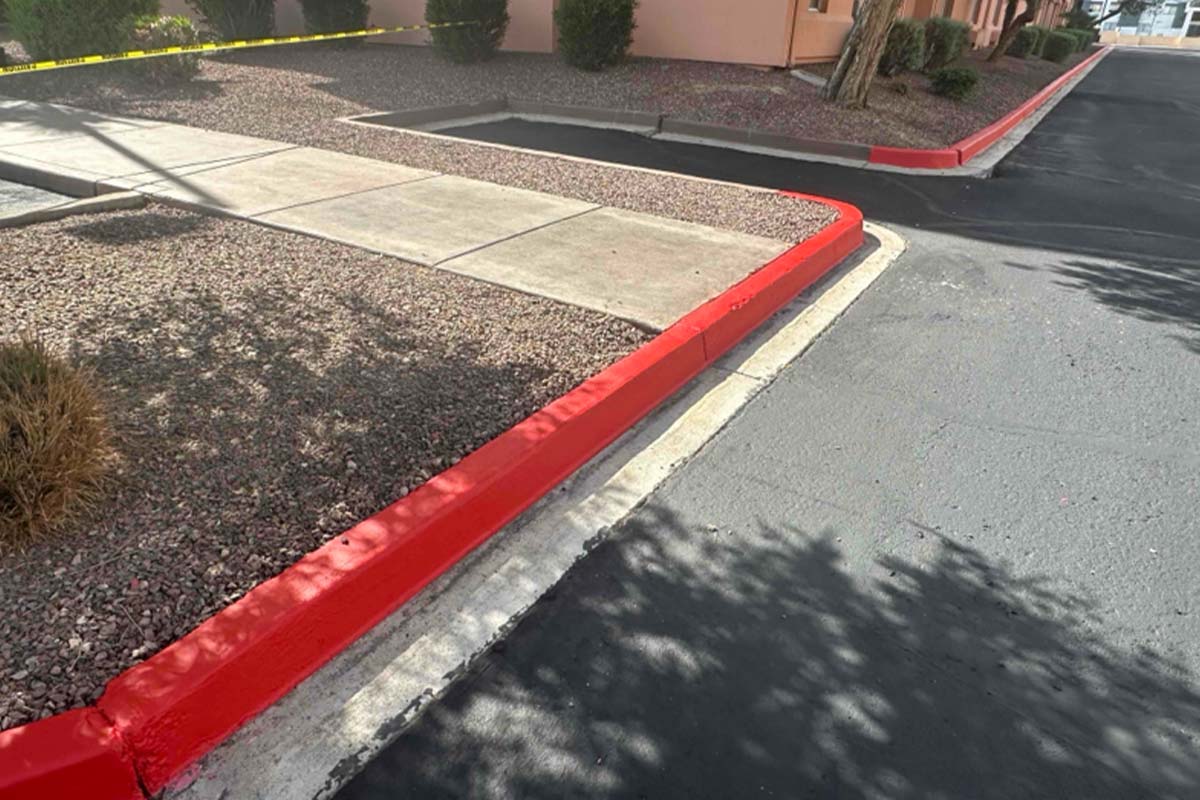
A fire lane is the piece of your lot that exists for a vehicle that may never arrive, and when it does, the margin between a working access road and an obstructed one is measured in seconds. Fire lane striping in Des Moines, IA means marking those routes so they read as off-limits to ordinary parking, stay legible under Iowa weather, and match what the code and your fire code official require. Those are two different things.
Which Fire Code Applies in Iowa
Iowa is an International Fire Code state, not an NFPA 1 state, and getting this wrong is the most common error in fire-lane content written for Iowa properties. Iowa Administrative Code rule 661—201.2(1) adopts the International Fire Code, 2015 edition, by reference as general fire safety requirements applying to all occupancies other than those to which occupancy-specific provisions explicitly say otherwise. NFPA 1 is not adopted in Iowa at all; the only NFPA instrument the rule adopts directly is NFPA 10, for portable fire extinguishers. Governing fire apparatus access roads, Section 503 is absent from Iowa’s amendment list, so it applies exactly as published.
What the Code Says About Marking a Fire Lane
Section 503.3 is the marking provision, and the conditional at the front of it matters as much as the rest. Where required by the fire code official, approved signs or other approved notices or markings that include the words NO PARKING—FIRE LANE shall be provided for fire apparatus access roads to identify such roads or prohibit the obstruction thereof. The means by which fire lanes are designated shall be maintained in a clean and legible condition at all times, and be replaced or repaired when necessary to provide adequate visibility. Two separate things are being said there. Whether you must mark at all is triggered by the fire code official; nowhere does the code say every fire lane in Iowa must be painted regardless. Once markings exist, though, the duty to keep them clean and legible at all times is unconditional. Section 503.4 adds that access roads shall not be obstructed in any manner, including by the parking of vehicles.
Fire Apparatus Access Road Dimensions
Section 503 sets the geometry, and these are the numbers that decide whether a drive aisle can serve as an access road at all.
| Provision | Requirement |
|---|---|
| Unobstructed width | not less than 20 feet |
| Unobstructed vertical clearance | not less than 13 feet 6 inches |
| Reach to all portions of the facility and first-story exterior walls | within 150 feet |
| Dead-end road requiring an approved turnaround | longer than 150 feet |
| Clear space around a fire hydrant (Section 507.5.5) | 3 feet |
Surfaces have a requirement of their own: the road must support the imposed loads of fire apparatus and stay usable in all weather. Notice what Section 503 does not contain. No stripe width, no paint color, no line spacing. That absence is why the fire code official’s judgment decides the details.
Iowa Adopts IFC Appendix D Statewide
Most states leave the International Fire Code appendices to local adoption, which is why national fire-lane guidance usually treats Appendix D as optional. Iowa does not. Iowa Administrative Code rule 661—201.2(1)(x) adopts Appendices B, C and D, and Appendix D is Fire Apparatus Access Roads. That makes it part of the statewide adopted instrument rather than a local option. For an owner in Polk, Dallas or Story county, access-road requirements are therefore more uniform across the metro than in a state leaving the appendix to each jurisdiction.
Who Enforces a Fire Lane in Polk, Dallas and Story Counties
The authority having jurisdiction decides, and for most commercial properties here that is the local fire code official. Because Section 503.3 conditions the marking requirement on that official, whether your lot needs fire lane markings is a local determination, not something a striping contractor rules on from a drawing. Within the city limits, Des Moines Municipal Code Chapter 46 governs fire prevention and protection, with Article XI on access and identification and Article XIX on fire department access, including commercial and industrial access roads. Outside Des Moines, the municipality or county fire official holds the same authority, and 1-800-STRIPER® confirms the designation with whichever office that is before any paint goes down.
Keeping Fire Lane Markings Legible
This is the obligation most properties miss, and the one part of Section 503.3 that carries no conditional once markings are in place. Designations must be maintained in a clean and legible condition at all times, and replaced or repaired when necessary to provide adequate visibility. Iowa weather works against that: freeze-thaw, plow blades and de-icing chemicals attack curb paint and legends faster than an ordinary stall line mid-lot. Compliant when painted does not mean compliant three winters later.
For a full list of our pavement marking services, visit our parking lot striping in Des Moines page.
Businesses We Serve




How it Works

GET A FREE ESTIMATE
Contact us today and we’ll have a quote to you in 24 hours

SCHEDULE AN INSTALLATION
We’ll have your installation scheduled in less than 7 days, without affecting your business hours

GET A PARKING LOT THAT POPS
For a budget-friendly price, you’ll get a parking lot that looks like new
We proudly work with:


We proudly work with:


Frequently Asked Questions About Fire Lane Striping in Des Moines, IA
Which fire code applies in Iowa?
The International Fire Code, 2015 edition. Iowa Administrative Code rule 661—201.2(1) adopts it by reference as general fire safety requirements applying to all occupancies. NFPA 1 is not adopted in Iowa — the only NFPA document adopted directly is NFPA 10 for portable fire extinguishers. For fire lane striping in Des Moines, IA that distinction matters, because the two codes differ on access-road provisions and guidance written against NFPA 1 does not describe what applies here.
What has to be painted on a fire lane in Des Moines?
Where the fire code official requires marking, Section 503.3 calls for approved signs, notices or markings including the words NO PARKING—FIRE LANE, provided to identify the access road or prohibit its obstruction. Note the conditional at the front: nothing in the code requires every fire lane in Iowa to be marked regardless of circumstance. No stripe width and no paint color are specified either, so those specifics come from your fire code official. We confirm with the authority having jurisdiction before marking.
How wide does a fire lane have to be?
Fire apparatus access roads need an unobstructed width of not less than 20 feet and an unobstructed vertical clearance of not less than 13 feet 6 inches, under Section 503 of the adopted code. Those are clear-space minimums rather than stripe dimensions. Twenty feet has to remain free of parked vehicles and other obstructions, which is why Section 503.4 prohibits obstructing an access road in any manner, including by parking.
Does Iowa use the IFC fire-lane appendix?
Yes, and that is unusual. Iowa Administrative Code rule 661—201.2(1)(x) adopts Appendices B, C and D of the International Fire Code statewide, and Appendix D is Fire Apparatus Access Roads. Most states leave the appendices to local option, so national guidance often treats Appendix D as something you have to check for. In Iowa it is part of the statewide adoption.
Who decides where a fire lane goes on my property?
The fire code official, as the authority having jurisdiction. Section 503.3 conditions the marking requirement on that official, and the placement and extent of an access road are determined against the code’s access requirements as applied to your specific site — building footprint, entrances, hydrant locations and the 150-foot reach requirement. A striping contractor marks what the authority approves; we do not set the designation ourselves, and we confirm it before any paint goes down.
Do faded fire lane markings have to be repainted?
Yes. Section 503.3 requires that the means by which fire lanes are designated be maintained in a clean and legible condition at all times, and be replaced or repaired when necessary to provide adequate visibility. That is a standing duty with no scheduled interval attached, and it applies independently of when the rest of your lot is due for restriping. Curb faces and legends typically degrade first under plowing and de-icing.
How far can a building be from a fire apparatus access road?
Section 503.1.1 requires the access road to extend to within 150 feet of all portions of the facility and of all portions of the exterior walls of the first story. A dead-end road longer than 150 feet also needs an approved turnaround. That reach requirement often determines where an access road runs, and therefore which drive aisles cannot be given over to stalls.