
Wheel Stop Installation
In Central Atlanta, GA
Concrete and Rubber Parking Stops
1-800-STRIPER provides professional wheel stop installation in Central Atlanta, GA — anchoring concrete, recycled-rubber, and plastic-composite wheel stops at stall heads to protect sidewalks, storefronts, and ADA accessible routes per the 2010 ADA Standards section 403 for commercial properties across Fulton and DeKalb counties.
1-800-STRIPER® of Atlanta (central) PROVIDes Wheel Stops Services NEAR YOU
Need to protect vehicles or walls from accidental damage?
Wheel stops (also called parking blocks) protect your property, enhance safety, and improve parking lot organization.
Benefits:
Wheel stops prevent vehicles from parking too far into a space or overextending into other spots, pedestrian walkways, and other areas, while also helping with vehicle alignment. They can prevent damage to buildings, curbs, or landscaping. Wheel stops also serve as clear visual cues for proper parking and are sometimes used on slopes to prevent cars from rolling.
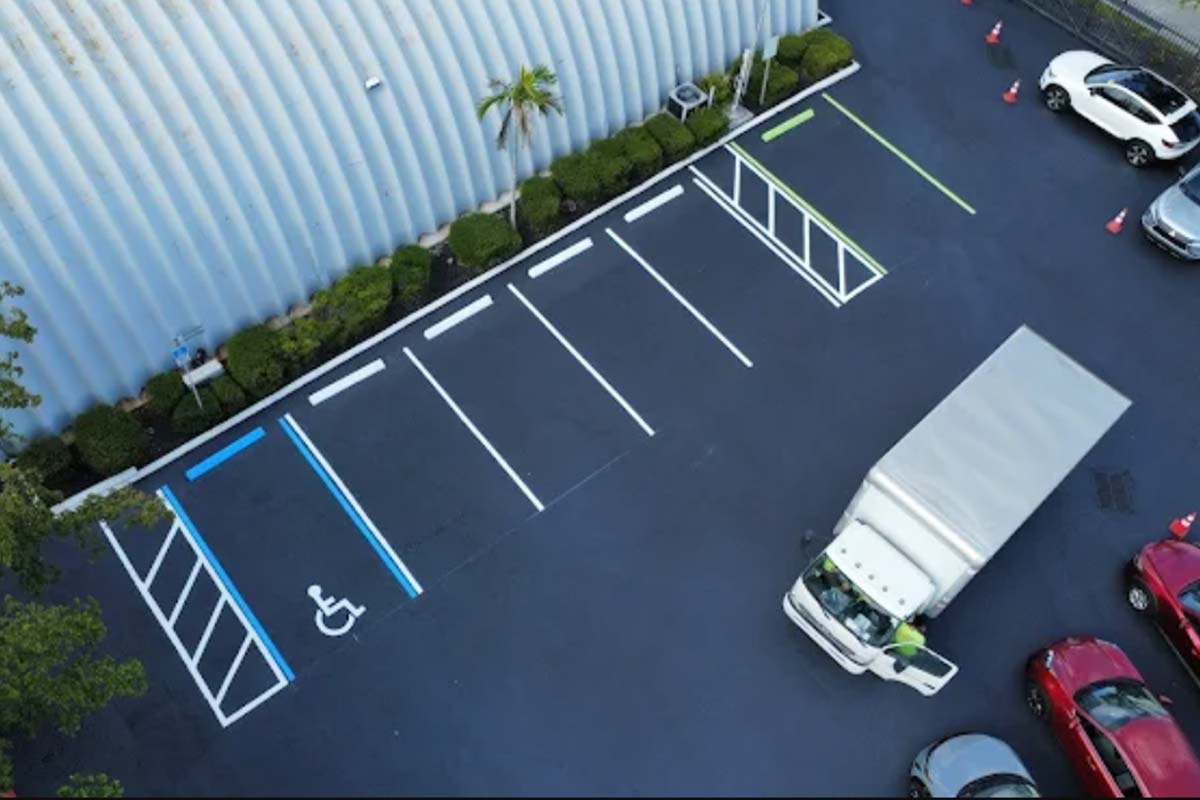
What Wheel Stops Do
Wheel stops (parking blocks or curb stops) sit at the head of a parking stall and keep a vehicle from rolling too far forward. They protect sidewalks, storefronts, landscaping, and equipment from bumper damage, keep cars from overhanging a pedestrian walkway, and help drivers position consistently within a stall. They matter most where a stall faces a building, a walkway, or an accessible route.
Wheel Stop Materials
We install three common types, each with trade-offs:
- Concrete — heavy, rigid, long-lasting; the traditional choice for durability, though it can crack over years of impact and is harder to relocate.
- Recycled rubber — lighter, flexible, won’t crack or rust, easier to handle and replace, and made from recycled material.
- Plastic/composite — light, weather-resistant, and color-stable (often safety yellow for visibility); good where visibility and easy installation matter.
We help match the material to the location, traffic, and how often the stops are likely to be relocated.
Placement: Where Wheel Stops Go
Placement is what makes a wheel stop work. They sit at the head of the stall, set back from the curb or wall by roughly the length of a bumper overhang — commonly two to three feet from a wall or sidewalk edge — so a parked vehicle stops short of what’s behind it without the front wheels riding over the block. Set them too close to a wall and bumpers still hit; too far and cars overhang the walkway. We position each stop for the vehicles and layout at your site.
ADA §502.7 Overhang & Accessible-Route Protection
Wheel stops play a specific role in ADA compliance. Under the 2010 ADA Standards, an accessible route — including the access aisle next to an accessible stall — has to stay clear, and a parked vehicle’s overhang can’t reduce the required width. Section 502.7 addresses vehicle overhang at accessible parking. Placing wheel stops correctly keeps bumpers from intruding into access aisles and walkways, protecting the accessible route and the required clear width.
Anchoring Method
A wheel stop only works if it stays put. We anchor each stop to the pavement — typically with steel spikes or rebar pins driven through pre-formed holes into asphalt, or with anchor bolts and adhesive on concrete — so it holds against repeated bumper contact. Proper anchoring is the difference between a stop that lasts and one that walks out of position.
For a full list of our pavement marking services, visit our parking lot striping in Central Atlanta page.
Businesses We Serve




How it Works

GET A FREE ESTIMATE
Contact us today and we’ll have a quote to you in 24 hours

SCHEDULE AN INSTALLATION
We’ll have your installation scheduled restriped in less than 7 days, without affecting your business hours

GET A PARKING LOT THAT POPS
For a budget-friendly price, you’ll get a parking lot that looks like new
We proudly work with:


We proudly work with:


Frequently Asked Questions About Wheel Stop Installation in Central Atlanta, GA
Where should wheel stops be placed?
At the head of the stall, set back from the curb, wall, or sidewalk by roughly a bumper’s length — commonly two to three feet — so the vehicle stops short of what’s behind it without riding over the block. Near accessible parking, placement also keeps overhang out of the access aisle.
How far should wheel stops be from the wall?
Generally about two to three feet from a wall or sidewalk edge, accounting for the vehicle’s front overhang. Too close and bumpers still contact the wall; too far and cars overhang the walkway. We set the distance to the vehicles and layout at your site.
What are wheel stops made of?
The common options are concrete, recycled rubber, and plastic/composite. Concrete is rigid and long-lasting; rubber is flexible, won’t rust or crack, and is easy to replace; plastic/composite is light and color-stable. We match the material to the location and traffic.
Are wheel stops required for ADA parking?
They’re not always required, but where they’re used near accessible parking they help keep vehicle overhang out of the access aisle and accessible route, which the 2010 ADA Standards require to stay clear. Section 502.7 addresses overhang at accessible spaces.
How are wheel stops anchored?
We anchor them to the pavement — steel spikes or rebar pins into asphalt, or anchor bolts and adhesive on concrete — so they hold against repeated bumper contact and don’t shift out of position.
Can you replace our broken wheel stops?
Yes. We remove cracked or dislodged concrete stops and install new ones in the material you choose, re-anchored properly so they stay in place.