Warehouse Line Painting
In Central Atlanta, GA
OSHA-Compliant Safety Markings
1-800-STRIPER provides professional warehouse line painting in Central Atlanta, GA — OSHA-compliant aisle lines, pedestrian walkways, and color-coded safety zones per OSHA 1910.22 and the ANSI Z535.1 safety color code for industrial facilities across Fulton and DeKalb counties.
1-800-STRIPER® of Atlanta (central) PROVIDes Warehouse Floor Markings Services NEAR YOU
Want your indoor space to operate more efficiently?
Warehouse and interior markings ensure clear traffic lanes, organized storage zones, and designated spaces designed to help your business operate safely and efficiently.
Benefits:
What Warehouse Line Painting Includes
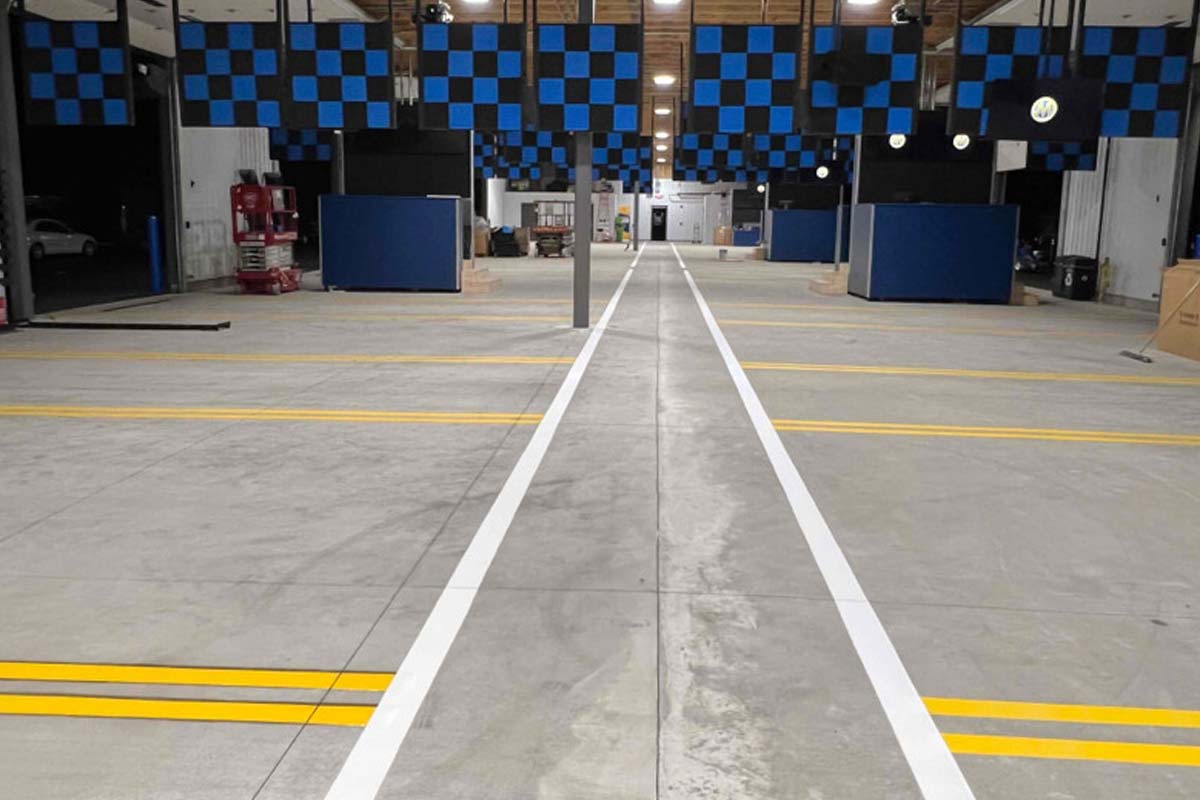
Warehouse line painting marks the floor of an industrial facility so people, forklifts, and inventory each have a defined place. Typical markings include forklift aisles and travel lanes, pedestrian walkways, crosswalks at intersections, storage and staging bays, equipment footprints, keep-clear zones in front of electrical panels and fire exits, and hazard striping at docks and ramps. We mark concrete floors in active distribution centers, manufacturing plants, and storage warehouses across Fulton and DeKalb counties.
A clear floor plan is operational, not cosmetic: defined aisles and walkways reduce forklift-pedestrian conflict, mark out the storage footprint so inventory doesn’t creep into travel lanes, and make the facility legible to new staff and to inspectors.
OSHA 1910.22 + ANSI Z535.1 Color Code
Floor marking in a warehouse is a safety-code matter. OSHA’s walking-working-surfaces rule (29 CFR 1910.22) requires aisles and passageways to be kept clear and in good repair. OSHA 1910.176(a) further calls for permanent aisles and passageways to be appropriately marked where mechanical handling equipment is used. OSHA doesn’t dictate specific colors, so most facilities follow the ANSI Z535.1 safety color code for consistency:
| Color | Common use |
|---|---|
| Yellow | Aisles, traffic lanes, work cells |
| White | Equipment, fixtures, racking, general boundaries |
| Red | Fire equipment, emergency stops, defective-material holds |
| Blue / Green | Informational, materials, safety/first-aid areas |
| Black-yellow or black-white hatching | Hazard areas requiring caution |
Using a documented color convention makes the floor readable to every worker and to OSHA inspectors, and it’s the backbone of lean/5S floor organization.
Aisle, Walkway & Safety-Zone Markings
We size aisles to your forklift traffic and rack layout, mark pedestrian walkways with a clear separation from vehicle lanes, and add crosswalks where foot and forklift paths cross. Lines are typically run 2 to 4 inches wide depending on the marking’s purpose. Keep-clear zones get marked in front of electrical panels, eyewash stations, fire extinguishers, and exit doors so nothing gets stacked where it shouldn’t be.
Epoxy vs. Traffic Paint for GA Facilities
Two coatings cover most jobs. Standard traffic paint goes down fast, cures quickly, and suits lighter foot traffic or facilities that re-stripe periodically. Epoxy and other high-durability coatings cost more and take longer to cure but stand up to constant forklift wear and frequent scrubbing. In Georgia facilities that swing between cool winters and hot, humid summers, surface temperature and slab moisture at application matter — we schedule coatings inside the manufacturer’s temperature window so they bond and cure correctly rather than peeling under traffic.
Floor Prep
A coating is only as good as the prep under it. New and old slabs alike need cleaning and degreasing, and high-durability coatings often need mechanical prep — diamond grinding or shot blasting — so the coating keys into the concrete instead of sitting on a sealed surface. We prep to the coating’s requirement before any line goes down.
Facilities We Mark
We work in distribution and fulfillment centers, light-manufacturing plants, cold-storage and food-grade warehouses, auto and parts facilities, and back-of-house retail stockrooms. Each gets a layout matched to its forklift flow, pedestrian routes, and storage plan.
Our Process
- Walk & plan — we map forklift lanes, pedestrian routes, and hazard zones with your operations team.
- Surface prep — concrete is cleaned, degreased, and mechanically prepped where the coating requires.
- Mark & cure — we apply the chosen coating in the agreed color code and schedule around your shifts so production keeps moving.
For a full list of our pavement marking services, visit our parking lot striping in Central Atlanta page.
Businesses We Serve




How it Works

GET A FREE ESTIMATE
Contact us today and we’ll have a quote to you in 24 hours

SCHEDULE A STRIPING
We’ll have your space restriped in less than 7 days, without affecting your business hours

GET A PARKING LOT THAT POPS
For a budget-friendly price, you’ll get a parking lot that looks like new
We proudly work with:


We proudly work with:
Frequently Asked Questions About Warehouse Line Painting in Central Atlanta, GA
What is the yellow line marking in a warehouse?
Under the common ANSI Z535.1 color code, yellow marks traffic and forklift aisles, work cells, and general circulation paths. It’s the color that tells people and drivers where the travel lanes are, separated from white equipment boundaries and red fire/emergency markings.
What is a warehouse walkway marking?
A walkway marking is a striped pedestrian path — usually a bordered lane, often with crosswalks where it meets forklift aisles — that keeps people physically separated from vehicle traffic. It’s part of meeting OSHA’s requirement to keep aisles and passageways clear and marked.
How do you mark a warehouse floor?
We map forklift lanes, pedestrian routes, and hazard zones with your team, clean and prep the concrete, then apply traffic paint or a durable coating in a documented color code (typically ANSI Z535.1). Work is scheduled around shifts and done zone by zone so production keeps running.
Epoxy or traffic paint — which lasts longer in a busy warehouse?
Epoxy and high-durability coatings last longer under constant forklift traffic and frequent washing, but they cost more and cure slower and need mechanical floor prep. Standard traffic paint is faster and cheaper and works well for lighter traffic or periodic re-striping. We recommend based on your traffic and re-coat cycle.
Can you mark our floors without shutting down operations?
Usually yes. We schedule around shifts, work zone by zone, and prep areas while another is curing. For coatings with longer cure times we plan the sequence with your operations team so production keeps running.
How do you handle markings in front of electrical panels and exits?
We mark keep-clear zones in front of electrical panels, eyewash stations, fire equipment, and exit doors so the required clearance stays open and nothing gets stored there. These zones are typically marked with hazard striping or a bordered keep-clear box.