Temporary Parking Lot Striping
In North Hartford, CT
Event and Construction Markings
1-800-STRIPER provides professional temporary parking lot striping in North Hartford, CT — short-duration event markings, construction-zone striping, and overflow parking layouts on grass, gravel, pavement, or any surface using removable water-based traffic paint.
1-800-STRIPER® of North Hartford PROVIDes Temporary Striping Services NEAR YOU
Need Temporary Stripes?
Use temporary stripes to direct traffic and create parking areas at your special event or to keep construction sites safe without a long-term commitment. We paint on grass, gravel, pavement, or any other surface where temporary striping is needed.
Striping solutions for:
Temporary Parking Lot Striping in North Hartford, CT
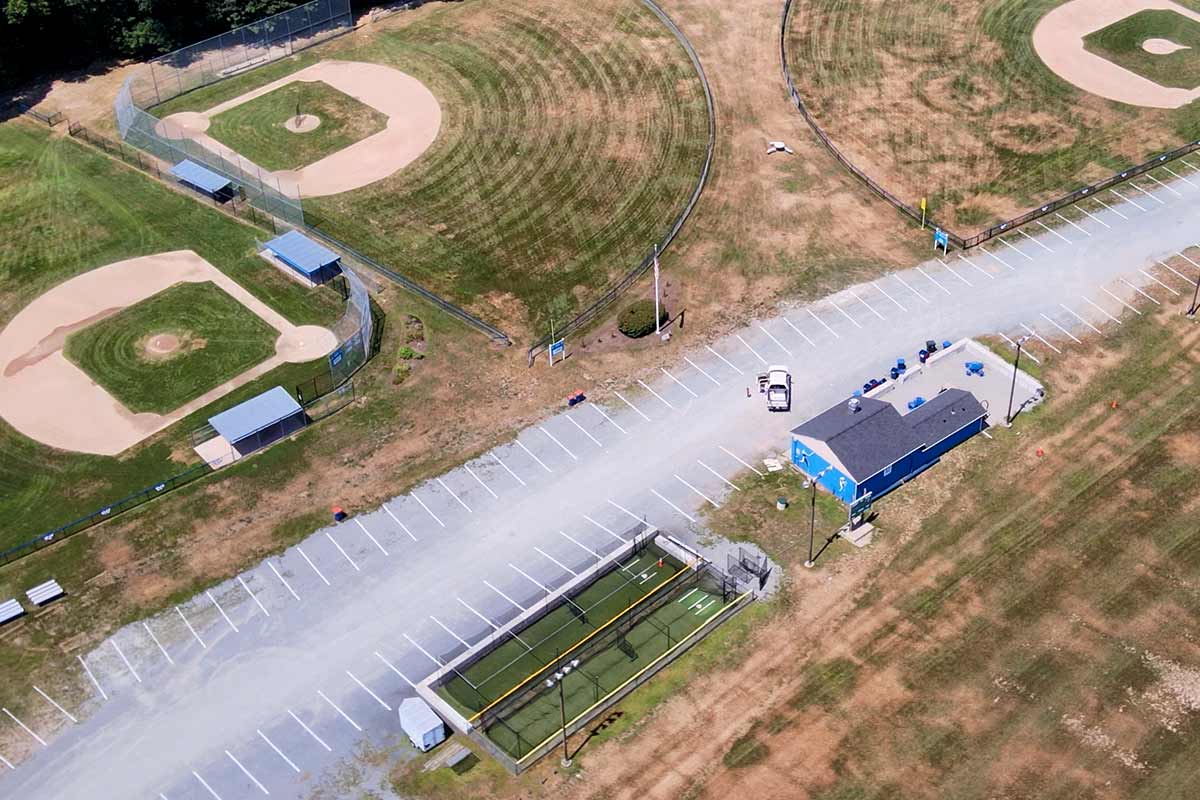
Temporary striping is parking layout that is meant to come back up. We mark stalls, aisles, entry and exit routes, walking routes, no-parking zones, and directional arrows for a defined window — a weekend event, a construction phase, a season of overflow, using removable water-based traffic paint rather than the long-life material that goes on a permanent lot. 1-800-STRIPER of North Hartford does this work for commercial properties, schools, churches, venues, and construction sites across Hartford and Tolland counties, including Manchester, Windsor, South Windsor, East Hartford, West Hartford, Glastonbury, Simsbury, Ellington, Vernon Rockville, and Windsor Locks.
The job is a layout problem before it is a paint problem. How many cars do you need to park, on what ground, arriving from which direction, and for how long? Answer those four and the marking plan mostly writes itself — row spacing, aisle width, where cars enter, where they stack, and where they must not go. We walk the site, chalk the plan on the ground, and paint it.
Timing matters too, because water-based paint needs dry ground. In the Hartford area the practical outdoor striping window runs roughly early May to early October — a rule of thumb drawn from the NOAA climate normals at Bradley International Airport in Windsor Locks, not a published standard, and hill towns such as Simsbury, Ellington, and Vernon run shorter shoulders than the valley floor. Most events fall inside that window; if yours sits on the edge of it, tell us early and we will work the forecast with you.
Call (860) 815-7337 for a free estimate. Estimates come back within 24 hours, which matters when the event is two weeks out.
Surfaces We Stripe: Grass, Gravel, Pavement, or Any Surface
We stripe grass, gravel, pavement, or any surface. A temporary lot does not have to be paved, and many of the ones we lay out are not — fairgrounds, church and school fields, gravel yards, the open ground beside a venue, and the back half of a paved site all get marked.
Surface is the first thing we establish at the site walk, because it drives the rest of the plan. On pavement, the surface has to be dry before paint goes down; that is the condition for the paint to bond, and it governs scheduling more than anything else on the job. On grass, gravel, and mixed ground, the rows go onto ground that is not flat, not uniform, and not permanent, so we measure and chalk the layout on site rather than working from a plan sheet.
What we will not do is quote you a lifespan or a removal method off a chart before anyone has stood on your ground. How a marking holds up, and how it comes back up, depends on the surface you have, the traffic that crosses it, and the weather inside your window. We walk the site, tell you what to expect for that site, and write it into the scope.
If you have something we have not listed — dirt, packed stone, grass running into gravel, tell us what you have. It is still on the list.
Event, Construction, and Overflow Parking
Three jobs, three different plans.
Events. A one-day event needs cars in and out quickly, often in the dark, with people walking between them the whole time. We mark rows and aisles, the entry and exit routes, a walking route to the gate, and the zones that must stay clear: the entrance, emergency access, and loading. If accessible spaces are part of your layout, raise that at the site walk — where Connecticut requires them, the current car stall is fifteen feet wide including five feet of cross hatch, and that gets planned into the rows rather than squeezed in at the end.
Construction. Construction-zone striping keeps the working site and the parked cars apart. We mark crew and visitor parking, the truck routes that have to stay clear, staging areas, and no-parking zones along the work face. Phases move, and the markings can move with them — when the site changes, we come back and re-mark to the new phase.
Overflow. Overflow parking is the ground you fall back on when the main lot fills: the field next door, the gravel yard, the back half of the site. Left unmarked, drivers park to their own judgment and the ground fills unevenly. Marked rows give them a line to park to and keep the exit lane open. If your overflow runs a whole season rather than a single weekend, say so — that changes the plan and how often we come back to it.
Removable Markings and Site Restoration
The markings are meant to come up, and we plan how before we put them down. We use removable water-based traffic paint rather than the long-life material that goes on a permanent lot, and the takedown gets agreed at the start of the job instead of improvised at the end of it.
Before we paint, we settle four things with you: how the markings come up, when, who does it, and what the ground should look like afterwards. That goes into the scope alongside the layout, so it is written down before anyone commits.
We are not going to tell you a marking will “just come off.” Different ground behaves differently, and the honest answer for your site comes from standing on it, not from a page. If the answer for your surface is that the takedown needs real work at the end of the job, we will say so before you book, not after.
And if the job runs longer than planned — the event extends, a construction phase slips — we come back and refresh the lines rather than leaving you with markings that have stopped doing their job.
How It Works
- Tell us the job. Date range, surface, how many cars, and what has to stay clear. Call (860) 815-7337 or request an estimate — we come back within 24 hours.
- Site walk. We measure the ground you have and check the surface: grass, gravel, pavement, or something in between.
- Layout plan. Rows, aisles, entry and exit, walking routes, no-parking zones, and accessible spaces where your layout includes them.
- Mark it out. We chalk the plan, you confirm it on the ground, and then we paint with removable water-based traffic paint.
- Through the job. If an event runs long or a construction phase moves, we come back and re-mark to the new plan.
- Come down. We carry out the removal or fade-out we agreed at the start and leave the site the way we said we would.
1-800-STRIPER of North Hartford holds a 5.0 rating on Google. Call (860) 815-7337 for a free estimate on temporary parking lot striping in North Hartford, CT.
For a full list of our pavement marking services, visit our parking lot striping in North Hartford page.
Businesses We Serve




How it Works

GET A FREE ESTIMATE
Contact us today and we’ll have a quote to you in 24 hours

SCHEDULE A STRIPING
We’ll have your space restriped in less than 7 days, without affecting your business hours

GET A PARKING LOT THAT POPS
For a budget-friendly price, you’ll get a parking lot that looks like new
We proudly work with:


We proudly work with:


Frequently Asked Questions About Temporary Parking Lot Striping in North Hartford, CT
Can you stripe temporary parking on grass or gravel?
Yes — grass, gravel, pavement, or any surface. A temporary lot does not have to be paved, and many of the ones we mark are not: fairgrounds, church and school fields, gravel yards, and the open ground beside a venue. That ground is rarely flat or uniform, so we measure and chalk the layout on site rather than working from a plan sheet. Tell us what you are parking on and we will tell you what to expect for that surface when we walk it.
How long do temporary markings last?
That depends on the surface, the traffic crossing it, and the weather inside your window — and we are not going to hand you a number we cannot stand behind. What we will do is scope the job to the window you give us. Tell us the date range and what will be driving over the lines, and after we have walked the site we will tell you what to expect for your specific ground. If the job runs longer than planned, we come back and refresh the lines.
Can temporary markings be removed?
Yes — the markings are meant to come up, and we plan the removal before we paint rather than after. Before the job starts we agree four things: how the markings come up, when, who does it, and what the ground should look like afterwards. That goes into the scope alongside the layout. What we will not do is promise a marking will “just come off” and then leave you standing in the lot with it. Nothing about the takedown should be a surprise.
Can you set up parking for a one-day event?
Yes — short-duration event markings are core to temporary parking lot striping in North Hartford, CT. We handle rows and aisles, entry and exit routes, walking routes between the parked cars, and the zones that must stay clear: the entrance, emergency access, and loading. If accessible spaces are part of your layout, say so early, where Connecticut requires them, the current car stall is fifteen feet wide including five feet of cross hatch, and that has to be planned into the rows. Call (860) 815-7337 for a free estimate.
Do you handle construction-site and overflow parking?
Yes, both. On construction sites we mark crew and visitor parking, the truck routes that must stay clear, staging areas, and no-parking zones along the work face — and we come back to re-mark when the phase moves. For overflow, we lay out the field, gravel yard, or back lot you use when the main lot fills, so cars park in rows instead of to each driver’s own judgment. We do this work across Hartford and Tolland counties.