Warehouse Line Painting
In North Denver, CO
OSHA-Compliant Safety Markings
1-800-STRIPER provides professional warehouse line painting in North Denver, CO — OSHA-compliant aisle lines, pedestrian walkways, and color-coded safety zones per OSHA 1910.22 and 1910.144 using durable epoxy and traffic paint for industrial facilities.
1-800-STRIPER® of North Denver PROVIDes Warehouse Floor Markings Services NEAR YOU
Want your indoor space to operate more efficiently?
Warehouse and interior markings ensure clear traffic lanes, organized storage zones, and designated spaces designed to help your business operate safely and efficiently.
Benefits:
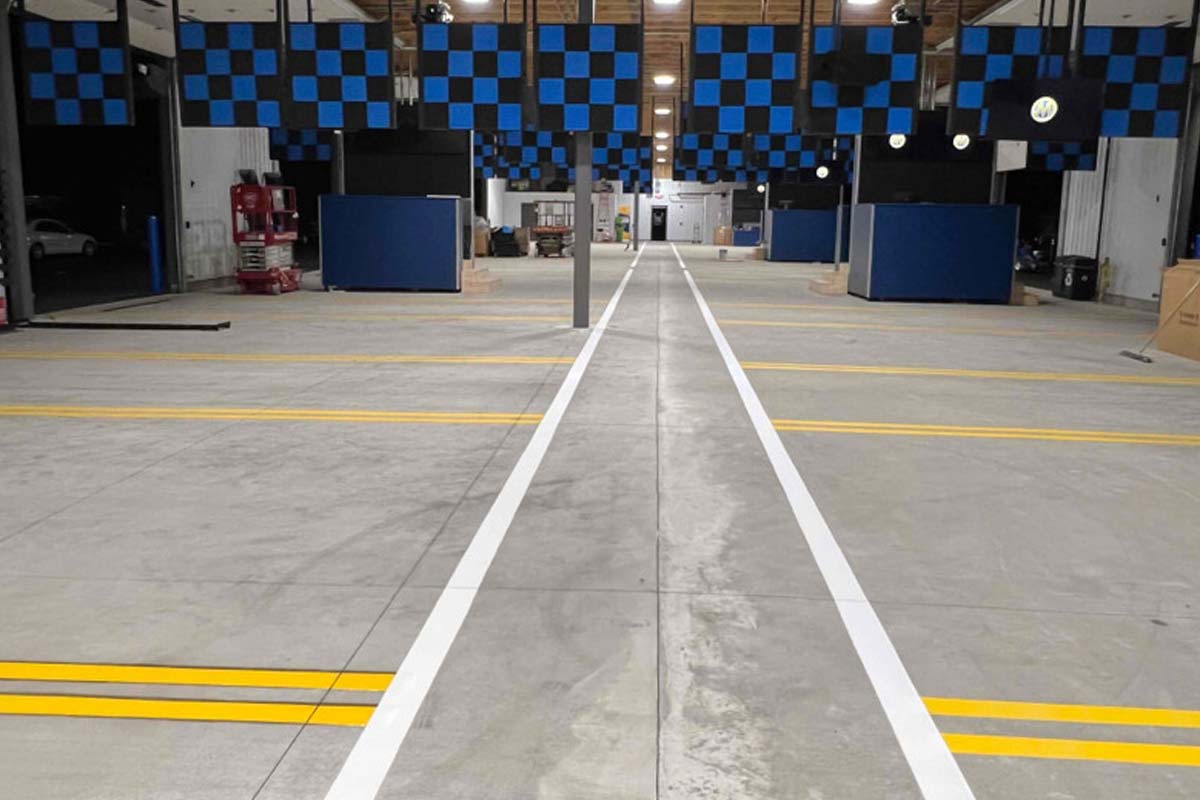
Warehouse Line Painting in North Denver, CO
Warehouse line painting covers everything that keeps a distribution facility organized: aisle boundaries, pedestrian walkways, work-cell outlines, and floor labels that tell forklift operators and foot traffic exactly where to go. For North Denver distribution centers running multiple shifts, clear floor markings cut down on near-misses between lift trucks and staff, speed up put-away and picking, and satisfy the marking requirements inspectors look for during OSHA walkthroughs. A facility with faded or missing lines isn’t just harder to navigate — it’s an open compliance question every time an inspector or insurer walks the floor.
OSHA Aisle & Walkway Marking Standards
OSHA 1910.22(b) requires that aisles and passageways be kept clear and appropriately marked so they’re visible and permanent. The standard doesn’t set a single mandated stripe width — “appropriate” is the operative word — but 2 to 4 inches is the width most warehouses use because it stays visible under forklift traffic without narrowing usable aisle space. Permanent aisles that stay in the same location get a solid, continuous line; pedestrian routes crossing forklift paths get their own dedicated marking so foot traffic and lift traffic don’t share a lane. Clearance on both sides of stored material matters too — lines only help if the aisle behind them is actually kept open.
OSHA Safety Color Codes
OSHA 1910.144 and the ANSI Z535.1 Safety Color Code set the color meanings used across industrial facilities, and we apply markings to match:
| Color | Meaning / Use |
|---|---|
| Red | Fire-protection equipment, danger, emergency stop |
| Yellow | Caution — physical hazards (striking, tripping, falling) |
| Orange | Dangerous parts of machines / energized equipment |
| Green | Safety, first aid, safety equipment |
| Blue | Information / mandatory action (often via signage) |
Using this same color language throughout a warehouse means an employee — or a new hire on day one — can read the floor at a glance, without needing to memorize a facility-specific key.
Markings We Apply
Beyond straight aisle lines, we handle the full set of markings a working warehouse needs: pedestrian crosswalks and walkways through forklift zones, work-cell and staging-area outlines, hazard and keep-clear zones around equipment or blind corners, and floor labels or numbering for rack locations and dock doors. Each marking type serves a different purpose — a crosswalk slows traffic at a decision point, a keep-clear zone protects an electrical panel or fire equipment, and a numbered floor label speeds up inventory counts. We lay these out to match how your team actually moves, not a generic template.
Durable Coatings for High-Traffic Floors
Two coating types cover most warehouse needs. Epoxy holds up best in high-forklift-traffic zones and areas exposed to chemicals, oils, or heavy washdown — it bonds hard to concrete and resists abrasion better than paint alone. Fast-dry traffic paint is the better call for large floor areas or projects that need to reopen quickly, since it cures faster and covers ground efficiently without sacrificing visibility. Either way, the coating is only as good as the floor prep underneath it: concrete gets cleaned and degreased before any line goes down, because paint and epoxy over dust or oil residue peels within weeks instead of lasting years.
Our Warehouse Marking Process
- We walk the facility with your team to map traffic flow, pinch points, and where lines and zones actually need to go.
- Floors are cleaned and degreased so the coating has a surface it can bond to.
- Lines and zones are laid out and taped for straight, consistent edges before anything is applied.
- Coating goes down — masked, straight-edged, and matched to the traffic level of that area.
- Each section cures and reopens area by area, so the rest of the warehouse keeps running while we work.
For a full list of our pavement marking services, visit our parking lot striping in North Denver page.
Businesses We Serve




How it Works

GET A FREE ESTIMATE
Contact us today and we’ll have a quote to you in 24 hours

SCHEDULE A STRIPING
We’ll have your space restriped in less than 7 days, without affecting your business hours

GET A PARKING LOT THAT POPS
For a budget-friendly price, you’ll get a parking lot that looks like new
We proudly work with:


We proudly work with:

Frequently Asked Questions About Warehouse Line Painting in North Denver, CO
What do the different floor colors mean in a warehouse?
Warehouse floor colors follow OSHA 1910.144 and the ANSI Z535.1 Safety Color Code. Red marks fire-protection equipment, danger areas, and emergency stops. Yellow flags caution zones — striking, tripping, or falling hazards. Orange calls out dangerous machine parts or energized equipment. Green marks safety and first-aid equipment, and blue signals information or a mandatory action, often paired with signage. Using this standard color set consistently means anyone on the floor can read a hazard at a glance, without needing a facility-specific legend.
How wide should warehouse aisle lines be?
OSHA 1910.22(b) requires aisles to be kept clear and “appropriately” marked, but doesn’t specify an exact stripe width. In practice, 2 to 4 inches is the range most industrial facilities use — wide enough to stay visible under regular forklift and foot traffic, narrow enough that it doesn’t eat into usable aisle space. The right width depends on your aisle layout and traffic volume, which we look at during the site walk.
Should we use epoxy or traffic paint on our warehouse floor?
It depends on the traffic. Epoxy is the stronger choice for zones with heavy, repeated forklift traffic or exposure to chemicals and oils, since it bonds hard to concrete and resists wear. Fast-dry traffic paint works well for larger floor areas or projects on a tighter turnaround, curing quickly while still holding up to normal warehouse conditions. Many facilities use both — epoxy where load and wear are highest, paint everywhere else.
Can you mark floors while our warehouse is still operating?
Yes. We work zone by zone rather than shutting the whole facility down, scheduling sections around your shifts or off-hours where it makes sense. Each area cures and reopens before we move to the next, so put-away, picking, and shipping keep moving while striping happens in the background.
How long do floor markings last in a busy Denver distribution facility?
Durability comes down to two things: the coating and the prep underneath it. Epoxy holds up longest in high-forklift-traffic lanes and areas exposed to chemicals or washdown; traffic paint is suited to lighter-duty zones and large-area coverage. Either way, floors are cleaned and degreased before any line goes down — that prep step is what determines whether markings hold up under daily wear or start peeling early.
Do you offer free estimates for warehouse line painting?
Yes. Call 1-800-STRIPER for a free estimate on warehouse line painting in North Denver, CO. We’ll walk your facility, talk through your traffic flow and marking needs, and put together a plan before any work begins.