Parking Lot Pressure Washing
In North Denver, CO
Surface Prep Before Restriping
1-800-STRIPER provides professional parking lot pressure washing in North Denver, CO — removing dirt, oil, tire marks, and debris from asphalt and concrete surfaces to prep for restriping and manage stormwater runoff per EPA stormwater discharge regulations for commercial properties across the north Denver metro.
1-800-STRIPER® of North Denver PROVIDes Parking Lot Power Washing Services NEAR YOU
Need to blast away years of grime?
If your parking lot or parking garage looks dull and dirty, our professional crew can wash away grime, oil, stains, and slippery buildup to restore the appearance of your property.
Benefits:
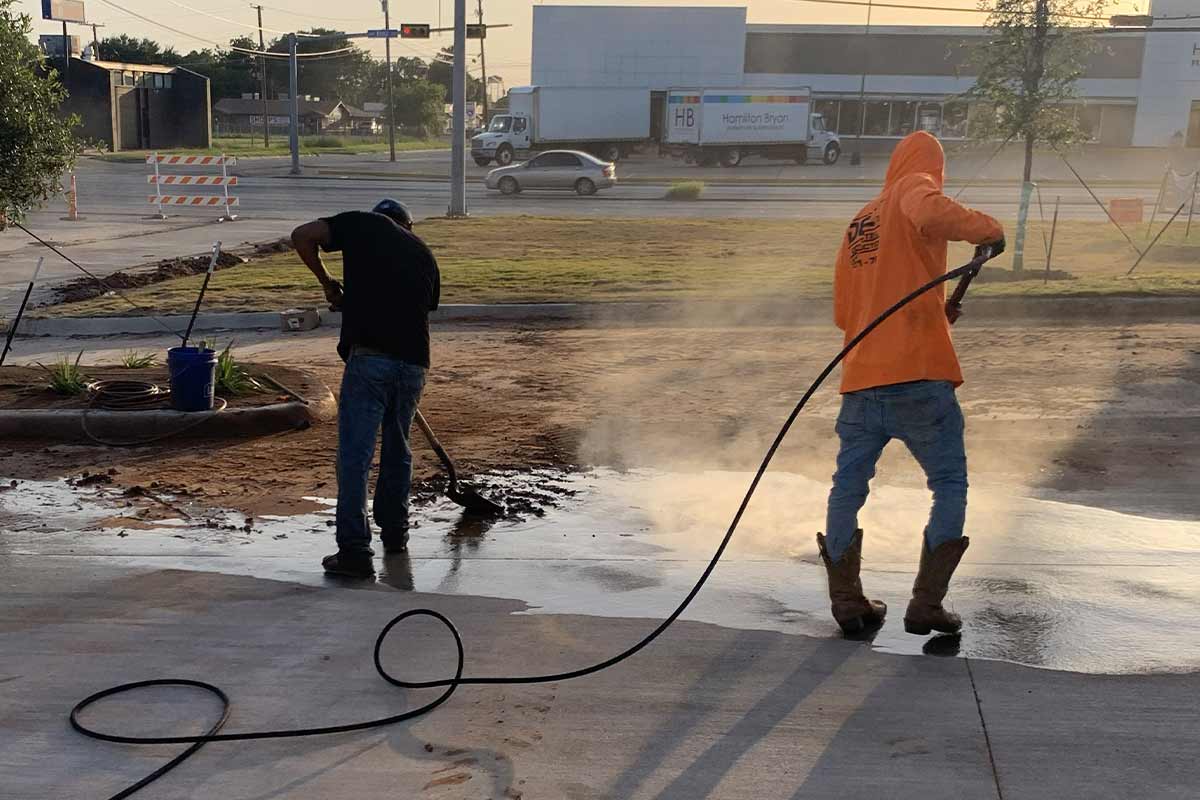
Parking Lot Pressure Washing in North Denver, CO
Pressure washing strips built-up grime, oil, and residue off a parking lot so the surface looks maintained and performs safely — and it’s the step that has to happen before any restriping job goes down. A commercial lot in North Denver takes a beating from tire rubber, engine drips, blowing dust off the Front Range, and the de-icing material trucks track through during a Colorado winter. Left alone, that buildup dulls the pavement, fills in the surface texture that gives tires grip, and creates a slick film in wet or icy conditions. For a retail center, office park, or multi-tenant property, a clean lot reads as well-run; a dirty one reads as neglected, even when the asphalt underneath is structurally fine.
Pressure washing also does double duty as prep work. Paint doesn’t bond to a dirty surface — oil, dust, and old sealcoat residue all break the adhesion between fresh striping paint and the pavement below. Property managers scheduling a restripe should plan the wash first, let the lot dry, then bring in the striping crew. Running both in the same project keeps everything on one schedule and avoids a second mobilization. 1-800-STRIPER coordinates cleaning and restriping together for North Denver properties so the surface is wash-ready and paint-ready in the same pass.
What Pressure Washing Removes
A parking lot accumulates several distinct types of buildup, and each responds differently to cleaning. Oil and grease stains from parked vehicles are the most common complaint — they sit on the surface and, over time, work into the pavement’s pores, especially on older asphalt. Tire marks show up at turns, stop lines, and loading docks where vehicles scrub against the surface. Chewing gum bonds to warm asphalt and needs to be softened before it will lift cleanly. General dirt and grime — windblown dust, tracked-in soil, leaf litter — builds a dull film across the whole lot rather than concentrating in one spot.
Concrete surfaces add their own issue: efflorescence, the white mineral residue that leaches out of concrete as moisture moves through it, which needs a different cleaning approach than an oil stain does. Colorado winters add another layer — de-icer and traction sand residue that tracks in from adjacent streets and settles into low spots until it’s washed out. In shaded or consistently damp areas — under overhangs, near landscaping, along the north side of a building — mildew can also take hold and darken the surface.
Asphalt and concrete don’t clean the same way. Asphalt is a softer, oil-based material, so cleaning uses moderate pressure and lower water temperatures to avoid stripping the surface binder or gouging the material. Concrete is harder and more porous, which tolerates higher pressure and hot water for cutting through efflorescence and ground-in stains without damaging the surface. Matching pressure and temperature to the pavement type keeps the wash effective without shortening the pavement’s service life.
Surface Prep Before Restriping + Stormwater Compliance
A clean surface isn’t optional before restriping — it’s the difference between paint that lasts through a Denver winter and paint that peels within a season. Line striping paint bonds to the pavement surface itself; anything sitting between the paint and the asphalt or concrete — oil film, dust, old rubber — becomes the weak point where the new stripe fails first. 1-800-STRIPER follows a consistent sequence to get a North Denver lot ready for restriping:
- Pre-sweep loose debris. Dirt, gravel, leaves, and loose sand are cleared first so pressure washing isn’t just pushing debris around the lot.
- Pre-treat oil, grease, and gum spots. Concentrated stains get a degreasing pre-treatment before the general wash, since a single pass of pressure alone won’t fully lift set-in oil.
- Surface-clean with pressure and temperature matched to the pavement. Asphalt gets moderate pressure and warm water; concrete gets higher pressure and hot water, targeting the full lot surface, not just the visibly dirty areas.
- Contain and manage wash water. Wash water carries oil, sediment, and cleaning residue, and it isn’t directed into storm drains. That’s consistent with the EPA’s National Pollutant Discharge Elimination System (NPDES), which regulates stormwater discharge from commercial sites; in Colorado, NPDES is implemented through the Colorado Department of Public Health and Environment. Wash water is contained and managed on-site rather than allowed to run off into the storm system.
- Let the surface dry, then inspect. Pavement needs to be fully dry before paint goes down — moisture trapped under a fresh stripe is a common cause of early peeling. A final inspection confirms the surface is clean, dry, and ready for layout and striping.
Property managers who bundle the wash and the restripe into one project get a lot that’s cleaned, prepped, and striped without a second scheduling round.
For a full list of our pavement marking services, visit our parking lot striping in North Denver page.
Businesses We Serve



How it Works

GET A FREE ESTIMATE
Contact us today and we’ll have a quote to you in 24 hours

SCHEDULE AN INSTALLATION
We’ll have your installation scheduled in less than 7 days, without affecting your business hours

GET A PARKING LOT THAT POPS
For a budget-friendly price, you’ll get a parking lot that looks like new
We proudly work with:


We proudly work with:
Frequently Asked Questions About Parking Lot Pressure Washing in North Denver, CO
Should I pressure wash a parking lot before restriping?
Yes. Striping paint needs to bond directly to the pavement, and oil film, dust, and old rubber residue sitting on the surface break that bond. A lot that’s cleaned first holds paint longer than one that’s striped over existing grime — the stripes hold up through more traffic and more Denver winters before they need a refresh. 1-800-STRIPER schedules the wash ahead of the restripe so the surface is ready when the striping crew arrives, keeping the project on one timeline.
Do you capture or contain the wash water?
Yes. Wash water picks up oil, sediment, and cleaning residue from the lot surface, and it’s contained and managed rather than allowed to flow into storm drains. That approach lines up with the EPA’s National Pollutant Discharge Elimination System (NPDES), which governs stormwater discharge from commercial properties; Colorado implements NPDES through the Colorado Department of Public Health and Environment. Keeping wash water out of the storm system protects the property and keeps the work aligned with stormwater discharge expectations for commercial sites.
Is there a difference between cleaning asphalt and cleaning concrete?
Yes. Asphalt is a softer, oil-based material, so cleaning uses moderate pressure and warm water to lift dirt and stains without stripping the surface binder. Concrete is harder and more porous — it holds up to higher pressure and hot water, which is useful for cutting through efflorescence (the white mineral residue concrete surfaces develop) and ground-in stains. Matching pressure and temperature to the pavement type gets the surface clean without shortening its service life.
How often should a busy retail lot get pressure washed?
It depends on traffic volume and the season. A high-traffic retail or commercial lot in North Denver picks up oil drips, tire marks, and grime faster than a low-traffic property, and winter adds de-icer and traction sand residue tracked in from surrounding streets. Many commercial properties schedule a wash in spring to clear winter residue and ahead of any restriping project, with additional cleaning as traffic and visible buildup warrant. Call for a free estimate to talk through a schedule for your property.
Can you remove oil stains and gum from a parking lot?
Yes. Oil and grease stains get a degreasing pre-treatment before the general wash, since pressure alone often won’t fully lift oil that’s worked into the pavement. Gum gets softened before it’s lifted rather than scraped, which avoids damaging the surface underneath. Both are addressed as part of the standard pre-treatment step, ahead of the full-lot pressure wash, so isolated problem spots don’t get left behind after the rest of the lot is clean.
Do you offer free estimates for pressure washing?
Yes. Call 1-800-STRIPER for a free estimate on parking lot pressure washing in North Denver, CO. An estimate covers lot size, surface type, and condition — oil staining, gum, efflorescence, winter residue — so the scope and process match what the property actually needs before any work is scheduled.