Fire Lane Striping
In North Denver, CO
Code-Compliant Fire Lane Markings
1-800-STRIPER provides professional fire lane striping in North Denver, CO — marking compliant fire lanes, curbs, and no-parking zones per the International Fire Code (IFC Section 503), as adopted across the Denver metro, for commercial properties in Adams, Boulder, and Jefferson counties.
1-800-STRIPER® of North Denver PROVIDes Fire Lane Striping Services NEAR YOU
Is your parking lot ready for first responders?
Our team is well-versed in local fire regulations and will parter with you to design a fire lane striping plan that creates unobstructed emergency access to protect your customers and property.
Core Services:
Fire Lane Striping in North Denver, CO
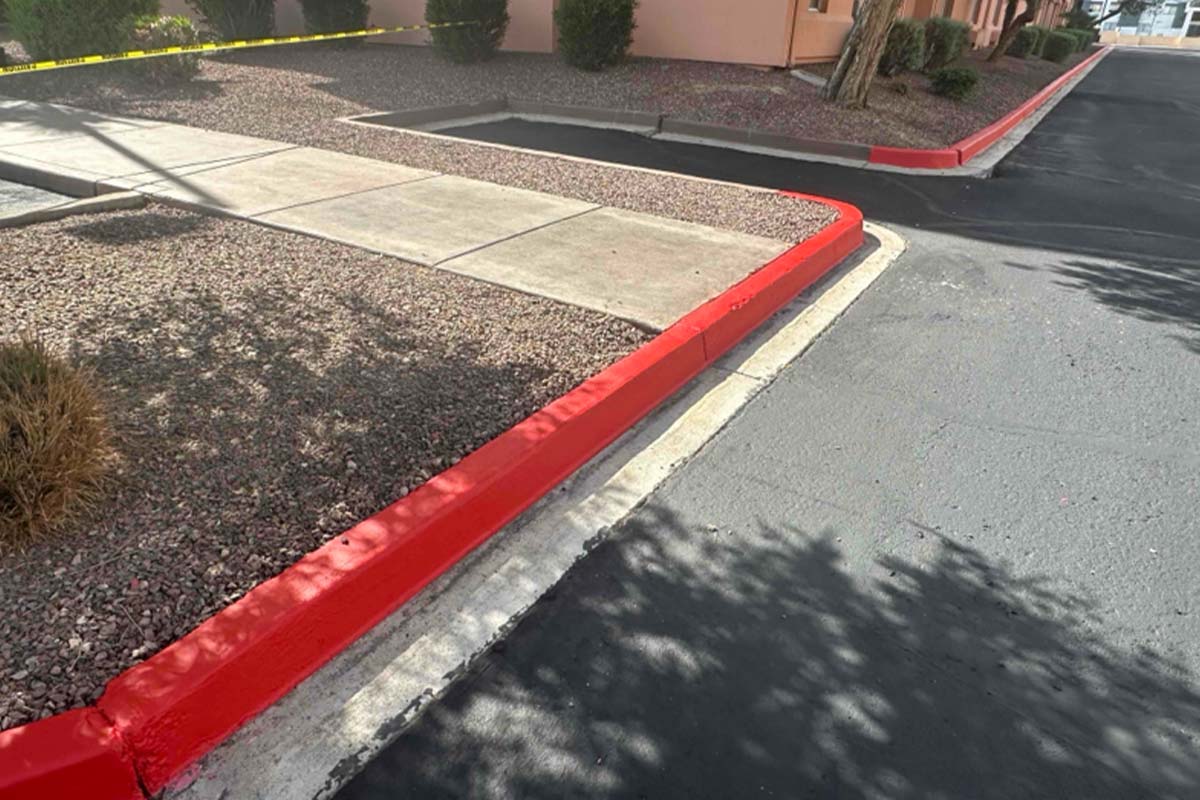
Fire lane striping marks the access routes emergency crews use to reach a building — painted lanes, red curbs, stenciled “NO PARKING — FIRE LANE” lettering, and clearly bounded no-parking zones. On commercial and multifamily properties, those markings keep fire apparatus paths open when minutes matter. A blocked lane can delay a ladder truck, and faded paint invites the cars that cause the blockage. 1-800-STRIPER installs and refreshes fire lane markings that keep access routes visible and enforceable.
In North Denver, fire lane markings are enforced locally by the Denver Fire Department, which acts as the Authority Having Jurisdiction (AHJ). The department reviews site plans, inspects marked lanes, and issues the citations that make an unmarked or faded lane a liability for a property owner. Getting the layout right the first time — width, color, lettering, and signage — keeps your property compliant and your tenants’ access clear year-round.
Denver Fire Code & IFC 503 Requirements
Denver adopts its own Denver Fire Code, based on the International Fire Code (IFC), and the Denver Fire Department enforces it as the AHJ. The core dimensional rules come from the Denver Fire Code (IFC Section 503), and the marking conventions follow that code.
| Requirement | Specification |
|---|---|
| Minimum unobstructed lane width | 20 feet |
| Minimum vertical clearance | 13 feet 6 inches |
| Curb / pavement marking | Red curb + white “NO PARKING — FIRE LANE” lettering (per Denver Fire Department AHJ) |
| Signage | Posted per local AHJ spacing requirements |
| Turning radius / dead-end turnarounds | Per Denver Fire Code / AHJ approval |
“Authority Having Jurisdiction” is the code’s term for the office that interprets and enforces the rules on the ground. In North Denver that office is the Denver Fire Department. The code sets the baseline — a fire apparatus access road needs at least 20 feet of unobstructed width and 13 feet 6 inches of vertical clearance — but the exact curb color, lettering, and sign spacing are approved by the AHJ. Denver’s common practice is red-painted curbs with white “NO PARKING — FIRE LANE” lettering, though final specs come from the department’s approval for your site. We layout every lane to those approved details so an inspection finds no surprises.
Fire Lane Markings We Install
We install the full set of fire lane markings a Denver property needs. Painted fire lanes define the drivable access route with continuous boundary lines in the approved color. Red curbs mark the no-parking edges along that route, brushed or sprayed for even coverage on the vertical and top faces. Stenciled lettering — typically white “NO PARKING — FIRE LANE” — repeats along the curb at the spacing the AHJ expects, so the restriction reads clearly from any approach.
Beyond the lanes themselves, we mark no-parking zones at hydrants, riser rooms, and building entrances, plus directional arrows and loading-zone boundaries that keep traffic flowing without encroaching on the fire route. Whether it’s a new lot being laid out from a site plan or an existing lane that’s worn down, we match the markings to what the Denver Fire Department has approved for the property.
Curb Painting & No-Parking Zones
Curb paint lives a hard life on the Front Range. Denver’s freeze-thaw cycles work moisture into concrete pores, intense high-altitude UV fades pigment, and snowplows scrape blades directly across painted curb faces every winter. Those forces peel and dull fire lane paint faster than a milder climate would.
Good curb work starts with prep. We clean the curb of dirt, salt residue, and loose or flaking old paint so the new coat bonds to sound concrete instead of failing paint. We then apply durable traffic-grade paint built for pavement and curb exposure, and stencil the lettering while the surface is clean.
Re-marking is a maintenance cadence, not a one-time job. Most Denver properties benefit from an annual look, with high-traffic entrances and plow-exposed curbs often needing a refresh sooner. When lettering starts to gray or curb red goes pink, it’s time — faded fire lane markings read as unenforceable to both drivers and inspectors.
Our Fire Lane Striping Process
We follow a five-step process that keeps the work compliant from plan to final walkthrough.
- Review AHJ requirements and site plan. We start with the Denver Fire Department’s approved specs for your property and the site plan, confirming lane routes, curb runs, and sign locations before any paint is opened.
- Surface prep. We clean and, where needed, scrape the pavement and curbs — removing dirt, debris, and failing paint so new markings bond and last.
- Layout and measure lanes and curbs. We measure and chalk the lanes to the 20-foot width and mark curb runs and lettering positions, verifying the layout against code before painting.
- Paint and stencil. We apply the fire lane lines, red curb coating, and white “NO PARKING — FIRE LANE” stencils in the approved colors, working for clean edges and even coverage.
- Final walkthrough for compliance. We walk the finished job against the AHJ’s requirements, checking widths, colors, lettering, and sign placement so the property is ready for inspection.
For a full list of our pavement marking services, visit our parking lot striping in North Denver page.
Businesses We Serve




How it Works

GET A FREE ESTIMATE
Contact us today and we’ll have a quote to you in 24 hours

SCHEDULE AN INSTALLATION
We’ll have your installation scheduled in less than 7 days, without affecting your business hours

GET A PARKING LOT THAT POPS
For a budget-friendly price, you’ll get a parking lot that looks like new
We proudly work with:


We proudly work with:
Frequently Asked Questions About Fire Lane Striping in North Denver, CO
What color are fire lanes in Denver?
Denver’s common practice is red-painted curbs with white “NO PARKING — FIRE LANE” lettering, and that’s what most properties here use. The exact color and lettering are set by the Denver Fire Department as the Authority Having Jurisdiction, so the final spec comes from the department’s approval for your site. We mark curbs and lanes to those approved details.
Who enforces fire lane markings here?
The Denver Fire Department enforces fire lane markings in North Denver as the Authority Having Jurisdiction (AHJ). It reviews site plans, inspects lanes, and issues citations when access routes are unmarked, faded, or blocked. Its rules draw on the International Fire Code (IFC Section 503), as adopted by the local fire authority.
How wide must a fire lane be?
Under the Denver Fire Code (IFC Section 503), a fire apparatus access road needs an unobstructed width of at least 20 feet and a vertical clearance of at least 13 feet 6 inches. Dead-end turnarounds and turning radii are approved separately by the Denver Fire Department for your site. We layout every lane to those dimensions.
Do you paint curbs and stencils?
Yes. We paint red curbs, apply stenciled “NO PARKING — FIRE LANE” lettering, and mark the no-parking zones and lane boundaries that go with them. That includes prepping the curb, applying durable traffic-grade paint, and stenciling at the spacing the AHJ expects. Whether you need a new layout or a refresh, we handle it as one job.
How often should fire lanes be re-marked?
Re-mark when fading or abrasion demands it, which in Denver tends to come sooner than in milder climates. High-altitude UV dulls pigment, freeze-thaw cycles stress the coating, and snowplow blades scrape curb faces all winter. Most properties benefit from an annual check, with plow-exposed curbs often needing a refresh first.
Do you offer free estimates?
Yes. Call for a free estimate and we’ll assess your property’s fire lanes, curbs, and no-parking zones against the Denver Fire Department’s requirements. We’ll look at lane widths, curb condition, lettering, and signage, then scope the striping or re-marking your site needs to stay compliant.