
Wheel Stop Installation
In South Phoenix, AZ
Concrete and Rubber Parking Stops
1-800-STRIPER® provides professional wheel stop installation in South Phoenix, AZ — anchoring concrete, recycled-rubber, and plastic-composite wheel stops at stall heads to protect sidewalks, storefronts, and ADA accessible routes for commercial properties throughout Maricopa and Pinal counties.
1-800-STRIPER® of South Phoenix PROVIDes Wheel Stops Services NEAR YOU
Need to protect vehicles or walls from accidental damage?
Wheel stops (also called parking blocks) protect your property, enhance safety, and improve parking lot organization.
Benefits:
Wheel stops prevent vehicles from parking too far into a space or overextending into other spots, pedestrian walkways, and other areas, while also helping with vehicle alignment. They can prevent damage to buildings, curbs, or landscaping. Wheel stops also serve as clear visual cues for proper parking and are sometimes used on slopes to prevent cars from rolling.
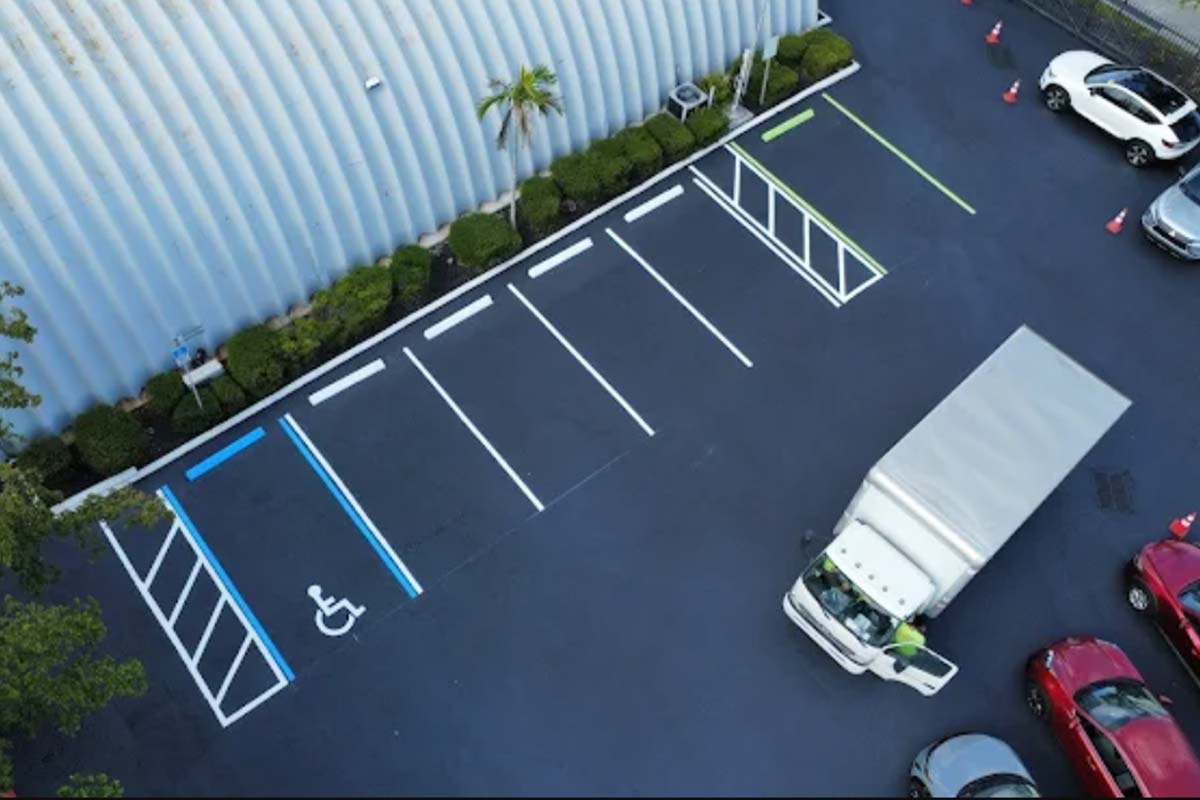
Wheel Stop Installation Services in South Phoenix
Parking lots without wheel stops run real risks. Vehicles overhang the stall head by two feet or more, and when that overhang sweeps across a sidewalk, a storefront entrance, or a utility cabinet, things get damaged — and sometimes people get hurt. Wheel stop installation puts a fixed barrier at the stall head so tires stop before the bumper becomes a problem.
1-800-STRIPER® of South Phoenix installs wheel stops on new construction projects and on existing lots that have outgrown their original layout. Common situations include stalls that face public sidewalks, storefronts, landscaping beds, drive aisles with cross-traffic, and outdoor electrical or HVAC equipment. If the area past the stall line is something you’d rather protect, a wheel stop is the straightforward answer.
We also handle replacement work. Concrete parking blocks crack after years of freeze-thaw cycling and heavy-truck impacts; rubber stops can shift when anchors loosen; older stops often migrate out of alignment during repaving. If some stops on your lot are cracked, shifted, or heaved up, we can remove the damaged units, prep the surface, and set replacements to match the rest of the row.
One thing property managers in South Phoenix often appreciate: scheduling wheel stop installation during the same visit as a striping or re-striping job cuts down on mobilization. One crew, one trip — the lot gets fresh lines and properly placed parking blocks at the same time.
The 2010 ADA Standards for Accessible Design require accessible routes to maintain their clear width (§403). Vehicle overhang is a common way that width gets compromised, and wheel stop installation in accessible stalls is a practical way to keep the route compliant.
—
Concrete vs. Rubber vs. Plastic: Choosing a Wheel Stop
Not all wheel stops are the same. The right material depends on your surface, traffic volume, climate exposure, and how often you want to deal with maintenance. Here’s how the three main options compare.
| Material | Durability | Maintenance | Best For |
|---|---|---|---|
| Concrete | High — handles heavy vehicles; can chip or crack over time with freeze-thaw or impact | Low until a crack develops; cracked units typically need full replacement | High-traffic lots, industrial yards, locations where weight and permanence matter |
| Recycled Rubber | Very high — flexible under impact, resists cracking, holds anchor rods reliably | Very low — no cracking; reflective stripe options available for visibility | General commercial lots, lots with moderate to heavy traffic, ADA-adjacent stalls |
| Plastic Composite | Moderate to high — won’t crack or chip; UV-stabilized versions hold color well | Very low — lightweight and easy to handle during replacements | Retail lots, lighter-traffic areas, locations where visual consistency matters |
South Phoenix sees sustained high temperatures and intense UV from June through September. Concrete performs well thermally but is more vulnerable to impact damage from heavy trucks. Recycled rubber and plastic composite handle AZ heat without degrading, and both are easier to anchor cleanly in asphalt. There’s no single right answer — it comes down to your specific lot conditions and how long you want each unit to last.
—
Our Installation Process
Wheel stop installation is a measured process. Rushing placement leads to uneven rows, loose anchors, and stops that migrate over time. Here’s how 1-800-STRIPER® of South Phoenix approaches each job.
- Stall measurement and placement plan. We measure the stall depth and mark the setback distance from the stall head — consistent placement across a row matters for both appearance and function. We account for adjacent ADA routes, drive-aisle clearances, and any site-specific obstacles before a single stop gets placed.
- Surface assessment. Asphalt and concrete require different anchor methods, and the condition of the surface determines whether additional prep is needed. We check for soft spots, previous patch work, or repaving layers that could affect anchor depth and holding strength.
- Anchor selection and drilling. Into asphalt, we drive rebar spikes or steel pins through the pre-drilled holes in the stop. Into concrete, we use anchor bolts with construction adhesive for a rigid, pull-resistant connection. The anchor type matches both the surface and the wheel stop material.
- Set and secure. Each stop goes down level, with anchors fully set. We check that there’s no rocking or lateral play before moving to the next unit.
- Alignment check. Once the row is placed, we step back and verify uniform spacing and consistent setback. If anything’s off, it gets adjusted before we leave the site.
—
Why Choose 1-800-STRIPER® of South Phoenix
Josh Hatch runs the South Phoenix operation and has built a reputation for showing up on time and doing the work right. The Google rating reflects that — 1-800-STRIPER® of South Phoenix holds a 5.0-star rating from 12 local customers.
For wheel stop installation specifically, precision matters more than speed. A misaligned stop, a shallow anchor, or a wrong-size unit creates problems down the road — units that shift, rows that look sloppy, or stops that have to be pulled and reset. We measure before we drill.
Free estimates are available for any wheel stop project in Maricopa and Pinal counties. If you’re planning a full-lot re-striping, we’ll scope the wheel stop work at the same time and give you a combined picture. Call (480) 662-2363 to schedule.
—
For a full list of our pavement marking services, visit our parking lot striping in South Phoenix page.
Businesses We Serve




How it Works

GET A FREE ESTIMATE
Contact us today and we’ll have a quote to you in 24 hours

SCHEDULE AN INSTALLATION
We’ll have your installation scheduled restriped in less than 7 days, without affecting your business hours

GET A PARKING LOT THAT POPS
For a budget-friendly price, you’ll get a parking lot that looks like new
We proudly work with:


We proudly work with:


Frequently Asked Questions About Wheel Stop Installation in South Phoenix, AZ
Where should wheel stops be installed in a parking lot?
Wheel stops work best in stalls where the vehicle overhang at the front bumper threatens something worth protecting — sidewalks, storefront glass, landscaping, drive aisles with cross-traffic, utility boxes, and ADA accessible routes. Consistent placement in a row matters: stops set at the same setback from the stall line look intentional and function predictably. Not every stall needs one, but any stall facing a pedestrian path or fixed obstacle is a good candidate.
What affects the scope of a wheel stop project?
Several factors shape how involved a wheel stop installation turns out to be. The number of stalls, the surface type (asphalt vs. concrete), whether you’re replacing existing stops or installing from scratch, and the condition of any existing anchors all factor in. Replacement jobs sometimes require grinding out old anchor points before new ones go in. The best way to get an accurate picture is a site visit — 1-800-STRIPER® of South Phoenix provides free estimates, so call (480) 662-2363.
How are wheel stops anchored into a parking lot surface?
The method depends on the surface. Into asphalt, the stops are pre-drilled and steel rebar spikes or pins are driven through the holes into the pavement below. Into concrete, anchor bolts are set with construction adhesive for a rigid, tamper-resistant connection. Both methods secure the stop so it doesn’t shift under repeated vehicle contact. Surface condition affects how the anchoring goes — loose or badly cracked pavement may need preparation before anchors will hold properly.
Do wheel stops crack or fade in Arizona heat?
Concrete wheel stops can develop surface cracks over time, especially after repeated impact from heavy vehicles combined with South Phoenix temperature swings. The material itself handles heat well, but impact stress adds up. Recycled rubber and plastic composite stops are more resilient to cracking under those conditions — rubber is flexible by nature, and quality plastic composite is UV-stabilized to resist color fade. If you’re replacing stops in a high-traffic row, rubber or composite often holds up longer in AZ climate conditions.
Are wheel stops required by law or code?
There’s no universal code that mandates wheel stops in every parking stall. They’re a protective measure, not a blanket code requirement. That said, the 2010 ADA Standards for Accessible Design require accessible routes to maintain their clear width (§403), and vehicle overhang into that path is a common problem wheel stops can solve. Local municipalities may also have specific requirements — it’s worth checking with your jurisdiction if you’re building or significantly modifying a lot.
Can you replace just a few broken wheel stops without doing the whole row?
Yes. If three stops in a row are cracked and the rest are solid, we can pull the damaged units, prep the anchor points, and set replacements that match the existing material and placement. We’ll check the neighboring stops for anchor stability while we’re there. Spot replacements are common on older lots where some stops have taken more impact than others — there’s no need to replace stops that are still doing their job.