Warehouse Line Painting
In South Phoenix, AZ
OSHA-Compliant Safety Markings
1-800-STRIPER® provides professional warehouse line painting in South Phoenix, AZ — OSHA-compliant aisle lines, pedestrian walkways, and safety zone markings per OSHA 1910.22 requirements using durable epoxy and traffic paint for industrial facilities.
1-800-STRIPER® of South Phoenix PROVIDes Warehouse Floor Markings Services NEAR YOU
Want your indoor space to operate more efficiently?
Warehouse and interior markings ensure clear traffic lanes, organized storage zones, and designated spaces designed to help your business operate safely and efficiently.
Benefits:
Warehouse Line Painting Services in South Phoenix
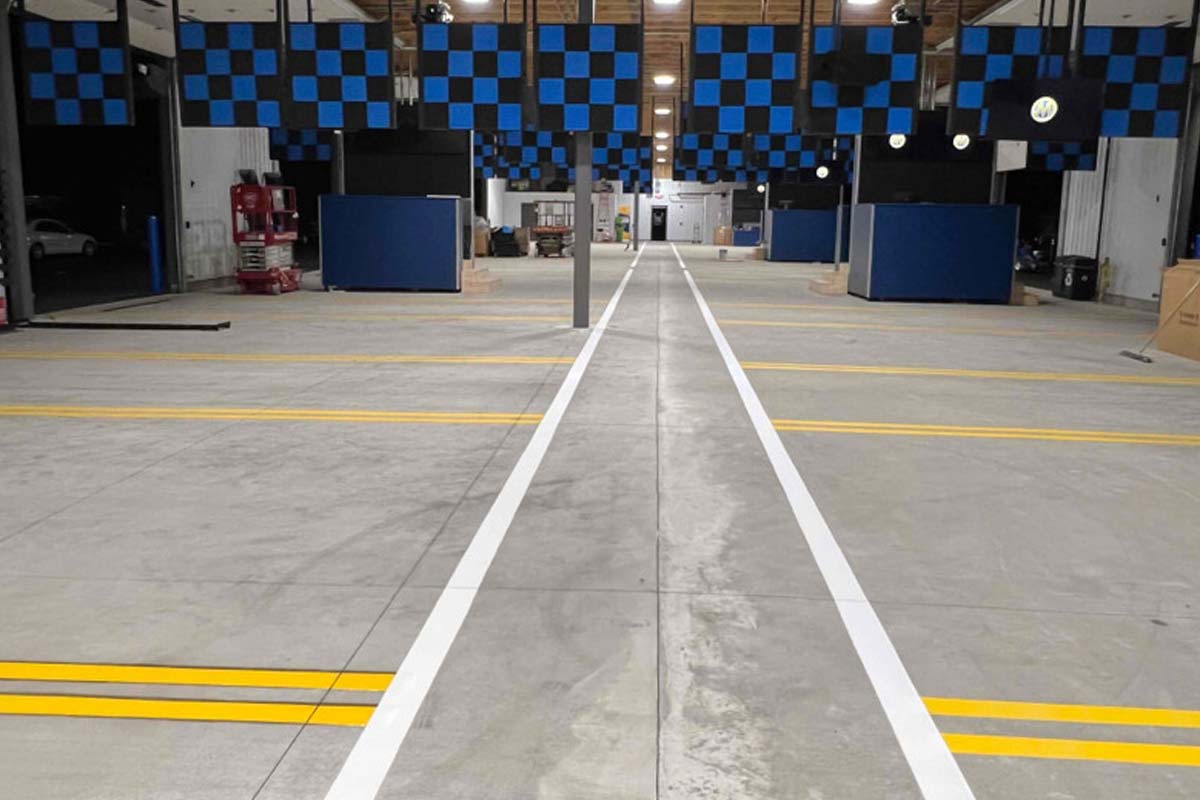
Industrial facilities in South Phoenix run hard — high forklift traffic, dense racking, active dock doors, and shift schedules that don’t stop. Keeping that environment safe starts with clear, durable floor markings that tell every worker and driver exactly where to go.
1-800-STRIPER® of South Phoenix handles the full scope of warehouse line painting: aisle lines, pedestrian walkways, forklift traffic lanes, staging and pallet zones, dock approach markings, and safety zones around equipment. We also mark column and rack-end footprints so drivers know where structure begins. If your facility follows 5S principles, we can lay out floor tape zones and painted color bands to support your program.
On South Phoenix concrete — often unsealed slab in older distribution centers — the right material matters. We apply epoxy for high-traffic lanes that need maximum durability, and traffic paint where faster cure windows are the priority. Either way, the warehouse floor markings are applied clean and straight, with crisp edges that hold up to steel wheels and heavy pallet jacks. Facilities running shift changes have called us specifically because we work around production schedules rather than forcing a full shutdown.
For multi-use buildings — industrial floor marking covering warehouse, light manufacturing, and staging in the same structure — we treat each zone separately so the marking system stays coherent across the whole floor plan.
OSHA 1910.22 and ANSI Z535.1 Color Standards
OSHA standard 1910.22 covers walking-working surfaces and requires that aisles and passageways be appropriately marked and kept clear. For most warehouses, that means painted lines with enough width and contrast to be visible under racking shadows and forklift traffic. The standard doesn’t specify exact line widths, but OSHA enforcement and industry practice both point to 2–4 inch lines for pedestrian paths and 4–6 inch lines for vehicle lanes as the normal working range.
Color meaning is defined by ANSI Z535.1 Safety Color Code. Using the right color in the right zone isn’t just a compliance checkbox — it’s what makes the marking system readable to a new hire on day one.
| Color | Meaning / Application |
|---|---|
| Yellow | Caution — aisle boundaries, forklift traffic lanes, physical hazard borders |
| Red | Danger / fire protection — fire extinguisher locations, sprinkler clearance zones, emergency equipment areas |
| Green | Safety — first-aid stations, emergency eyewash, safety equipment storage |
| Blue | Informational / mandatory — required-action areas, mandatory PPE zones |
| Orange | Dangerous machine parts / energized equipment — pinch points, exposed drive components, machinery guards |
| Black & Yellow | Physical hazard — floor-level obstacles, low-clearance markers, dock edges |
When we walk your facility before layout, we map which zones call for which colors. That conversation happens on-site so nothing gets assumed.
Our Warehouse Marking Process
Every warehouse line painting job in South Phoenix follows the same sequence. The steps look simple; the value is in not skipping any of them.
- Facility walkthrough and traffic flow review. We walk the floor with your operations contact, confirm aisle widths, identify pedestrian crossing points, note dock door swing clearances, and flag any areas where the current layout creates conflicts.
- Layout plan around racking and dock doors. Lines get snapped or measured relative to fixed structure — rack columns, door frames, wall edges — so the finished grid stays square even on large floor plates.
- Concrete surface preparation. We clean and degrease the application area before any paint goes down. On South Phoenix slabs that see oil drip or forklift hydraulic fluid, this step is what separates lines that last from lines that peel in three months.
- Epoxy or traffic-paint application. Material choice is confirmed during the walkthrough based on your traffic type, cure window, and existing floor condition. We apply in a single pass where possible to keep edges consistent.
- Cure window coordinated with your shifts. We give you a realistic no-traffic window before handoff. For epoxy, that’s typically longer; for traffic paint on prepped concrete, it’s shorter. We confirm timing before we start so your team can plan around it.
Call (480) 662-2363 for a free estimate and we’ll set a walkthrough date that fits your schedule.
Why Choose 1-800-STRIPER® of South Phoenix
1-800-STRIPER® of South Phoenix holds a 5.0-star Google rating from 12 local customers. Owner Josh Hatch runs the South Phoenix territory and handles industrial accounts across Maricopa and Pinal counties.
Warehouse clients call us again for a few specific reasons. First, we show up with a layout plan, not just a paint gun. The difference shows in corners, dock zones, and anywhere racking creates awkward geometry — areas where generic striping crews eyeball it and end up with crooked lines. Second, we work with your schedule. Warehouse floors don’t shut down for us; we plan around shift changes, weekend windows, or overnight slots so your operations don’t take a hit. Third, warehouse floor striping is a repeating need. Lines fade. Traffic patterns change. We’re local in South Phoenix, which means you’re not chasing down an out-of-area crew when it’s time to refresh.
Free estimates are available for any size facility. Reach 1-800-STRIPER® of South Phoenix at (480) 662-2363.
For a full list of our pavement marking services, visit our parking lot striping in South Phoenix page.
Businesses We Serve




How it Works

GET A FREE ESTIMATE
Contact us today and we’ll have a quote to you in 24 hours

SCHEDULE A STRIPING
We’ll have your space restriped in less than 7 days, without affecting your business hours

GET A PARKING LOT THAT POPS
For a budget-friendly price, you’ll get a parking lot that looks like new
We proudly work with:


We proudly work with:

Frequently Asked Questions About Warehouse Line Painting in South Phoenix, AZ
What’s the best way to paint lines on a warehouse floor — epoxy or traffic paint?
The short answer is: it depends on your floor and your traffic. Epoxy bonds hard to concrete and holds up to steel wheels and heavy pallet jacks better than traffic paint, but it takes longer to cure and costs more per square foot. Traffic paint on a properly prepped and degreased surface cures faster and works well in lower-traffic aisles. Surface preparation is the real variable — either product fails quickly on a dirty or oily slab. We assess the floor condition during the walkthrough and recommend the right material before anything goes down.
What do OSHA’s aisle marking rules actually require?
OSHA 1910.22 requires that permanent aisles and passageways on walking-working surfaces be appropriately marked and kept clear. The regulation doesn’t mandate a specific line width or color scheme, but it does require markings to be visible and maintained. In practice, that means painting aisle boundaries, pedestrian walkways, and forklift lanes with enough contrast to be read under normal warehouse lighting. OSHA inspection guidance and industry practice both treat unmarked or faded aisles as a citation-ready condition, so regular restriping is part of staying compliant.
What do the different floor colors mean in a warehouse?
Color meaning follows ANSI Z535.1. Yellow marks aisle boundaries and forklift traffic lanes — caution zones where vehicles and pedestrians share space. Red indicates fire protection equipment and danger areas. Green marks safety stations like first-aid kits and eyewash. Blue signals mandatory-action zones (PPE required, for example). Orange highlights dangerous machine parts or energized equipment. Black-and-yellow stripes call out physical hazards at floor level, like dock edges or low-clearance obstacles. The table in the OSHA/ANSI section above covers the full color map.
How long does the floor need to cure before forklifts can drive on it?
Cure time depends on the material and conditions. Traffic paint on a clean, dry slab is typically walkable within an hour and ready for light forklift traffic in two to four hours under South Phoenix temperatures. Epoxy takes longer — full cure is usually 24 hours before heavy traffic, though light foot traffic is often safe sooner. Heat accelerates cure; overnight applications in summer often finish faster than expected. We confirm the realistic no-traffic window with you before we start so your team can plan around it, not guess.
Can you work around an active warehouse operation?
Yes. Most of our warehouse line painting jobs in South Phoenix happen in phases or during off-peak windows — overnight, on weekends, or during shift changes — so production doesn’t stop. We section off the work area, complete that zone, and hand it back before moving to the next. The walkthrough conversation is where we map out the sequence. If your facility runs 24 hours, we can usually find a rotation that works. Call (480) 662-2363 to talk through the logistics for your site.
How is warehouse floor marking different from parking lot striping?
The core skill — layout, prep, paint, clean edges — is the same. The differences are in the materials and the compliance environment. Warehouse concrete is typically sealed or polished differently than asphalt, and it may have oil contamination that needs more aggressive degreasing before paint adheres. The marking system also follows OSHA and ANSI standards rather than ADA and local traffic codes. Color meaning is specific (see the ANSI table above), aisle widths have to accommodate your equipment, and the whole layout needs to account for racking, dock doors, and emergency egress. 1-800-STRIPER® of South Phoenix handles both — same crew, adapted for the surface and the regulatory context.