Warehouse Line Painting
In Austin, TX
OSHA-Compliant Safety Markings
1-800-STRIPER provides professional warehouse line painting in Austin, TX — striping OSHA-compliant aisles, pedestrian walkways, forklift lanes, and safety zones with durable epoxy and traffic paint for industrial and distribution facilities across the Austin metro.
1-800-STRIPER® of Austin PROVIDes Warehouse Floor Markings Services NEAR YOU
Want your indoor space to operate more efficiently?
Warehouse and interior markings ensure clear traffic lanes, organized storage zones, and designated spaces designed to help your business operate safely and efficiently.
Benefits:
What We Mark
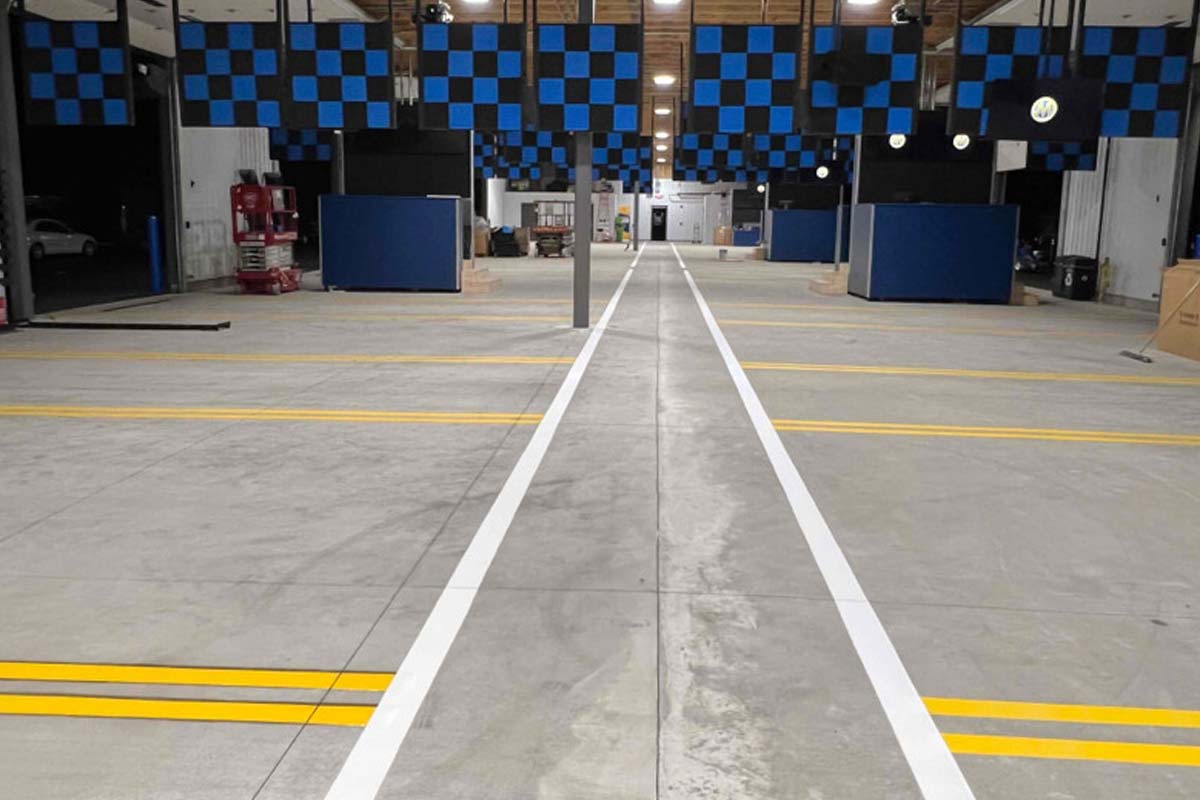
Inside a working warehouse, painted lines are a safety system. 1-800-STRIPER of Austin marks industrial floors for distribution centers, manufacturing plants, and storage facilities across the metro — aisles, walkways, forklift lanes, staging and racking zones, and hazard areas — with durable coatings built to survive forklift traffic. As Austin’s east-side and I-35-corridor logistics footprint grows, so does the demand for floors marked to keep people and equipment apart.
Our interior work covers the full marking set: main and cross aisles, pedestrian walkways, forklift travel lanes, staging and put-away zones, racking and shelving boundaries, dock and loading areas, equipment and charging zones, and hazard and keep-clear striping around panels, exits, and eyewash stations. Each marking type gets a color and a placement that communicates its meaning at a glance.
OSHA Aisle-Marking Requirements
The governing rule is narrower and vaguer than most people assume, and that is the useful part. OSHA’s standard on materials handling, 29 CFR 1910.176(a), requires that “permanent aisles and passageways shall be appropriately marked” where mechanical handling equipment is used, and that sufficient safe clearances be maintained. That is essentially the whole mandate. Read it carefully and notice what it does not say: it sets no line width, no specific color, and no aisle dimension. OSHA requires the aisles to be marked and kept clear — it leaves the how to the facility. Anyone who tells you OSHA mandates a specific stripe width or color is citing something the regulation doesn’t contain.
Safety Color Conventions
Because OSHA doesn’t specify color, the color convention comes from a different source: the ANSI Z535.1 safety-color standard and common industry practice. Typically, aisles and pedestrian ways are marked in white or yellow, hazard and caution areas in yellow (often yellow-and-black for physical hazards), red for fire and emergency equipment and defective-equipment zones, and other colors for specific in-house meanings. We apply a consistent scheme across the facility so every crew reads the floor the same way.
Durable Materials for Industrial Floors
A warehouse floor is a punishing surface — steel forklift wheels, pallet drag, and constant abrasion destroy ordinary paint. Our coatings are matched to the traffic: high-wear traffic paints for lighter areas and epoxy or comparable industrial coatings for heavy forklift lanes and dock zones. Matching the coating to the wear pattern is what keeps the lines from ghosting out within months.
Forklift & Pedestrian Separation
The core safety purpose of floor marking is keeping people and powered equipment apart. We lay clearly bounded pedestrian walkways separated from forklift travel lanes, with marked crossings where they must intersect. This is exactly the “appropriately marked” clearance OSHA is after — a walker should always know where it is safe to be, and an operator should always know where pedestrians will appear.
5S / Lean Floor Marking
For facilities running 5S or lean programs, floor marking is the visual backbone of “set in order.” We mark home locations for equipment, carts, pallets, and bins; outline staging and inventory footprints; and border work cells so anything out of place is obvious. Consistent marking turns the floor itself into the standard, which is the whole point of visual management.
Staging, Racking & Dock Zones
Beyond aisles, the working zones need boundaries. We outline staging and put-away areas, mark racking and shelving footprints, delineate dock and truck-loading zones, and border battery-charging and equipment areas. Clear zone marking speeds the flow of goods and keeps blocked aisles and mis-staged pallets from becoming safety and productivity problems.
Our Warehouse Marking Process
- Plan. We walk the floor with your team, map traffic flow, and agree a color scheme.
- Prep. We clean and, where needed, prepare the concrete so coatings bond.
- Mark. We lay aisles, walkways, lanes, and zones in the agreed colors and durable coatings.
- Cure and return. We phase the work around operations and confirm cure before traffic returns.
Why Choose 1-800-STRIPER of Austin
We know what the rule actually requires — that aisles be marked and kept clear under 1910.176(a) — and where the color and layout conventions really come from, so we don’t sell you a phantom “OSHA spec.” We use coatings matched to forklift traffic, plan around your operations to minimize downtime, and lay a consistent scheme that any crew can read. That is a floor that stays safe and legible, not one that fades in a season.
For a full list of our pavement marking services, visit our parking lot striping in Austin page.
Businesses We Serve




How it Works

GET A FREE ESTIMATE
Contact us today and we’ll have a quote to you in 24 hours

SCHEDULE A STRIPING
We’ll have your space restriped in less than 7 days, without affecting your business hours

GET A PARKING LOT THAT POPS
For a budget-friendly price, you’ll get a parking lot that looks like new
We proudly work with:


We proudly work with:

Frequently Asked Questions About Warehouse Line Painting in Austin, TX
What does OSHA require for aisle marking?
OSHA’s 29 CFR 1910.176(a) requires that permanent aisles and passageways be “appropriately marked” and kept clear where mechanical handling equipment is used. That’s the core mandate. Notably, it does not specify a line width, color, or aisle dimension — it requires marking and safe clearance and leaves the specifics to the facility.
What color should warehouse lines be?
OSHA doesn’t set the color, so the convention comes from the ANSI Z535.1 safety-color standard and industry practice — commonly white or yellow for aisles and walkways, yellow (or yellow-and-black) for caution and physical hazards, and red for fire and emergency equipment. We apply one consistent scheme across your facility so every marking reads the same.
How wide should aisles be?
OSHA requires “sufficient safe clearances” rather than a fixed number, so aisle width depends on your equipment and traffic — a lane for a reach truck differs from one for a sit-down counterbalance forklift. We plan widths around the equipment you actually run and the flow of your operation, keeping safe clearance the priority.
What paint holds up to forklift traffic?
Forklift lanes and dock zones take heavy abrasion, so we use durable industrial coatings — epoxy or comparable products — in those areas, and high-wear traffic paint in lighter-traffic zones. Matching the coating to the wear pattern is what keeps heavy-traffic lines from ghosting out within months.
Can you separate forklift lanes and walkways?
Yes — it’s the main safety goal of floor marking. We lay clearly bounded pedestrian walkways separated from forklift travel lanes, with marked crossings where they intersect, so people and powered equipment stay apart. That’s precisely the “appropriately marked” clearance OSHA’s rule is aimed at.
Do you do 5S or lean floor marking?
Yes. For 5S and lean facilities we mark home locations for equipment, carts, and pallets, outline staging and inventory footprints, and border work cells so anything out of place is immediately visible. Consistent marking makes the floor itself the visual standard.