Parking Lot Pressure Washing
In Austin, TX
Surface Prep Before Restriping
1-800-STRIPER provides professional parking lot pressure washing in Austin, TX — lifting oil stains, tire marks, and ground-in grime with wash-water captured and managed per Clean Water Act stormwater rules before we restripe.
1-800-STRIPER® of Austin PROVIDes Parking Lot Power Washing Services NEAR YOU
Need to blast away years of grime?
If your parking lot or parking garage looks dull and dirty, our professional crew can wash away grime, oil, stains, and slippery buildup to restore the appearance of your property.
Benefits:
What We Clean
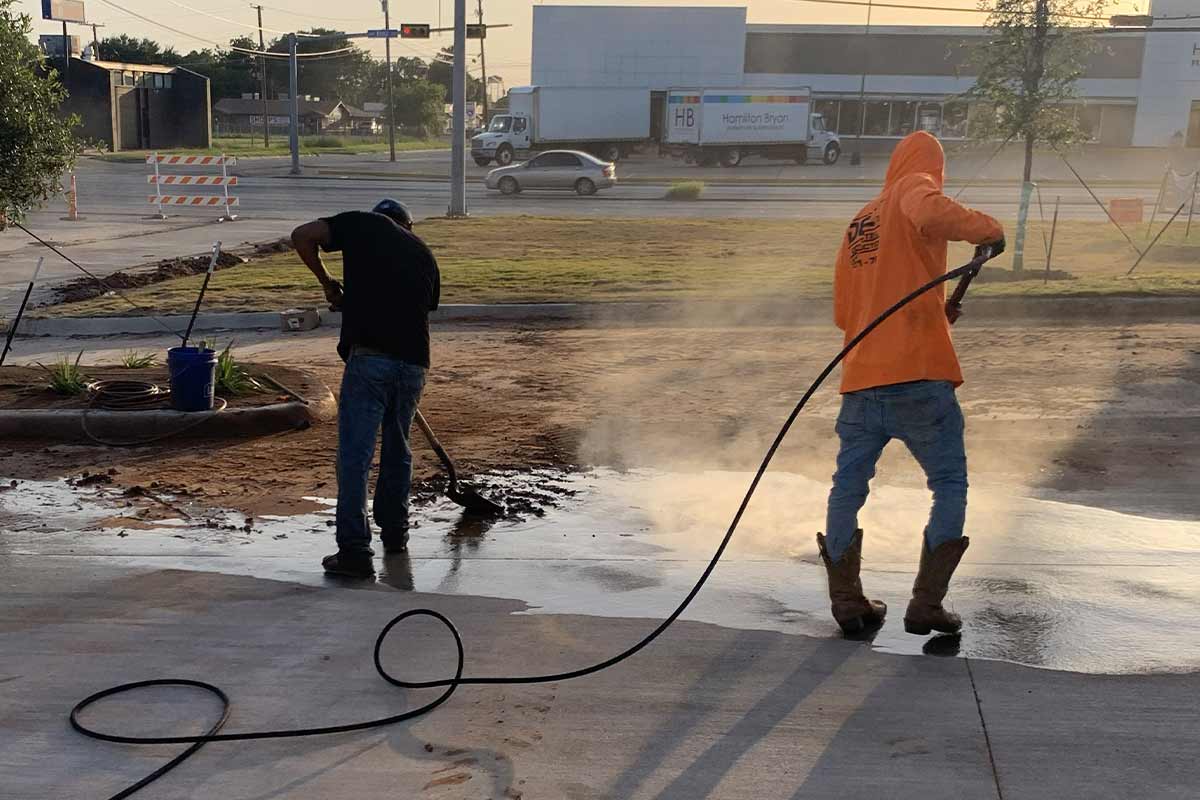
A clean lot reads as a well-run business, and it is also the foundation for durable striping. 1-800-STRIPER of Austin pressure washes commercial parking lots, sidewalks, and building aprons to lift oil, tire rubber, gum, and the fine grime that builds up between services. We do it with the wash-water managed correctly, which for a commercial site is not an afterthought — it is a compliance requirement.
Parking lots collect a specific set of stains: petroleum drips under every stall, black tire scrubbing at the turns, gum and food spills at the storefronts, and a general dulling film across the whole surface. Our wash targets all of it, along with sidewalk gum, dumpster-pad buildup, and the greasy zones behind restaurants. Pressure washing brightens the pavement, removes slip and trip hazards, and pulls off the contaminants that would otherwise keep fresh paint from bonding.
Surface Prep Before Restriping
Paint bonds to a clean, dry surface — not to oil and dust. When pressure washing is paired with striping, it doubles as surface prep: we lift the contaminants along the marking paths so the new lines key into the pavement instead of sitting on a greasy film that lets them peel early. On a badly soiled lot, a wash before the restripe is the single cheapest way to add years to the markings’ life.
Wash-Water & Stormwater Compliance
This is where a professional differs from a guy with a machine. Parking-lot wash-water carries oil, heavy metals, and detergents, and it cannot legally be sent into a storm drain untreated. The federal Clean Water Act, administered through the EPA’s National Pollutant Discharge Elimination System, prohibits that discharge; in Texas the program is delegated to the TCEQ as the Texas Pollutant Discharge Elimination System, so the same rule applies at the state level. A compliant contractor captures, contains, and disposes of the wash-water properly rather than letting it run to the nearest inlet. We handle it that way as a matter of course.
Pressure Washing vs Power Washing
The two terms get used interchangeably, but there is a real distinction. Pressure washing uses high-pressure water at ambient temperature; power washing adds heat. Hot water cuts grease and oil faster, which is why kitchen aprons and heavy petroleum staining often call for it, while cold high-pressure water is plenty for general lot cleaning. We use whichever the surface and the stains call for — the “power washing” many customers search for is simply the heated version of the same service.
Our Pressure Washing Process
- Assess. We identify the stain types and the drainage layout so wash-water is captured, not released.
- Pre-treat. Heavy oil and grease get a degreaser before washing.
- Wash. We work the surface at the right pressure and temperature for the stains present.
- Capture and dispose. We contain the wash-water and dispose of it per stormwater rules.
- Dry and stripe. When striping is part of the job, we let the surface dry, then restripe.
Why Choose 1-800-STRIPER of Austin
We treat pressure washing as part of a striping program, not a standalone blast-and-go. That means we clean with the restripe in mind, we handle wash-water to Clean Water Act and TCEQ standards, and we can turn a cleaned lot straight into a fresh striping job without a second mobilization. For a property manager, that is one vendor, one schedule, one accountable crew.
For a full list of our pavement marking services, visit our parking lot striping in Austin page.
Businesses We Serve




How it Works

GET A FREE ESTIMATE
Contact us today and we’ll have a quote to you in 24 hours

SCHEDULE AN INSTALLATION
We’ll have your installation scheduled in less than 7 days, without affecting your business hours

GET A PARKING LOT THAT POPS
For a budget-friendly price, you’ll get a parking lot that looks like new
We proudly work with:


We proudly work with:
Frequently Asked Questions About Parking Lot Pressure Washing in Austin, TX
Do I need to pressure wash before restriping?
Not always, but it helps — a lot. Fresh paint bonds to a clean, dry surface, so washing the marking paths lifts the oil and grime that make new lines peel early. On a lightly soiled lot a spot clean is enough; on a heavily stained one, a full wash before striping is the cheapest way to make the markings last.
Where does the wash-water go?
It gets captured and disposed of properly — not down the storm drain. Parking-lot wash-water carries oil and contaminants, and the federal Clean Water Act (through EPA’s NPDES program) and the TCEQ’s Texas Pollutant Discharge Elimination System prohibit sending it into the storm system untreated. We contain and manage it to stay compliant.
Can you remove oil stains and tire marks?
Yes. Oil drips and black tire scrubbing are the two most common lot stains, and both respond to the right combination of pressure, heat, and degreaser. Deep, long-standing oil that has penetrated the asphalt may lighten rather than vanish entirely, and we’ll tell you honestly what to expect before we start.
What is the difference between pressure and power washing?
Pressure washing uses high-pressure water at ambient temperature; power washing adds heat. Hot water cuts grease and oil faster, so it suits kitchen aprons and heavy petroleum stains, while cold high-pressure water handles general lot cleaning well. We use whichever the surface and stains require.
How often should I clean my lot?
It depends on traffic and use. Most commercial lots benefit from at least an annual wash, with high-traffic retail, grocery, and restaurant properties cleaning more often. Pairing the wash with your restripe cycle is an efficient way to keep both the surface and the markings in good shape on one schedule.
Will pressure washing damage asphalt or existing lines?
Not when it’s done at the correct pressure. We match the pressure and temperature to the surface so it lifts contaminants without gouging asphalt or stripping sound paint. Very old, already-failing lines may lift further during a wash — which usually just means they were due for a restripe anyway.