Bollard Installation
In Austin, TX
Safety and Security Bollards
1-800-STRIPER provides professional bollard installation in Austin, TX — setting and painting steel safety and security bollards that shield storefronts, ADA routes, and fuel islands, with crash-rated options meeting ASTM F3016 impact ratings.
1-800-STRIPER® of Austin PROVIDes Bollard Installation Services NEAR YOU
Want to prevent accidents and protect your property?
Bollards provide physical protection for your customers and your property.
Safety and security:
Bollards create a physical barrier between vehicles and pedestrians, protecting people in walking areas from accidental or intentional vehicle intrusions.
Bollards act as a protective barrier around storefronts, gas stations, and other vulnerable areas, minimizing the risk of costly damage from vehicle impacts.
Strategic Placement Locations:
Types of Bollards We Install
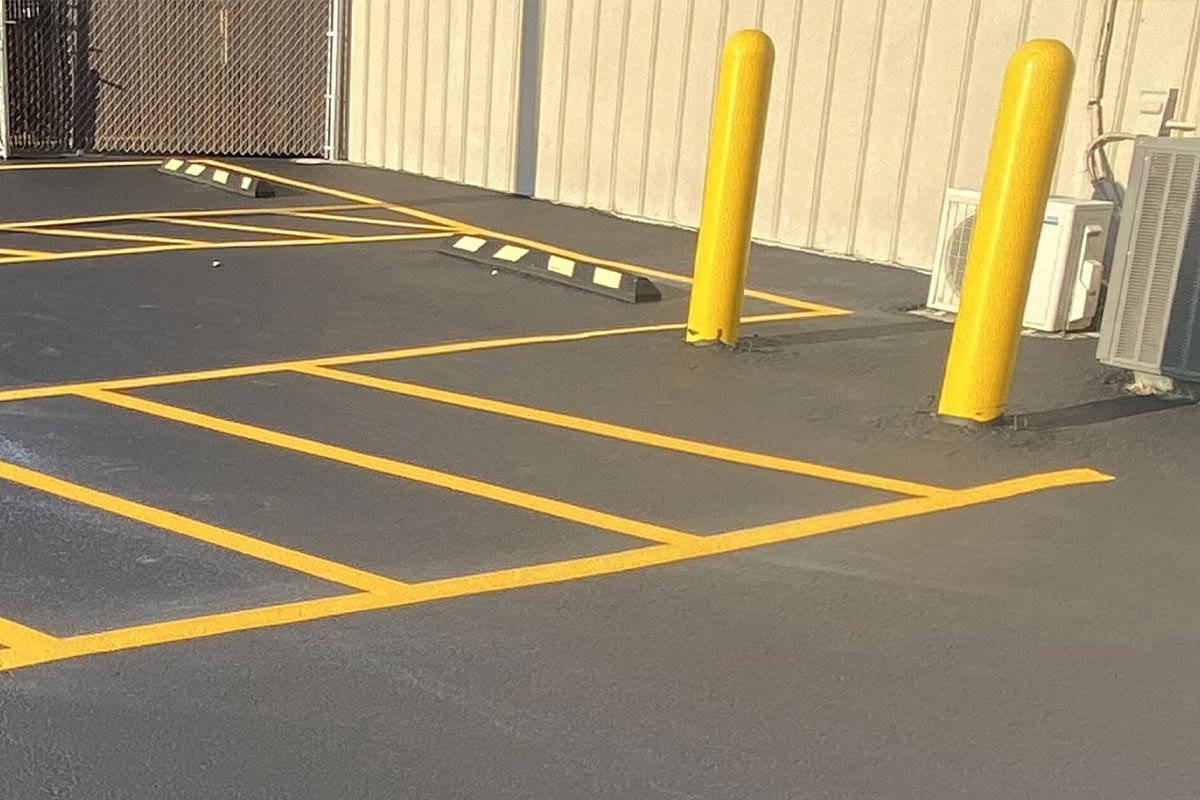
A bollard is the post that stands between a moving vehicle and the thing you can’t afford to have hit. 1-800-STRIPER of Austin installs and paints bollards across commercial properties — protecting storefronts, entrances, fuel islands, equipment, and pedestrian areas from vehicle strikes. We handle everything from a single replacement post to a full protective line, set and finished to last.
Our installs cover steel pipe bollards (the common concrete-filled post), decorative and architectural bollards for storefronts that need protection without an industrial look, removable and retractable bollards for access points that must open and close, and high-visibility safety bollards for hazard zones. We can supply new bollards or replace and repaint existing ones that have been struck or gone rusty.
Safety vs Security Bollards
The two words describe two jobs. Safety bollards guide traffic and protect equipment and people from low-speed contact — protecting a propane cage, a utility meter, or a walkway corner. Security bollards are engineered to stop a vehicle, protecting a storefront glass line or entrance from an accidental — or intentional — high-energy impact. The difference drives everything about the specification, from post diameter to foundation depth to crash rating.
Crash-Rated Bollards
When stopping a vehicle is the actual requirement, the bollard needs a crash rating — a tested performance standard, not a guess. ASTM F3016 is the standard for security bollards tested against lower-speed vehicle impacts typical of a parking lot or storefront approach, and ASTM F2656 covers higher-security, higher-energy ratings. A crash-rated bollard’s stopping power comes from the whole system — post, fill, and foundation together — which is why embedment and footing matter as much as the post. We install crash-rated bollards to their tested specification rather than eyeballing it.
Storefront & Fuel-Island Protection
The highest-value places for bollards are the ones a vehicle can roll straight into: glass storefronts at the head of a parking row, entrance vestibules, drive-up windows, and fuel islands and propane cages where a strike is a serious hazard. We plan bollard spacing to block a vehicle while leaving carts, pedestrians, and deliveries a clear path — protection that doesn’t become an obstruction.
Our Bollard Installation Process
- Assess. We identify what needs protecting and whether the job calls for safety or security bollards.
- Specify. We select post type, spacing, and — where required — the crash rating and foundation.
- Install. We core or excavate, set the posts to depth, and fill and finish.
- Finish. We paint or sleeve the bollards for visibility and appearance.
For a full list of our pavement marking services, visit our parking lot striping in Austin page.
Businesses We Serve




How it Works

GET A FREE ESTIMATE
Contact us today and we’ll have a quote to you in 24 hours

SCHEDULE AN INSTALLATION
We’ll have your installation scheduled in less than 7 days, without affecting your business hours

GET A PARKING LOT THAT POPS
For a budget-friendly price, you’ll get a parking lot that looks like new
We proudly work with:


We proudly work with:


Frequently Asked Questions About Bollard Installation in Austin, TX
What’s the difference between safety and security bollards?
Safety bollards guide traffic and protect equipment or people from low-speed contact — think a post shielding a propane cage or a walkway corner. Security bollards are engineered to actually stop a vehicle, protecting a storefront or entrance from a high-energy impact. The intended job sets the post size, foundation, and whether a crash rating is needed.
What is a crash-rated bollard?
It’s a bollard tested to a recognized standard for stopping a vehicle at a defined speed and weight. ASTM F3016 covers lower-speed impacts typical of parking lots and storefronts, and ASTM F2656 covers higher-security ratings. The rating reflects the whole system — post, fill, and foundation — so proper installation depth is part of what makes the rating real.
Do I need bollards at my storefront?
If vehicles park or drive toward a glass storefront, entrance, or drive-up window, bollards are cheap insurance against an expensive strike. Storefront rows where a car noses in directly and fuel or propane areas are the highest-priority spots. We’ll assess your layout and point out where a strike is most likely.
Steel or concrete-filled — which is better?
Most protective bollards are steel pipe filled with concrete, which combines the steel’s toughness with the fill’s mass for better impact resistance. Decorative or removable bollards use different constructions for their purpose. We match the construction to the job — a storefront security post is specified differently from a post marking a walkway edge.
Do you offer removable or retractable bollards?
Yes. For access points that must open for deliveries, emergency vehicles, or seasonal traffic, we install removable or retractable bollards that lock in place when up and clear the opening when down. They give you controlled protection without permanently blocking an access lane.
How deep are bollards set?
Depth depends on the bollard’s job. A protective, crash-oriented bollard needs a substantial footing because its stopping power comes from the foundation as much as the post, while a decorative or guidance bollard is set more modestly. For crash-rated posts we install to the tested specification’s foundation requirement, since shorting the footing undercuts the rating.