Temporary Parking Lot Striping
In West Cleveland, OH
Event and Construction Markings
1-800-STRIPER provides professional temporary parking lot striping in West Cleveland, OH — short-duration event markings, construction-zone striping, and overflow parking layouts on grass, gravel, pavement, or any surface using removable water-based traffic paint for events throughout Cuyahoga, Lorain, Medina, and Summit counties.
1-800-STRIPER® of Cleveland West PROVIDes Temporary Striping Services NEAR YOU
Need Temporary Stripes?
Use temporary stripes to direct traffic and create parking areas at your special event or to keep construction sites safe without a long-term commitment. We paint on grass, gravel, pavement, or any other surface where temporary striping is needed.
Striping solutions for:
Surfaces We Stripe Temporarily
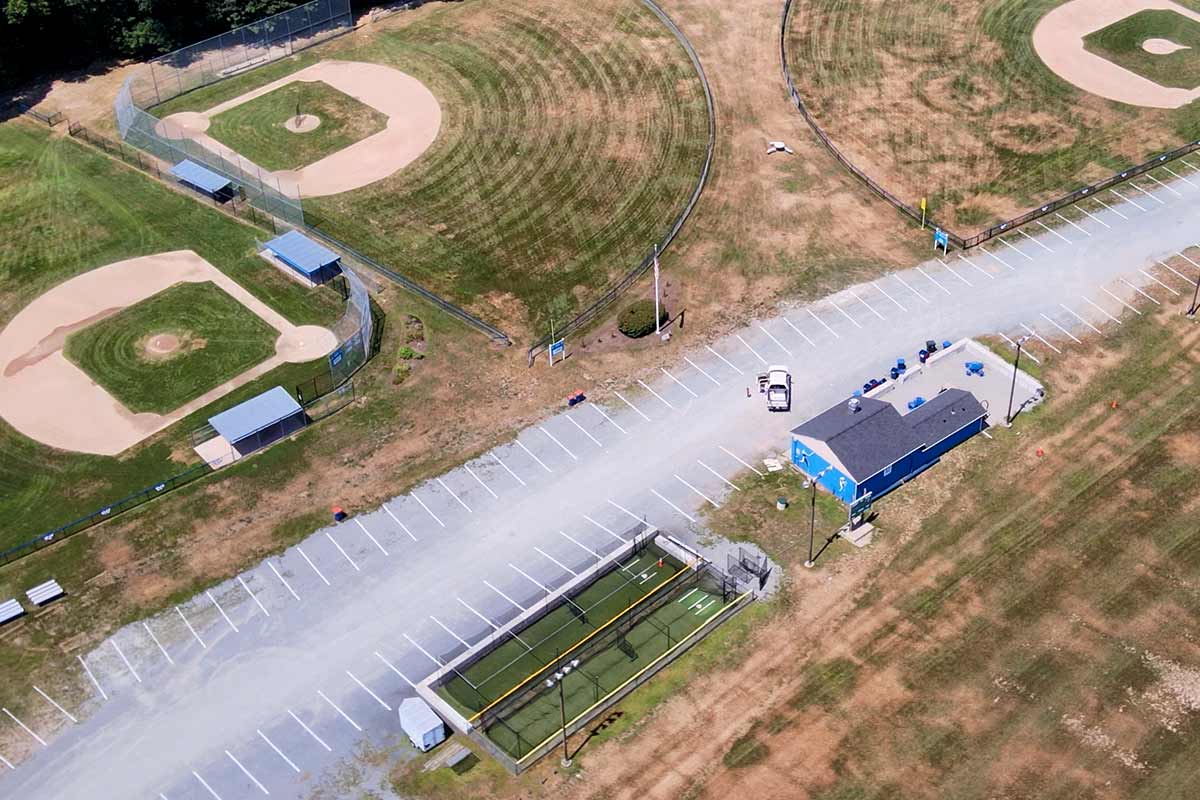
Temporary parking lot striping works across four surface types — and the surface choice changes the paint, the cure time, and the removal-after method.
Asphalt pavement. The most common temporary-striping surface. Removable water-based traffic paint adheres to asphalt during the event window, then either weathers off naturally over 4 to 12 weeks or can be accelerated-removed with hot-water pressure washing. Cleveland-area summer events get the cleanest removal; spring and fall events run longer weather-degradation windows.
Concrete pavement. Slightly tighter adhesion than asphalt; temporary paint typically lasts 6 to 16 weeks on concrete before weathering off. Heavy-traffic concrete surfaces (high-school parking lots, church lots) hold temporary marking through full event seasons.
Grass. Yes — grass-surface temporary striping is a regular project category. We use a higher-pigment water-based paint formulated to mark the grass blades themselves; the marking weathers off within 2 to 4 weeks as the grass cuts and grows out. Common for outdoor event parking on athletic fields, fairground overflow lots, and church-camp overflow parking.
Gravel. Gravel surfaces take temporary marking with a higher-coverage application — the paint coats both the gravel stones and any visible substrate. Marking holds for the event window; gravel-surface paint can be vehicle-tire-displaced over time, so we mark immediately before the event.
The surface choice gets confirmed during the project intake — what’s the event, where’s the parking, what surface, what duration?
Common Use Cases
Temporary striping serves a handful of recurring event and project types across our service area.
Outdoor events and festivals. Concert venues, county fairs, food festivals, and church-camp events that need parking marking for a weekend or week-long window. The most common request: overflow grass-field parking with marked stall rows so attendees can park efficiently.
Construction-zone parking. Active construction sites with worker parking and trade-vehicle staging that needs defined stall layout for the project duration. Marking holds 2 to 6 months depending on traffic and removal preference at project close.
Sports tournaments. Youth-sports tournaments, regional pickleball or basketball tournaments, and one-time athletic events that draw weekend overflow parking on athletic fields or adjacent unpaved areas.
Seasonal church and assembly parking. Easter, Christmas, and Mother’s Day services that need expanded parking marking on overflow lots or grass fields beyond the standard church parking footprint.
Property-management projects. Property managers running short-term parking reconfigurations during paving, sealcoat, or major-equipment-staging projects — temporary marking holds the layout during the project, then weathers off (or gets removed) when the permanent striping is reapplied.
Pop-up retail and farmers markets. Vendor-staging marking, customer-parking lanes, and entry-and-exit traffic flow for short-duration retail events.
Paint Selection — Removable Water-Based Traffic Paint
Temporary-striping paint differs from permanent traffic paint in two ways: it’s formulated to weather off in a predictable window, and it doesn’t require the cure conditions that permanent paint demands.
Our temporary paint is Sherwin-Williams Setfast Acrylic Waterborne Traffic Marking Paint, applied at reduced film thickness compared to permanent striping (about 7 to 9 mils wet versus the 14 to 16 mils standard for permanent restriping). The reduced film thickness shortens the natural-weathering life-cycle to the 4 to 16-week range that fits event and short-term project needs.
The paint is bright white or yellow (other colors available for specialty applications), water-based, and complies with VOC limits for commercial application in Ohio. Cure to vehicle-traffic-ready is 60 to 90 minutes at 70°F.
For grass-surface applications, we use a heavier-pigment formulation that marks the grass blades directly. For gravel surfaces, we use a thicker application that coats both the stones and any visible substrate. Both formulations are water-based and weather off naturally — the gravel and grass versions just have shorter visible life than the asphalt or concrete version because the substrate itself moves or grows during the event window.
Setup and Turnaround Speed
Temporary striping moves faster than permanent striping because the prep is lighter and the cure window is shorter.
For a typical event lot — 200 to 500 stalls on grass, asphalt, or gravel — setup runs as a same-day or overnight job: arrive day-of-event-minus-one, walk the lot with the event coordinator, layout-mark the parking grid, paint the stalls, cure for two hours, ready for the event.
For larger event lots (1,000 stalls or more) or for multi-surface lots, we stage the work over a 24 to 48-hour window before the event. Multi-day events get one painting pass for the full event window.
The fastest turnaround we’ve handled is a same-day mark-and-paint for a Saturday-afternoon event coordinated Friday morning — arrival at 6:00 AM Saturday, painting complete by 10:00 AM, cure complete by noon, event opens at 2:00 PM. That’s the floor; most events get a more relaxed schedule.
Layout Planning for Event Capacity
Event-parking capacity planning is part of the temporary-striping scope.
For grass-field event parking, we use a standard 9-foot stall width by 18-foot stall length on the grass — narrower than commercial asphalt stalls because the on-grass turnover speed is lower and shorter stalls allow more rows per acre. A typical grass-field event lot fits roughly 90 to 110 stalls per acre depending on the field shape and drive-aisle layout.
For asphalt or concrete event lots (often a permanent commercial lot temporarily reconfigured for an event), we work within the lot’s existing pavement boundaries. Common event reconfiguration: striking the existing daily stalls and re-striping with narrower or denser stalls to add event-day capacity, then weathering the temporary marking off after the event so the permanent layout returns.
For gravel surfaces — typical at construction-staging and overflow-rural lots — capacity planning is more flexible because there are no curb or pavement-edge constraints. We mark stall rows with stall-and-aisle dimensions matched to the expected vehicle mix (passenger cars require 9-by-18 stalls; pickup trucks and vans need 9.5-by-20 minimum).
The event coordinator typically gives us an expected attendance and vehicle-occupancy figure; we mark the lot to hit that capacity with a comfortable circulation margin.
Cleanup and Paint Removal Options
Removable paint weathers off naturally — but some events and project closes require accelerated removal.
Natural weathering. The standard path. Water-based temporary paint degrades naturally under UV, rain, and traffic exposure. Asphalt-surface markings weather off in 4 to 12 weeks, concrete in 6 to 16 weeks, grass in 2 to 4 weeks (faster because the grass grows and gets mowed), gravel in 4 to 8 weeks (faster because the gravel moves under traffic).
Hot-water pressure-wash removal. Accelerated removal for events that need the surface marking-free immediately after the event. We bring hot-water pressure washing equipment and remove the paint same-day or next-day after the event. Removal is most effective on asphalt; concrete surfaces sometimes retain ghost lines that fade over a few additional weeks.
Chemical removal. For situations where hot-water removal isn’t enough — typically older asphalt that’s absorbed paint pigment, or concrete with heavy temporary marking. We use commercial paint-removal chemicals (citrus-based on most surfaces; methylene-chloride-based as a last resort) followed by pressure-rinse.
No removal — return to permanent. For commercial property where temporary marking is sitting on top of permanent marking, the typical close is to weather the temporary off and let the permanent marking show through as it returns. Used in property-management projects where temporary marking covered a paving or sealcoat operation.
The removal-after choice gets settled during the project intake — what happens to the lot after the event, and what’s the timeline?
Weather Considerations on Cleveland’s West Side
Cleveland-west weather drives three temporary-striping decisions.
Application temperature window. Sherwin-Williams Setfast Acrylic requires 50°F minimum surface and air temperature during application and through the first 30 to 60 minutes of cure. Cleveland-west spring conditions typically don’t reach the 50°F floor reliably until mid-April; fall conditions hold the floor through mid-October on south-facing surfaces. November through March is outside the application window.
Lake-effect precipitation timing. Late-spring and early-fall lake-effect rain events can disrupt application or cure windows. We watch the weather forecast for the 24 hours before and 4 hours after planned application; if there’s a high-probability rain event in that window we reschedule or stage the work for a clear weather window.
Cure-time extension in cool weather. At the 50°F floor, cure to vehicle-traffic-ready stretches from the 60-to-90-minute summer baseline to 2 to 3 hours. We build the longer cure window into shoulder-season event schedules.
Snow and freeze-thaw degradation in winter-stored lots. For temporary marking that has to span winter (rare for true event striping; more common for construction-zone marking), expect heavy degradation through the December-to-March freeze-thaw cycle. Spring-restripe is typically needed if the project carries through winter.
Cure Time and Foot or Vehicle Traffic
Cure time depends on application temperature and paint thickness.
Vehicle-traffic-ready cure. 60 to 90 minutes at 70°F application; 2 to 3 hours at 50°F (the application floor); roughly proportional to ambient temperature within that range.
Foot-traffic-ready cure. Shorter than vehicle cure — typically 30 to 45 minutes at 70°F. Pedestrian event traffic can use the lot before vehicle traffic.
Full cure. Full chemical cure (where the paint reaches its maximum durability) is 24 hours at 70°F. For event lots that open within the same day as paint application, we apply at the earliest practical morning window so the vehicle-traffic-ready cure clears by event start.
Cold-weather extension. Below 60°F, cure time scales up roughly linearly. Below 50°F, the paint can fail to cure properly and may chalk or wash off in subsequent rain — which is why the 50°F application floor matters.
For a full list of our pavement marking services, visit our parking lot striping in West Cleveland page.
Businesses We Serve




How it Works

GET A FREE ESTIMATE
Contact us today and we’ll have a quote to you in 24 hours

SCHEDULE A STRIPING
We’ll have your space restriped in less than 7 days, without affecting your business hours

GET A PARKING LOT THAT POPS
For a budget-friendly price, you’ll get a parking lot that looks like new
We proudly work with:


We proudly work with:

Frequently Asked Questions About Temporary Parking Lot Striping in West Cleveland, OH
Can you stripe parking on grass for an event?
Yes — grass-surface temporary striping is a regular project category. We use a higher-pigment water-based paint formulated to mark the grass blades directly. The marking weathers off within 2 to 4 weeks as the grass cuts and grows out, so no separate removal step is needed. Common applications: church-camp event parking, county-fair overflow parking, youth-sports tournaments, outdoor festivals.
How long does temporary striping last on asphalt?
The standard is 4 to 12 weeks of clearly visible marking on asphalt before natural weathering reduces visibility. Concrete holds slightly longer, 6 to 16 weeks. The actual duration depends on traffic load, weather exposure, and whether the marking is in direct sun or shaded. For event lots that need to be marking-free after the event, we can accelerate removal with hot-water pressure washing.
Is temporary striping paint removable from concrete?
Yes — hot-water pressure washing removes most temporary water-based paint from concrete same-day or next-day after the event. Older concrete sometimes retains ghost lines that fade over a few additional weeks; chemical removal is available for stubborn cases. For events on concrete where the surface has to be marking-free immediately afterward, plan on the pressure-wash removal step as part of the project.
Can you mark parking for a construction zone or overflow lot?
Yes — construction-zone striping and overflow lot marking are two of our most common temporary-striping use cases. Construction zones typically need marking for 2 to 6 months during the project; overflow lots need marking for the event window plus a few weeks of weather-off time. We mark the surface, paint cures the same day, and the marking stays through the project window.
What’s the minimum lead time to book temporary striping for an event?
We’ve handled same-day turnarounds for emergency event work, but the comfortable lead time is one to two weeks before the event date. The longer lead lets us match a weather window for cure, confirm surface and capacity details during a pre-event site walk, and coordinate any pre-event prep the event coordinator wants to handle in advance.
Will rain wash off the temporary paint before my event?
Once cured (60 to 90 minutes at 70°F, 2 to 3 hours at 50°F), the paint is rain-resistant for the duration of its weathering life-cycle. The vulnerability is rain during application or during the cure window — we watch the forecast for the 4 hours before through 4 hours after application and reschedule or stage the work if a high-probability rain event falls in that window. Once the paint has cured, normal rain doesn’t accelerate weathering meaningfully.