Parking Lot Restriping
In Cherry Hill, NJ
Restripe Existing Lines and Markings
1-800-STRIPER® provides professional parking lot restriping in Cherry Hill, NJ — refreshing faded lines, ADA stalls, fire lanes, and directional arrows using Sherwin-Williams Fast-Dry Traffic Paint and Graco LineLazer equipment for commercial properties across the South Jersey metro area.
1-800-STRIPER of Cherry Hill PROVIDes Restriping Services NEAR YOU
Need to brighten up your faded parking lot?
Keep your parking lot safe and attractive by restriping annually to freshen up lines and symbols that have faded from the sun, weather, and traffic. Nothing beats a fresh coat of paint!
Benefits:
Parking Lot Restriping Services in Cherry Hill, NJ
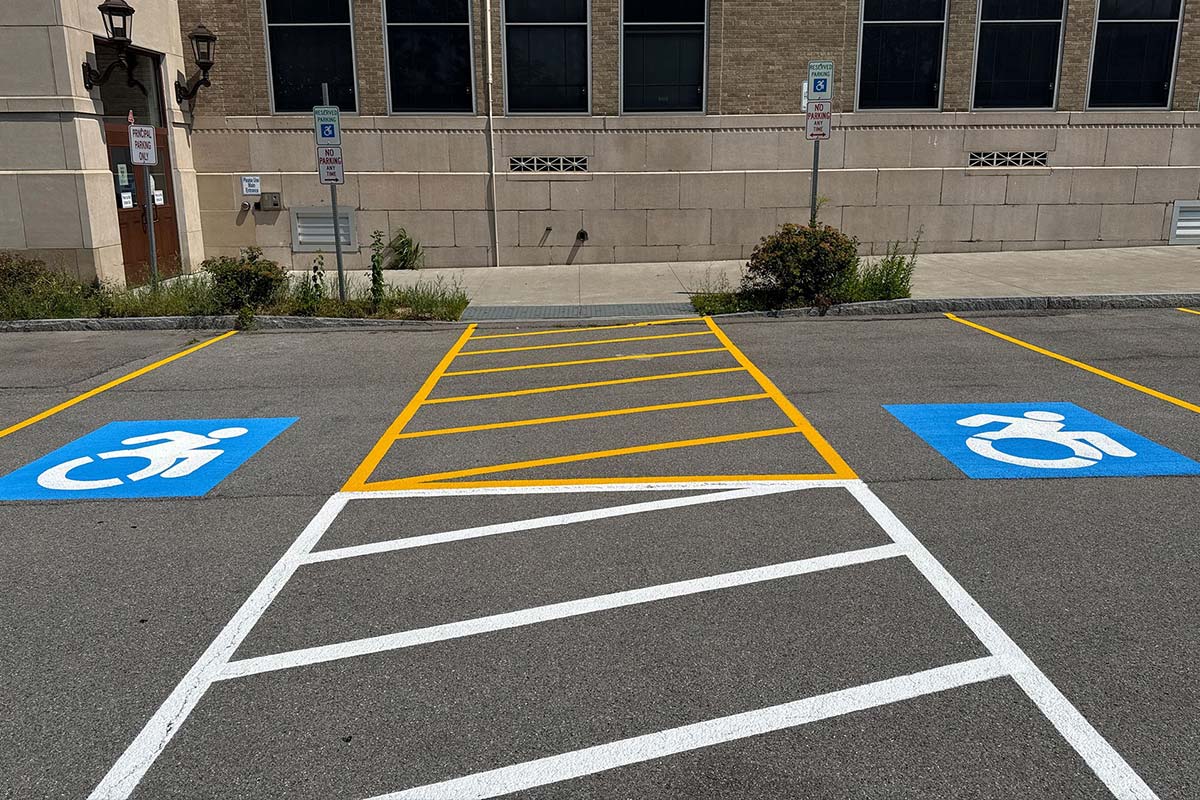
Restriping refreshes the markings on an existing lot so it’s safe, legible, and compliant again — without the cost of repaving. We restripe commercial lots across Camden and Burlington counties: faded stall lines, worn ADA stalls and access aisles, fire lanes, directional arrows, crosswalks, and stall numbering. If the asphalt is still sound but the lines have faded, restriping is the fix.
Most lots are re-marked over the existing layout to keep the same proven circulation, but restriping is also the moment to correct problems — a missing accessible space, faded fire-lane markings, or an aisle that never worked. We mark everything to MUTCD conventions so the refreshed lot reads consistently to drivers.
When to Restripe Your Lot
The clearest signal is visibility: if stall lines are hard to see from a moving car, the lot is overdue. Watch for these signs:
- Faded or barely-visible stall lines and directional arrows
- ADA stalls, access-aisle striping, or the accessibility symbol wearing away
- Fire-lane markings or “No Parking” stencils losing legibility
- Chipped, flaking, or cracked paint after winter
- New tenants, a use change, or complaints about traffic flow
In South Jersey, the timing is driven by climate as much as traffic. New Jersey winters cycle through repeated freeze and thaw, and the salt and brine used on lots and the roads feeding them are hard on waterborne markings. That’s why most commercial lots here benefit from restriping every 12 to 24 months, with high-traffic retail and industrial lots on the shorter end.
Restriping vs. Repaving — A Cost-Effective Refresh
Restriping and repaving solve different problems. If the pavement itself is failing — alligator cracking, potholes, base failure — that’s a paving job. But when the asphalt is structurally fine and only the markings have faded, restriping restores safety and compliance for a fraction of the disruption. There’s no demolition, no curing slab, and most lots reopen the same day once the paint sets.
Many property managers put off restriping while they weigh a bigger repaving decision, and the lot keeps degrading in the meantime — faded ADA stalls become a compliance exposure and worn fire lanes become a safety one. Restriping bridges that gap: it keeps the lot legible and compliant now, whether or not repaving is on the horizon.
A fresh restripe also does work that goes beyond compliance. Crisp lines and clearly marked accessible spaces, fire lanes, and traffic flow signal that a property is well maintained — the first impression a customer forms before they ever reach the door. Worn, confusing markings do the opposite, and they invite the kind of disorganized parking and fender-bender risk that creates liability of its own. For retail and medical properties along the busy Route 70 and Route 73 corridors, that curb appeal and safety margin is a real part of the value.
What We Restripe
A full restripe covers every marking on the lot, not just the parking stalls:
- Standard parking stalls and any stall numbering
- ADA accessible spaces, access aisles, and the International Symbol of Accessibility
- Fire lanes and “No Parking — Fire Lane” stencils
- Directional arrows, stop bars, and crosswalks
- Loading zones, no-parking hatching, and curb markings
We can re-mark the existing layout line-for-line, or use the restripe to make targeted corrections — adding a required accessible space, refreshing a fire lane to the fire official’s expectations, or tightening a row to recover capacity.
Paint and Equipment
We use fast-dry waterborne traffic paint — Sherwin-Williams Fast-Dry — applied with Graco LineLazer airless striping equipment. The combination lays down a crisp, uniform line and sets quickly, which shortens the time a section of lot has to stay closed. Fast cure time matters in South Jersey’s variable weather, where the dry window between rain and humidity can be short.
Line color and pattern follow MUTCD conventions: white for standard stalls and most markings, blue for accessible spaces and the accessibility symbol, and the colors local fire officials expect for fire lanes. Consistent color and width are what make a restriped lot read clearly and pass inspection.
Our Restriping Process
- Assess and confirm scope. We walk the lot, note faded markings, and confirm whether you want a line-for-line refresh or corrections.
- Clean the surface. Markings only bond to a clean, dry surface, so we clear dirt, debris, and loose material from the lines first.
- Lay out and mark. We follow the existing layout (or the corrected plan) and stripe with airless equipment for consistent lines.
- Cure and reopen. Fast-dry paint sets quickly; we sequence the work so each section reopens as soon as it’s ready.
Why Cherry Hill Businesses Choose Us
We’re a local South Jersey crew that knows what the lots here go through — the freeze-thaw winters, the salt, the high-turnover retail along Route 70 and Route 73. We refresh the whole lot to code, not just the easy lines, and we schedule around your busiest hours so the work doesn’t cost you customers. Every project starts with a free on-site estimate and a clear scope, so you know exactly what’s being restriped before we start.
We also catch the things a quick paint job misses. During the estimate we flag faded accessible markings that fall short of the 2010 ADA Standards or the NJ Barrier Free Subcode, fire-lane markings that won’t pass inspection, and worn traffic markings that create confusion on the lot — so the restripe fixes the real issues, not just the obvious ones. That whole-lot view is what keeps a property compliant and safe between visits.
For a full list of our pavement marking services, visit our parking lot striping in Cherry Hill page.
Businesses We Serve



How it Works

GET A FREE ESTIMATE
Contact us today and we’ll have a quote to you in 24 hours

SCHEDULE AN INSTALLATION
We’ll have your installation scheduled in less than 7 days, without affecting your business hours

GET A PARKING LOT THAT POPS
For a budget-friendly price, you’ll get a parking lot that looks like new
We proudly work with:


We proudly work with:
Frequently Asked Questions About Parking Lot Restriping in Cherry Hill, NJ
How often should I restripe my parking lot?
Most commercial lots in South Jersey benefit from restriping every 12 to 24 months. The exact timing depends on traffic volume, paint type, and weather. New Jersey’s freeze-thaw winters and road salt wear waterborne markings faster than milder climates, and high-traffic retail and industrial lots fade sooner. The practical test is visibility: if stall lines or ADA markings are hard to see from a moving car, it’s time.
How long does parking lot striping paint last?
Waterborne traffic paint on a commercial lot typically holds up for about one to two years before it needs refreshing, depending on traffic and weather. Higher-durability systems like thermoplastic or epoxy last longer but cost more and aren’t necessary for every lot. In our climate, salt exposure and freeze-thaw cycling are the main factors that shorten paint life, which is why annual touch-ups are common on busy lots.
Is restriping cheaper than repaving?
Restriping and repaving address different problems. Restriping refreshes the markings on pavement that’s still structurally sound, with no demolition and minimal downtime — most lots reopen the same day. Repaving is needed only when the asphalt itself is failing. If your lines have faded but the surface is fine, restriping restores safety and compliance at a fraction of the disruption of a paving project. We’ll tell you honestly which one your lot needs.
Do you stripe over the old lines or remove them first?
For most refreshes we restripe directly over the existing markings, which preserves a layout that already works and keeps the project efficient. When a layout needs to change — relocating a stall, correcting an accessible space, or reconfiguring a row — we lay out the new geometry and can address the old lines as needed. We confirm which approach fits your lot during the estimate.
How long before we can drive and park on fresh stripes?
We use fast-dry waterborne paint that sets quickly, so a striped section is typically ready for traffic within a short window the same day, depending on temperature and humidity. We sequence the work so part of the lot stays open while another section cures, then reopen each area as the paint is ready. We’ll give you a clear timeline for your specific weather window.
Will you refresh our ADA and fire-lane markings too?
Yes. A full restripe includes accessible stalls, access aisles, the accessibility symbol, fire lanes, and “No Parking — Fire Lane” stencils, not just the standard stalls. Faded ADA markings are a compliance exposure under the 2010 ADA Standards and the NJ Barrier Free Subcode, and worn fire lanes are a safety one — so we refresh them to current expectations as part of the job.