
Temporary Parking Lot Striping
In SE Boston, MA
Event and Construction Markings
1-800-STRIPER® provides professional temporary parking lot striping in SE Boston, MA — short-duration event markings, construction-zone striping, and overflow parking layouts on grass, gravel, pavement, or any surface, including temporary accessible spaces under 521 CMR 23.00.
1-800-STRIPER® of SE Boston PROVIDes Temporary Parking Lot Striping Services NEAR YOU
Need Temporary Stripes?
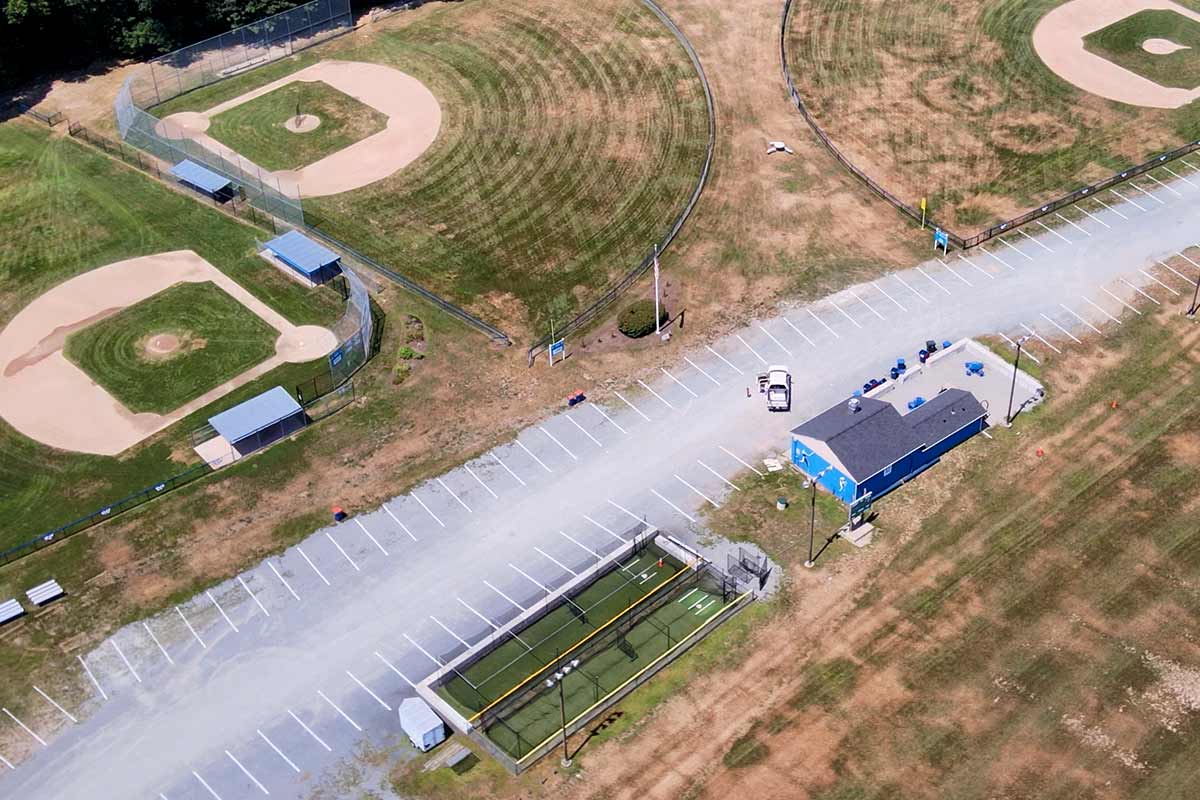
Use temporary stripes to direct traffic and create parking areas at your special event or to keep construction sites safe without a long-term commitment. We paint on grass, gravel, pavement, or any other surface where temporary striping is needed.
Striping solutions for:
Need Temporary Stripes?
Temporary striping solves a problem permanent paint cannot: parking that has to exist for a weekend, a season, or the length of a construction phase, and then stop existing. Overflow lots for a festival, graduation, or church event. Contractor and visitor parking on an active site. Interim layouts while a lot is being resurfaced and its permanent markings are gone.
How the work runs:
- Establish the duration. A three-day event and a nine-month construction phase are different jobs with different materials.
- Read the surface. Turf, gravel, compacted dirt, and pavement each take marking differently.
- Lay out the field, including accessible spaces and the route from them to the entrance.
- Mark, in the material the surface and the timeline call for.
- Set signage, freestanding where nothing permanent exists to mount to.
- Remove or let it wear, according to what was agreed at the start.
Temporary Striping on Grass, Gravel, Pavement, or Any Surface
We mark on grass, gravel, pavement, and whatever else a site presents. That is not a slogan — it is the reason this service exists, because the overflow parking a property actually needs is rarely on finished asphalt.
Turf takes a marking paint formulated for grass, which stays legible for the run of an event and then grows out. Gravel and compacted dirt hold a layout best when the marking follows a set-out rather than a painted line alone, since loose material shifts underfoot. Pavement takes a removable water-based traffic paint that wears off on a known timescale instead of committing the surface.
The variables that decide the material are duration, weather exposure, and how the area gets used afterwards. A lot being resurfaced next month wants something that disappears without residue. A construction laydown area running through a New England winter wants something that survives plowing and freeze-thaw. Those are opposite requirements, and picking the wrong one is the usual reason temporary markings fail early.
Drainage matters more than people expect on unpaved ground. Water pooling across a marked area destroys legibility quickly and makes the surface unpleasant to walk, which is why the layout usually goes on the part of a field that sheds water rather than the part that is flattest to the eye.
Temporary Accessible Parking Under 521 CMR 23.00
Massachusetts is one of the few states that legislates temporary parking directly, and the detail is genuinely useful.
521 CMR 23.00: Parking and Passenger Loading Zones scopes its chapter at section 23.1 to private off-street parking areas “including temporary parking areas.” From there the exceptions do the work, and they read like they were written by someone who had actually parked cars in a field.
On unpaved ground, section 23.4.3 directs accessible spaces to the least sloping area available. Section 23.4.4 asks for a “hard packed, smooth surface with a minimum amount of pooling or draining water” — a description of ground condition rather than a material specification, which is what makes it workable on turf.
Marking is handled with equal practicality. Section 23.4.5 accepts a space that is “easily identifiable, such as lined with field markings, paint or field tape,” and permits traffic cones or barrels. Section 23.4.6(a) calls for International Symbol of Accessibility and directional arrow signage along the accessible route.
The route itself is section 23.5: a firm, stable path at least thirty-six inches wide, with no abrupt level change greater than half an inch. Signage placement is covered at sections 23.6.1 and 23.6.4, which permit a temporary post set in a weighted base where there is nothing to mount to.
One more provision pairs with this on construction sites. 527 CMR 1.00 requires at section 16.1.4 that a fire apparatus access road exist from the start of a project and be maintained through construction, while permanent markings are not required until completion or occupancy. Temporary marking is what covers that interval.
For a full list of our pavement marking services, visit our parking lot striping in SE Boston page.
Businesses We Serve




How it Works

GET A FREE ESTIMATE
Contact us today and we’ll have a quote to you in 24 hours

SCHEDULE A STRIPING
We’ll have your space restriped in less than 7 days, without affecting your business hours

GET A PARKING LOT THAT POPS
For a budget-friendly price, you’ll get a parking lot that looks like new
We proudly work with:


We proudly work with:


Frequently Asked Questions About Temporary Parking Lot Striping in SE Boston, MA
Can you stripe parking on grass or a gravel lot?
Yes — it is most of what this service does. Temporary parking lot striping in SE Boston, MA goes on grass, gravel, compacted dirt, and pavement. Turf takes a marking paint made for grass that grows out afterwards; gravel and dirt hold a layout best when the marking is combined with a physical set-out; pavement takes a removable water-based traffic paint. The surface changes the material, not whether it can be done.
Do temporary parking areas need accessible spaces?
Yes, and Massachusetts is unusually specific about how. 521 CMR 23.1 scopes the chapter to private off-street parking including temporary parking areas, and its exceptions cover unpaved ground directly: accessible spaces on the least sloping area available, on a hard packed smooth surface without significant pooling water, marked so as to be easily identifiable using field markings, paint, or field tape.
How long do temporary markings last?
As long as the material and the exposure allow, which is why we ask about duration before choosing anything. Event markings on turf are meant to be gone within weeks. Construction-phase markings on pavement need to survive months, plowing, and freeze-thaw. Telling us the end date at the start is what keeps a marking from disappearing early or outstaying its welcome.
Can you mark accessible parking on a field if there are no posts for signs?
Yes. 521 CMR 23.00 anticipates it: sections 23.6.1 and 23.6.4 permit temporary signage on a post set in a weighted base where no permanent mounting exists. Section 23.4.6(a) covers the accessibility symbol and directional signage along the route, and section 23.5 sets the route itself at a firm, stable path at least thirty-six inches wide.