
Fire Lane Striping
In SE Boston, MA
Code-Compliant Fire Lane Markings
1-800-STRIPER® provides professional fire lane striping in SE Boston, MA — marking fire apparatus access roads, curbs, and no-parking zones per 527 CMR 1.00, the Massachusetts Comprehensive Fire Safety Code, for commercial properties across Norfolk, Suffolk, and Plymouth counties.
1-800-STRIPER® of SE Boston PROVIDes Fire Lane Striping Services NEAR YOU
Is your parking lot ready for first responders?
Our team is well-versed in local fire regulations and will parter with you to design a fire lane striping plan that creates unobstructed emergency access to protect your customers and property.
Core Services:
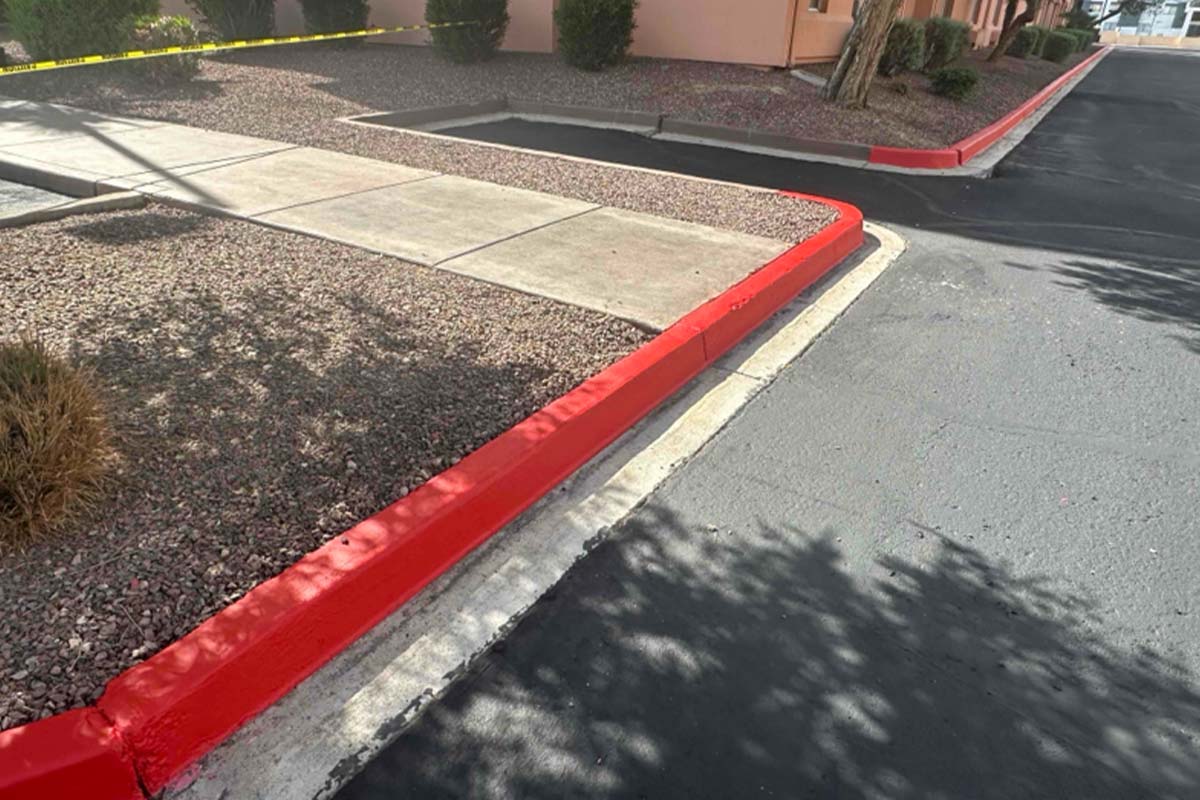
Is your parking lot ready for first responders?
A fire lane is the strip of pavement that decides whether a ladder truck can reach your building. Everything else on a commercial lot can be worked around; that one cannot. We mark and refresh fire apparatus access roads, curb faces, and no-parking zones for commercial, industrial, retail, and multifamily properties across Brockton, Quincy, Braintree, Stoughton, Randolph, and the surrounding towns.
The vocabulary is worth getting right, because it explains why searching for the rule can be frustrating. Property owners, tenants, and signage all say *fire lane*. Massachusetts regulation says *fire apparatus access road* — the phrase “fire lane” does not appear in the state’s amendment text at all. Same strip of pavement, two names, and the one that finds the regulation is the second.
How the work runs:
- Confirm the required route. Which access road the fire department expects to be kept clear, and where it begins and ends.
- Check the geometry against the code. Width, turning radius, and gradient, measured rather than assumed.
- Ask the local fire department for the marking specification. In Massachusetts this is a municipal answer, not a statewide one.
- Prepare the surface. Cleaning, and removal of failed markings that would otherwise telegraph through.
- Mark the road, curbs, and no-parking zones to the specification the department confirmed.
- Reinstate stall lines and adjacent markings disturbed by the work.
Fire Apparatus Access Road Rules in Massachusetts
Massachusetts regulates fire apparatus access roads through 527 CMR 1.00: Massachusetts Comprehensive Fire Safety Code, the state code administered by the Massachusetts Department of Fire Services. The Massachusetts code is based on the 2021 edition of NFPA 1 with state amendments, and it is the instrument with legal force here — which is why this page cites the state regulation rather than the model document behind it.
The geometry is set in the amended Chapter 18. An access road needs at least twenty feet of unobstructed width, a minimum inside turning radius of twenty-five feet, and a gradient no steeper than ten percent. New designs may not rely on opposing-lane travel. Where an access road is being built or rebuilt, plans are sealed by a registered professional engineer and approved by the fire department before construction begins.
The timing provision is the one almost nobody publishes, and it answers a real question. Section 16.1.5 provides that permanent fire apparatus access road markings “shall not be required until the building is complete or occupied for use.” Read alongside section 16.1.4, which requires the access road to exist from the start of a project and be maintained through construction, the sequence is clear: the route has to be usable from day one, and the permanent paint follows at occupancy. Temporary marking covers the gap.
Marking specifications themselves are municipal in Massachusetts. Section 18.1.1.6 preserves local requirements under M.G.L. c. 40A, and towns differ on stripe width, color, lettering, and how far the marked zone stands off the curb. There is no single statewide paint standard to point at. The reliable answer is to confirm the specification with the fire department having jurisdiction over your property before any paint goes down, and that call is part of our scoping work rather than something we leave to you.
For a full list of our pavement marking services, visit our parking lot striping in SE Boston page.
Businesses We Serve




How it Works

GET A FREE ESTIMATE
Contact us today and we’ll have a quote to you in 24 hours

SCHEDULE AN INSTALLATION
We’ll have your installation scheduled in less than 7 days, without affecting your business hours

GET A PARKING LOT THAT POPS
For a budget-friendly price, you’ll get a parking lot that looks like new
We proudly work with:


We proudly work with:


Frequently Asked Questions About Fire Lane Striping in SE Boston, MA
When do fire lane markings actually have to be painted on a new building?
At completion or occupancy, not at the start of construction. 527 CMR 1.00 provides at section 16.1.5 that permanent fire apparatus access road markings “shall not be required until the building is complete or occupied for use.” Section 16.1.4 requires the access road itself to exist from the beginning of the project and be maintained throughout, so the route has to work long before the permanent paint appears.
What color and width does Massachusetts require for fire lane striping?
There is no single statewide answer, and any contractor who gives you one without asking your town is guessing. Massachusetts sets marking specifications municipally; 527 CMR 1.00 section 18.1.1.6 preserves local requirements under M.G.L. c. 40A. Stripe width, color, lettering, and offset from the curb vary between towns. We confirm the specification with the fire department having jurisdiction before marking.
How wide does a fire apparatus access road have to be?
At least twenty feet of unobstructed width under the Massachusetts-amended Chapter 18 of 527 CMR 1.00. The same chapter sets a minimum inside turning radius of twenty-five feet and a maximum gradient of ten percent, and new designs may not depend on opposing-lane travel. Obstructed means obstructed in practice — a route that measures twenty feet on the plan but parks vehicles along one edge does not qualify.
Why does the regulation say access road when our signs say fire lane?
Because they are two names for the same pavement. Massachusetts legislates the term “fire apparatus access road” throughout; the phrase “fire lane” appears nowhere in the state amendment text. Signage, leases, and everyday use all say fire lane, and that stays the useful word for talking to tenants. It is simply not the word that finds the rule when you go looking for it.
Our fire lane markings have faded. Who decides whether they need repainting?
The fire department having jurisdiction. Faded markings are a common reason a lot fails an inspection, because enforcement depends on a driver being able to see the zone before parking in it. Fire lane striping in SE Boston, MA is inspected town by town, so the practical test is whether your local department can read the markings — not whether you can remember them being painted.