Sports Court Striping
In St. Louis Metro East, IL
Multi-Sport Court Line Marking
1-800-STRIPER provides professional sports court striping in St. Louis Metro East, IL — marking pickleball courts to USA Pickleball specifications, basketball courts, tennis courts, and playground game markings using durable, weather-resistant acrylic traffic paint.
1-800-STRIPER® of St Louis Metro East PROVIDes Sport Court and Playground Markings Services NEAR YOU
Want to get people to come out to play?
Brighten up your faded sport courts or turn your playground into a safe, colorful, and engaging space that entices people to come out and play.
Sport Court Specialties:
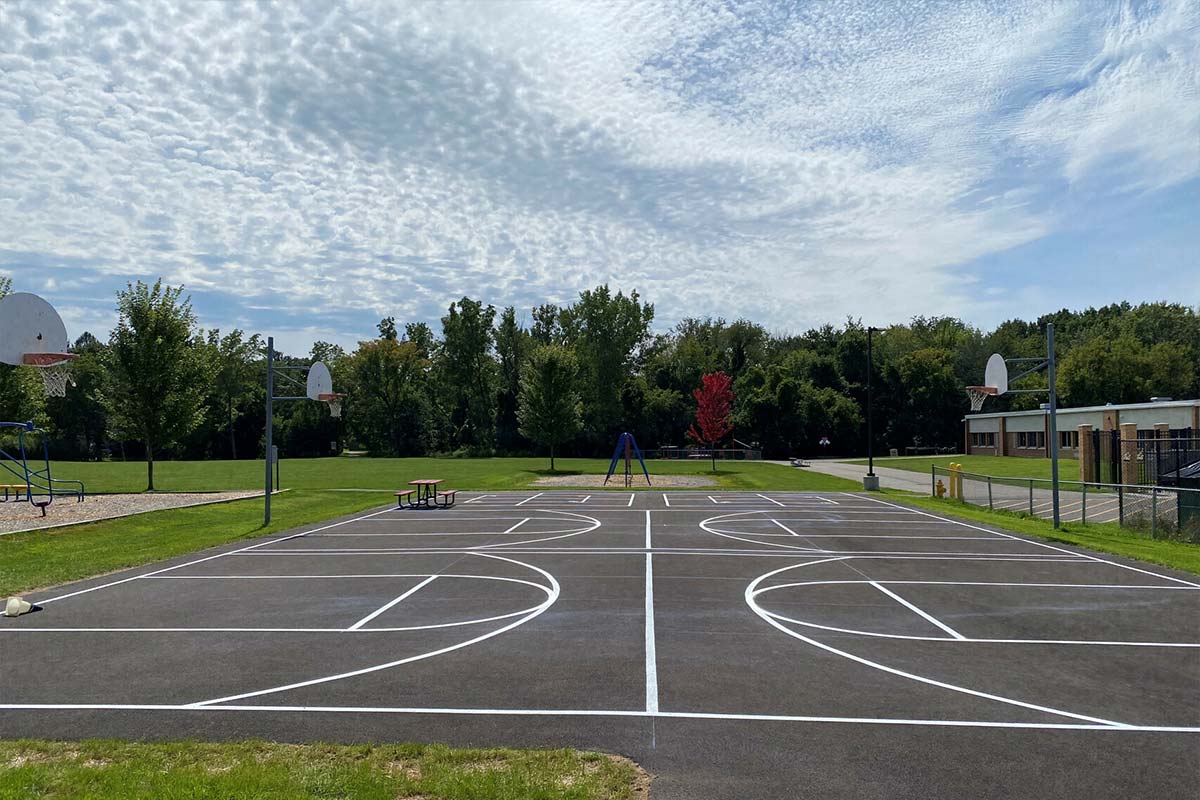
Sports Court Striping in St. Louis Metro East, IL
Sports court striping puts accurate, durable game lines on the surface you already have. We mark pickleball, basketball, and tennis courts, plus playground game markings, for schools, parks, HOAs, apartment communities, and churches across the Metro East. This is line work, not resurfacing — if your slab or court surface is sound, we lay down crisp, regulation lines that hold up to play and weather.
Court Types & Line Layouts
Each sport has its own dimensions, and getting them right is the whole job:
- Pickleball courts follow USA Pickleball specifications — a 20-by-44-foot playing area, a 7-foot non-volley zone (the “kitchen”) on each side of the net, and a net set to 34 inches at the center.
- Basketball courts are lined to the level of play — a high-school court runs 84 by 50 feet, with the key, free-throw line, three-point arc, and center circle marked to match. Half-courts and driveway courts are laid out to the space available.
- Tennis courts are 78 by 27 feet for singles and 36 feet wide for doubles, with service boxes, baselines, and the net line marked to spec.
- Playground game markings — hopscotch, four square, number grids, and activity circles — turn blacktop into a usable play space for a school or park.
We confirm the layout and colors with you before painting so the finished court plays right.
Multi-Sport Overlays
One slab can hold more than one game, which is how most communities get the most out of a court. Pickleball lines over an existing tennis court is the most common request — we lay the two sets of lines in contrasting colors so players can pick out their own game at a glance. Basketball keys, four-square grids, and pickleball courts can share the same pad the same way. The key is a clear color scheme and clean, well-masked lines, so an overlay reads as two courts instead of a tangle. We plan the color separation with you before any paint goes down.
Our Court Striping Process
We measure and chalk the layout, mask the lines, and apply durable, weather-resistant acrylic traffic paint built for foot traffic and the elements. For courts that need longer-wearing lines, we’ll discuss acrylic versus thermoplastic options and where each makes sense — acrylic for most recreational courts, longer-wearing systems where play is heavy. Multiple colors are applied in sequence so overlaid courts stay legible, and we walk the finished lines with you before the court reopens.
Where We Stripe Sports Courts
We stripe courts for the places across the Metro East where people actually play. Schools and school districts make up a big share — gym-class game lines, playground markings, and outdoor basketball and pickleball courts. Parks and municipal recreation departments bring tennis and pickleball work, and the pickleball boom means many of our requests are new lines on courts originally built for something else. HOAs, apartment and condo communities, and senior-living campuses add courts as an amenity, and churches and community centers round out the list with multi-use pads that need to do double duty. Whatever the setting, the job is the same: accurate, durable game lines on a surface that’s already sound.
Line Colors & Visibility
Color is what makes a court readable, especially when more than one game shares the slab. We use contrasting colors so each set of lines stands on its own — a player should never have to hunt for their baseline. On dedicated courts we match the standard color conventions for the sport; on overlays we plan the palette with you up front so pickleball lines don’t disappear into tennis lines or a basketball key. Clean masking and even paint application keep the edges crisp, and weather-resistant acrylic holds the color through sun and rain. The finished court reads clearly from the baseline, which is the whole point of striping it right.
For a full list of our pavement marking services, visit our parking lot striping in St. Louis Metro East page.
Businesses We Serve




How it Works

GET A FREE ESTIMATE
Contact us today and we’ll have a quote to you in 24 hours

SCHEDULE AN INSTALLATION
We’ll have your play space restriped in less than 7 days, without affecting your playtime

GET A PARKING LOT THAT POPS
For a budget-friendly price, you’ll get a parking lot that looks like new
We proudly work with:


We proudly work with:

Frequently Asked Questions About Sports Court Striping in St. Louis Metro East, IL
What are the official pickleball court dimensions?
The playing area is 20 by 44 feet, matching the badminton-court footprint, with a 7-foot non-volley zone on each side of the net and a 34-inch center net height, per USA Pickleball. We mark to those specifications.
Can you put pickleball lines on our existing tennis court?
Yes. Overlaying pickleball on a tennis court is common — we use contrasting line colors so both games stay readable, or we can lay out dedicated pickleball courts on the same slab.
Do you resurface courts or just stripe them?
We stripe. If the surface is sound, we lay down accurate, durable game lines. We don’t resurface or recoat the court itself — this is line-marking work.
What paint do you use on sports courts?
Durable, weather-resistant acrylic traffic paint made to take foot traffic and the elements. For high-use courts we can talk through longer-wearing options during the estimate.
Can you mark playground games too?
Yes. Hopscotch, four square, number grids, and activity circles are all part of what we do — a fast way to turn a plain blacktop into a play area for a school or park.