Fire Lane Striping
In St. Louis Metro East, IL
Code-Compliant Fire Lane Markings
1-800-STRIPER provides professional fire lane striping in St. Louis Metro East, IL — marking compliant fire lanes, curbs, and no-parking zones per the International Fire Code and local fire-marshal requirements for commercial properties throughout Madison, St. Clair, and Monroe counties.
1-800-STRIPER® of St Louis Metro East PROVIDes Fire Lane Striping Services NEAR YOU
Is your parking lot ready for first responders?
Our team is well-versed in local fire regulations and will parter with you to design a fire lane striping plan that creates unobstructed emergency access to protect your customers and property.
Core Services:
Fire Lane Striping in St. Louis Metro East, IL
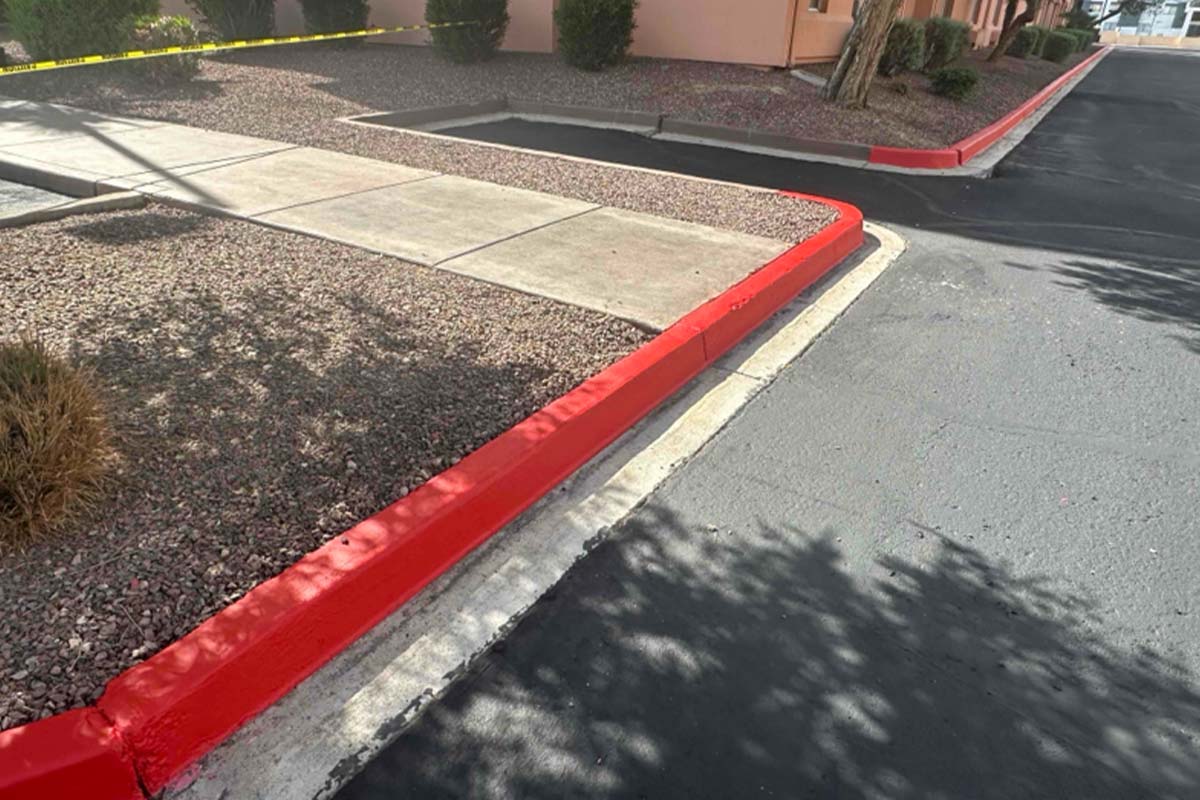
Fire lane striping keeps emergency access clear and keeps your property on the right side of the fire marshal. We paint code-compliant fire lanes, red curbs, and “NO PARKING — FIRE LANE” markings for commercial properties across Belleville, Granite City, O’Fallon, and Collinsville. When the local fire department inspects your lot, the markings need to be present, correct, and legible — and that’s exactly what we deliver.
What Counts as a Fire Lane
A fire lane is any route the fire department needs kept clear to reach a building and its fire equipment. On a commercial property that usually includes the apparatus access road around the building, the approach to fire hydrants and the fire department connection (FDC), and the zones directly in front of main entrances. These are the areas that have to stay open for a fire truck to set up and operate. Blocking them — even briefly — is what fire-lane marking is designed to prevent, which is why the paint and signage have to be unmistakable day or night.
Fire Lane Marking Requirements
Fire-lane rules come from the International Fire Code, which Illinois municipalities adopt locally, and the Office of the Illinois State Fire Marshal oversees fire safety at the state level. The details inspectors check:
- Clear width. Fire apparatus access roads generally require a minimum 20-foot unobstructed width (IFC §503.2.1), with more where the code demands it.
- Curb and pavement marking. Fire lanes are marked with red curbing and lettering — commonly “NO PARKING — FIRE LANE” — repeated at intervals so it’s readable from any point along the lane.
- Signage. Posted signs reinforce the painted markings where the local authority requires them.
- Local approval. Because fire-code adoption is home-rule in Illinois, the fire lane width, marking style, lettering, and spacing are approved by your local fire department or AHJ. We mark to their specification, not a generic template.
We coordinate the marking to what your jurisdiction actually enforces, so the lot passes the first time.
Our Fire Lane Striping Process
We locate the required fire lanes from your site plan or the fire marshal’s markup, prep the curbs and pavement, then apply durable red curb paint and high-visibility lettering. Stencil lettering is spaced for legibility along the full run of the lane, and no-parking zones at hydrants and building entrances are marked to match. Where signage is required, we note the locations so posts and signs line up with the paint. If your jurisdiction wants a pre-marking walkthrough with the fire marshal, we’ll build that into the schedule so there are no surprises at inspection.
Common Fire Lane Problems We Fix
Most failed inspections come down to a handful of recurring issues, and all of them are correctable. Faded red curbs and unreadable lettering top the list — snowplows and road salt wear Metro East curbing hard over a winter. Missing or too-widely-spaced “NO PARKING — FIRE LANE” stencils are another common flag, along with lanes that were never marked to the current required width. We re-mark curbs, re-space lettering to the local standard, and bring the whole lane back to a legible, inspection-ready state in a single visit.
Why Choose 1-800-STRIPER for Fire Lane Striping
Fire-lane work is a safety and liability issue, so it pays to use a crew that does it right. We’re a striping specialist with a veteran-owned operation — Michael Slaton’s 22 years in the U.S. Air Force built the discipline that shows up in code-accurate, inspection-ready work. We know the Metro East jurisdictions and mark to local fire-department specs. Our Google reviews sit at five stars, and every fire-lane quote is free and in writing.
Fire Lane Signage & Ongoing Compliance
Painted markings and posted signs work together to keep a fire lane enforceable. Where the local code requires them, “FIRE LANE — NO PARKING” or “TOW-AWAY ZONE” signs are posted at intervals along the lane and at its start and end, and we mark those locations so the signs line up with the curb paint and stenciling. Consistent spacing matters: a driver should be able to see a marking or a sign from anywhere along the lane, which is what an inspector checks for.
Fire-lane compliance isn’t a one-time job, either. Red curb paint and pavement lettering fade under traffic, sun, and especially the plowing and salting that Metro East lots see every winter, and faded fire-lane markings are one of the most common reasons a property fails a fire inspection. We suggest a look at your fire lanes every year or two, and we can re-mark curbs, refresh lettering, and re-space stencils in a single visit before a scheduled inspection. Because Illinois adopts the fire code locally, we always mark to what your specific fire department enforces rather than a generic template — so the lane passes the first time and stays compliant between inspections.
For a full list of our pavement marking services, visit our parking lot striping in St. Louis Metro East page.
Businesses We Serve




How it Works

GET A FREE ESTIMATE
Contact us today and we’ll have a quote to you in 24 hours

SCHEDULE AN INSTALLATION
We’ll have your installation scheduled in less than 7 days, without affecting your business hours

GET A PARKING LOT THAT POPS
For a budget-friendly price, you’ll get a parking lot that looks like new
We proudly work with:


We proudly work with:


Frequently Asked Questions About Fire Lane Striping in St. Louis Metro East, IL
Who requires fire lane striping?
Your local fire department or authority having jurisdiction, under the International Fire Code your municipality adopts. Requirements are enforced locally in Illinois, so the exact marking is set by your fire marshal.
How wide does a fire lane have to be?
Fire apparatus access roads generally require a minimum 20-foot clear width under IFC §503.2.1, with additional clearance where the local code demands it. Your fire marshal confirms the width for your property.
What does the striping actually include?
Red curb paint, “NO PARKING — FIRE LANE” lettering repeated along the lane, and marked no-parking zones at hydrants and entrances — plus signage locations where they’re required.
How often should fire lanes be re-striped?
Whenever the red curb or lettering fades enough to lose legibility — typically every couple of years, sooner in high-traffic lots or after heavy plowing. Faded fire-lane markings are a common inspection failure.
Can you match our fire marshal’s exact requirements?
Yes. We mark to the local jurisdiction’s specification for width, lettering, and spacing rather than a one-size template, because Illinois fire-code adoption is handled town by town.
Do you paint red curbs as well as lane markings?
Yes. Red curbing is a core part of fire-lane marking, and we apply durable curb paint along with the pavement lettering and no-parking zones.