Bollard Installation
In Boise, ID
Safety and Security Bollards
1-800-STRIPER® provides professional bollard installation in Boise, ID — setting steel, concrete-filled, and decorative security bollards to protect storefronts, pedestrian walkways, and utility equipment per ASTM F3016 impact-resistance standards for commercial properties throughout Ada and Canyon counties.
1-800-STRIPER® of Boise PROVIDes Bollard Installation Services NEAR YOU
Want to prevent accidents and protect your property?
Bollards provide physical protection for your customers and your property.
Safety and security:
Bollards create a physical barrier between vehicles and pedestrians, protecting people in walking areas from accidental or intentional vehicle intrusions.
Bollards act as a protective barrier around storefronts, gas stations, and other vulnerable areas, minimizing the risk of costly damage from vehicle impacts.
Strategic Placement Locations:
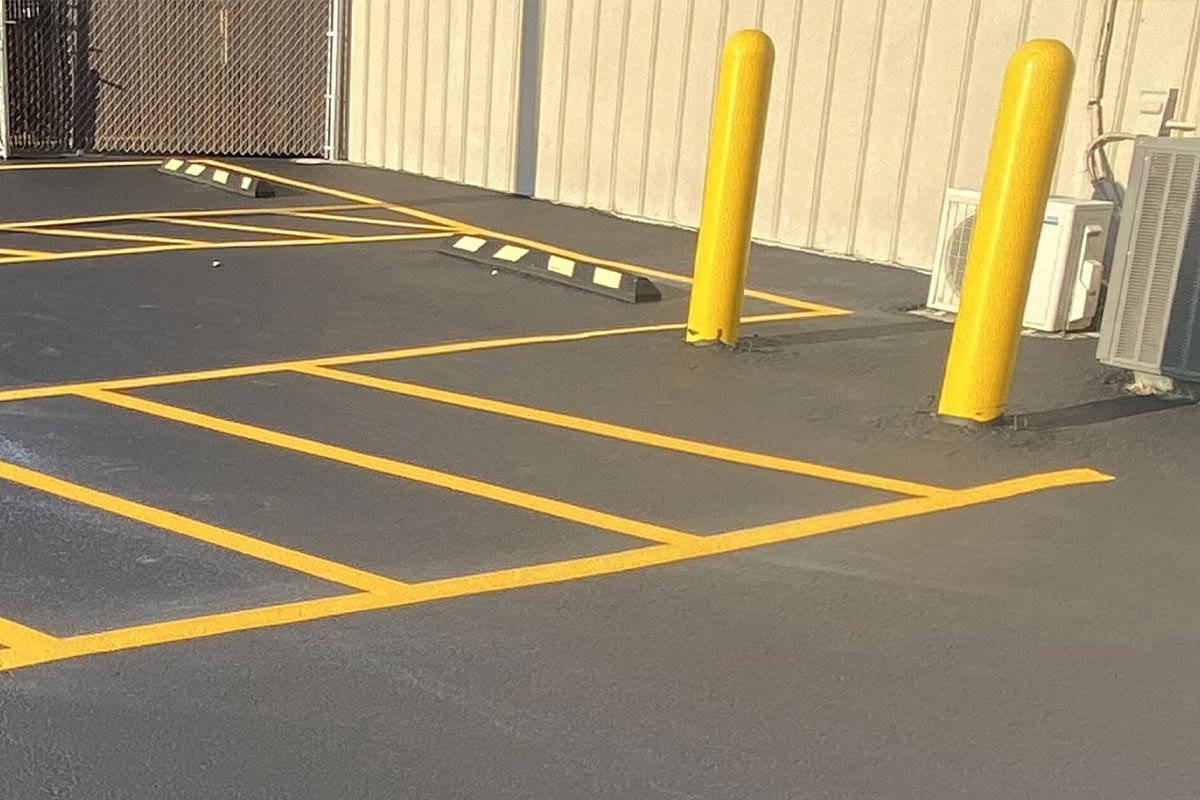
Bollard Installation in Boise, ID
Bollards are the short, sturdy posts that stand between vehicles and the things you can’t afford to have hit — storefronts, entrances, walkways, fuel dispensers, and utility equipment. We supply and install steel, concrete-filled, and decorative security bollards on commercial properties, anchored to do their job in a low-speed impact. A well-placed bollard turns a vulnerable glass storefront or crowded entrance into a protected one, and it’s far cheaper than the damage and liability of a vehicle strike.
Bollard Types
Different jobs call for different bollards, and we install the full range:
| Type | Best for |
|---|---|
| Steel (schedule-40/80 pipe) | General storefront and equipment protection; can be concrete-filled for more mass |
| Concrete-filled steel | Higher impact resistance where a vehicle strike is a real risk |
| Decorative / architectural | Protection that matches the building — covers and finishes over a structural core |
| Removable / retractable | Controlled access points that need to open for deliveries or emergencies |
We match the type to the threat, the location, and the look you want.
What Bollards Protect
Bollards go wherever a vehicle could reach something valuable or vulnerable: glass storefronts and entrances, pedestrian walkways and gathering areas, fuel dispensers and EV chargers, utility meters and transformers, ATMs and drive-up windows, and building corners at the end of drive aisles. They also reinforce the accessible route by keeping vehicles off the paths and clearances pedestrians rely on.
Impact-Resistance Ratings
Not all bollards stop the same thing, and the ratings tell you what a bollard will actually do. ASTM F3016 covers low-speed impact — the storefront-protection scenario — testing at 10, 20, and 30 mph so you can match a bollard to a parking-lot threat. ASTM F2656 covers high-speed, high-security crash ratings (M30, M40, M50) for barriers protecting against deliberate vehicle attack at government, financial, and infrastructure sites. Most retail and commercial storefront protection is an F3016 question; we help you spec the right rating for the risk.
Foundation & Anchoring
A bollard’s strength is in its footing. For fixed bollards, we core-drill or excavate and set the post in a concrete foundation sized to the bollard and the impact it needs to resist — the deeper, wider footing is what actually stops a vehicle, not just the post itself. Surface-mounted (baseplate) bollards anchor to existing concrete where digging isn’t possible, suited to lighter-duty protection. We match the foundation method to the bollard’s job.
Bollard Covers & Finishes
Bollards don’t have to look industrial. We finish structural steel bollards with safety-yellow or custom paint for visibility, or fit decorative covers and architectural sleeves that match your building while a steel-and-concrete core does the protecting underneath. Covers also protect the post from Boise’s weather and de-icing chemicals, extending its life and keeping it looking maintained.
Our Install Process
- Assess the site — what needs protecting, the likely impact, and the look you want.
- Spec the bollard — type, size, and impact rating (ASTM F3016 or F2656).
- Set the foundation — core-drill and concrete for fixed, or baseplate-anchor for surface mount.
- Install and align the bollards consistently and plumb.
- Finish — paint or fit covers for visibility, durability, and appearance.
For a full list of our pavement marking services, visit our parking lot striping in Boise page.
Businesses We Serve




How it Works

GET A FREE ESTIMATE
Contact us today and we’ll have a quote to you in 24 hours

SCHEDULE AN INSTALLATION
We’ll have your installation scheduled in less than 7 days, without affecting your business hours

GET A PARKING LOT THAT POPS
For a budget-friendly price, you’ll get a parking lot that looks like new
We proudly work with:


We proudly work with:


Frequently Asked Questions About Bollard Installation in Boise, ID
What’s the difference between steel and concrete-filled bollards?
A hollow steel bollard protects against everyday bumps and guides traffic; filling it with concrete adds mass and stiffness for real impact resistance where a vehicle strike is a genuine risk. We recommend concrete-filled or higher-rated bollards for storefronts and high-traffic drive aisles, and standard steel for lighter-duty guarding.
How deep does a bollard footing go?
It depends on the bollard and the impact it must resist, but fixed bollards are set in a concrete foundation deep and wide enough to anchor the post against a strike — the footing does the real work. Surface-mounted baseplate bollards anchor to existing concrete for lighter-duty jobs. We size the foundation to the application.
What’s the difference between removable and fixed bollards?
Fixed bollards are permanently set in concrete for continuous protection. Removable and retractable bollards lock in place for protection but can be taken down or lowered to open an access point for deliveries, maintenance, or emergency vehicles. We install both, depending on whether you need permanent or controlled access.
Will a bollard stop a car from hitting my storefront?
A properly specified and anchored bollard is designed to stop or deflect a vehicle in a low-speed impact — the common parking-lot scenario. ASTM F3016 rates bollards at 10, 20, and 30 mph for exactly this. For deliberate high-speed attack, ASTM F2656 crash-rated barriers apply. We match the rating to your actual risk.
What finish and cover options are there?
Structural bollards can be painted safety yellow or a custom color for visibility, or dressed with decorative covers and sleeves that match your building’s look while the steel-and-concrete core does the protecting. Covers also shield the post from weather and de-icing chemicals, which helps in Boise’s climate.
Can bollards be paired with wheel stops?
Yes — they solve related problems and often go in together. Wheel stops stop a parked vehicle’s overhang; bollards stop a moving vehicle from reaching a building, walkway, or equipment. Many storefront and walkway protection plans use both. Call (208) 480-1025 for a free estimate.