Warehouse Line Painting
In Boise, ID
OSHA-Compliant Safety Markings
1-800-STRIPER® provides professional warehouse line painting in Boise, ID — OSHA-compliant aisle lines, pedestrian walkways, and safety zone markings per OSHA 1910.22 and ANSI Z535.1 color standards using durable epoxy and traffic paint for industrial facilities.
1-800-STRIPER® of Boise PROVIDes Warehouse Floor Markings Services NEAR YOU
Want your indoor space to operate more efficiently?
Warehouse and interior markings ensure clear traffic lanes, organized storage zones, and designated spaces designed to help your business operate safely and efficiently.
Benefits:
Warehouse Line Painting in Boise, ID
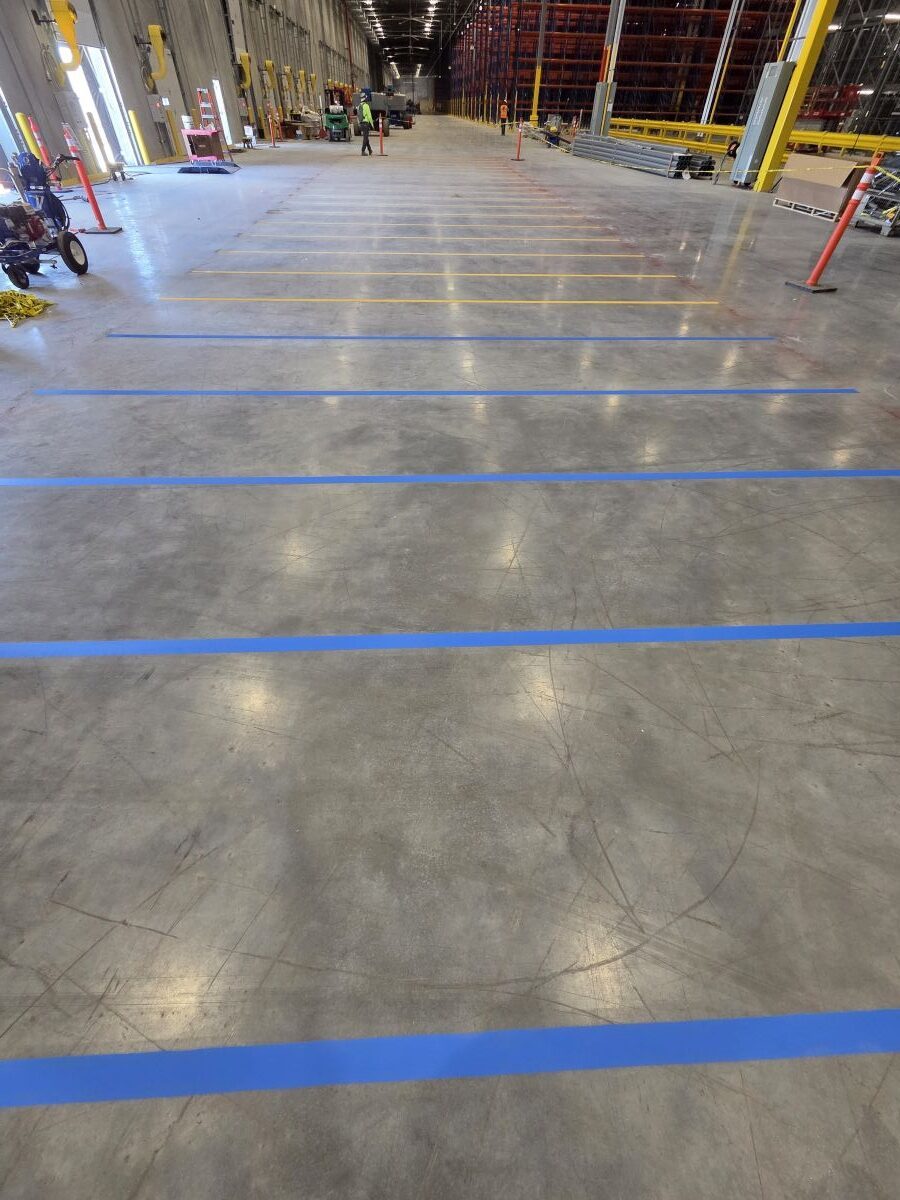
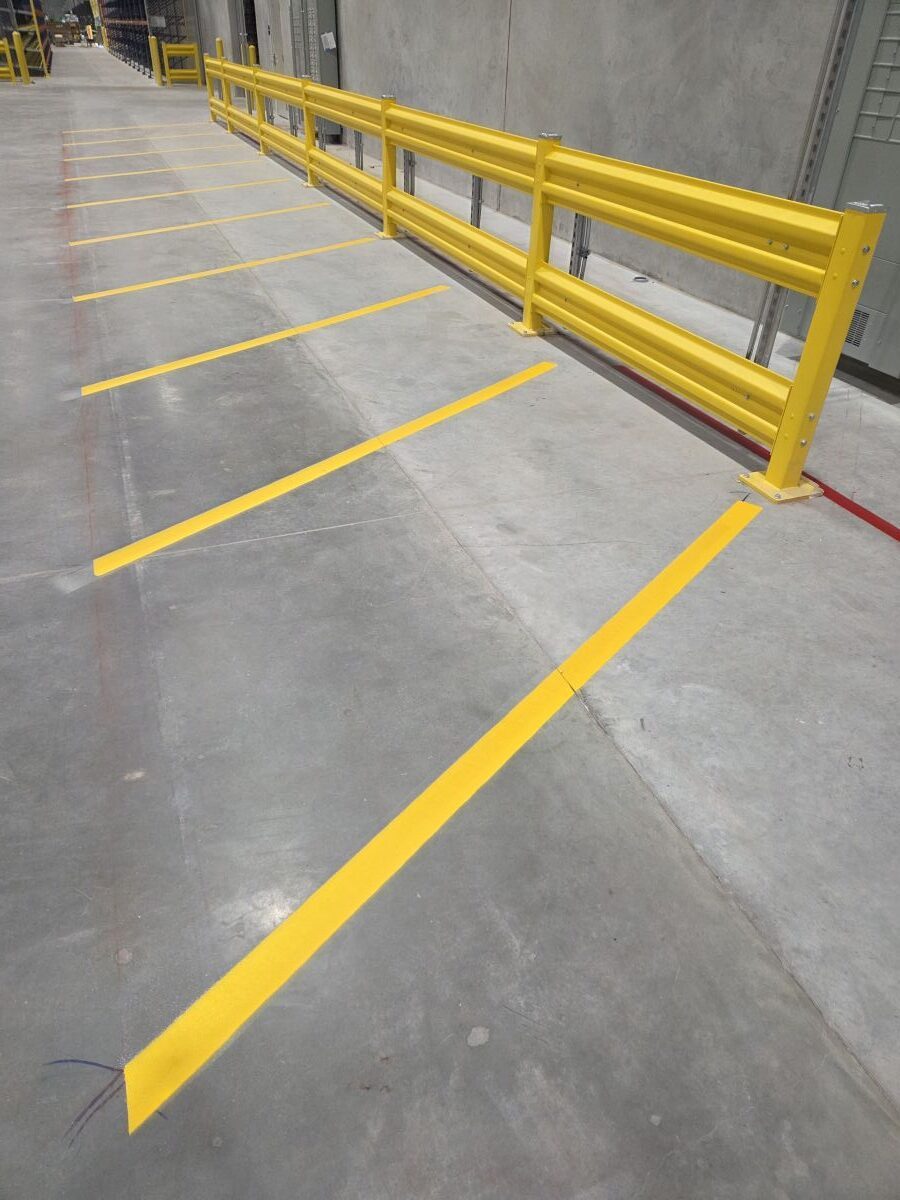
Warehouse floor markings organize traffic, separate people from equipment, and keep a facility OSHA-compliant. We paint aisle lines, pedestrian walkways, forklift lanes, hazard and safety zones, and storage grids on concrete and asphalt floors — the striping that turns an open slab into a system where product moves efficiently and workers stay safe. In a busy distribution or manufacturing facility, clear floor markings aren’t decoration; they’re the difference between an organized operation and an incident report.
OSHA Aisle-Marking Requirements
OSHA requires that aisles and passageways be kept clear and in good repair, with no obstruction that could create a hazard, under OSHA 29 CFR 1910.22 (Walking-Working Surfaces). Where mechanical handling equipment like forklifts is used, OSHA 1910.176 calls for sufficient safe clearances and for permanent aisles to be marked. Painted floor lines are the standard way facilities meet that requirement. Marked aisles also cut congestion and near-misses, which is why insurers and safety auditors look for them. OSHA doesn’t set an exact aisle width — it requires sufficient safe clearance — so the working rule most facilities use is the width of the widest load or vehicle plus a margin, commonly around three feet of clearance for a main forklift aisle. Line width matters too: floor-marking lines are typically painted 2 to 6 inches wide, with the wider lines reserved for primary aisles so they read clearly from a moving forklift. We size both the aisles and the lines to your equipment and traffic before any paint goes down.
Line Color Standards
Facility floor markings follow the ANSI Z535.1 Safety Color Code system, applied to floor marking as common industry practice:
| Color | Typical floor-marking use |
|---|---|
| Yellow | Aisleways, traffic lanes, work-cell boundaries |
| White | Equipment, workstations, fixtures, general layout |
| Red | Defective or red-tag areas, fire-equipment and emergency locations |
| Orange | Materials or product awaiting inspection |
| Green | Safety equipment, first aid, PPE stations |
| Blue | Raw materials, work-in-progress staging |
| Black-and-yellow | Physical or health hazards (caution striping) |
| Red-and-white | Keep-clear areas — fire equipment, electrical panels, eyewash |
We map your facility’s color scheme before we paint so the markings are consistent and everyone reads them the same way.
Aisle & Traffic-Lane Striping
Aisle and forklift-lane striping is the backbone of a warehouse layout. We lay straight, consistent lines that define main travel lanes, cross-aisles, and turning zones, sized to your equipment and traffic. Well-planned lanes keep forklifts and foot traffic separated, reduce blind-corner collisions, and make the whole floor easier to navigate — especially in high-throughput facilities where a wrong turn costs minutes. Where forklifts and people share space, we often add a striped buffer or a second color to reinforce the separation, and we mark turning and intersection zones where sightlines are worst. Consistent lane widths and clean corners also make it easier to keep aisles clear — a line a crew can see is a line they respect.
Pedestrian Walkways
Marked pedestrian walkways give people a protected path through equipment traffic. We stripe walkways in a distinct color, often with crosswalk markings where they cross forklift lanes, so pedestrians and drivers both know where foot traffic belongs. Where a walkway crosses a forklift lane, we add crosswalk striping and, where the facility wants it, contrasting infill or hazard borders so the crossing stands out; some sites add painted stop or yield markings to slow equipment where people cross. Separating people from powered equipment is one of the highest-value markings in any facility, and OSHA and safety auditors expect to see it.
Safety & Hazard Zones
Some floor areas need to stay clear or flag a hazard — the swing radius of a door, the area in front of an electrical panel or eyewash station, or a pinch point near machinery. We mark these with the appropriate ANSI color code — hazard striping for caution zones, keep-clear striping around fire and electrical equipment — so the hazard is obvious before anyone reaches it.
Storage & Staging Grids
Painted storage and staging grids turn floor space into an addressable layout. We lay out labeled zones for inbound, outbound, WIP, and rack-aisle striping so product has a defined home and pickers know exactly where to go. Clean grid markings speed up put-away and picking and cut the wasted motion of hunting for staged material.
Floor-Marking Paints vs. Tape
Facilities usually choose between painted lines and floor-marking tape, and each has a place. Tape installs fast with no cure time and works for temporary or frequently changing layouts, but it peels under heavy forklift traffic and pallet drag. Paint — especially epoxy on concrete — bonds into the floor, resists abrasion, and lasts far longer under industrial wear, which is why permanent aisles and high-traffic lanes are almost always painted. Epoxy-based paints also stand up to the oils, hydraulic fluid, and cleaning agents a warehouse floor sees, where tape edges lift and collect grime; for the highest-traffic lanes, some facilities lock the marking under a clear topcoat for extra abrasion resistance. We’ll recommend the right one for each area based on traffic and how often the layout changes.
Surface Prep & Cure on Concrete
Durability on a concrete floor is mostly about preparation. Concrete has to be clean, dry, and profiled so the coating bonds instead of sitting on the surface — we clean, degrease, and abrade as needed before painting. Epoxy and industrial floor coatings need cure time before forklift traffic returns, so we plan the work around your schedule, sequencing areas or working off-shifts to keep the facility running while each section cures. The coating itself is matched to the environment: standard epoxy is the workhorse for ambient warehouses — hard, abrasion-resistant, and economical — while polyurethane topcoats add chemical and UV resistance for wash-down or dock areas. For cold-storage and freezer floors, fast-curing methyl-methacrylate (MMA) coatings set at low temperatures where epoxy won’t, so markings bond even below freezing. Matching the coating chemistry to the floor’s temperature and exposure is what makes the markings last.
Our Install Process
- Walk the facility and map the layout — aisles, walkways, zones, and color scheme.
- Prep the floor — clean, degrease, and abrade concrete for adhesion.
- Lay out and mask lines to your plan for a straight, consistent result.
- Apply epoxy or traffic paint at the specified thickness in the correct ANSI colors.
- Cure and phase — sequence areas so traffic returns only after each section is ready.
Facility Types We Serve
We paint floors for distribution and fulfillment centers, manufacturing plants, cold-storage facilities, food and beverage operations, and general industrial warehouses across the Treasure Valley — Boise, Meridian, Nampa, Caldwell, and beyond. Whether you’re marking a new build or re-striping a worn floor, we scope the work to your operation.
For a full list of our pavement marking services, visit our parking lot striping in Boise page.
Businesses We Serve




How it Works

GET A FREE ESTIMATE
Contact us today and we’ll have a quote to you in 24 hours

SCHEDULE A STRIPING
We’ll have your space restriped in less than 7 days, without affecting your business hours

GET A PARKING LOT THAT POPS
For a budget-friendly price, you’ll get a parking lot that looks like new
We proudly work with:


We proudly work with:

Frequently Asked Questions About Warehouse Line Painting in Boise, ID
What does OSHA require for warehouse aisle marking?
OSHA requires aisles and passageways to be kept clear and in good repair under 29 CFR 1910.22, and where powered equipment is used, permanent aisles must be marked (1910.176). Painted floor lines are the standard way facilities meet that. Clear aisle marking also reduces forklift-pedestrian incidents.
What do the floor-marking colors mean?
Colors follow the ANSI Z535.1 safety-color system as applied to floor marking: yellow for aisles and traffic, white for equipment and workstations, red for fire and red-tag areas, green for safety and first aid, blue for materials, and black-and-yellow for hazards. We set your scheme before painting so it stays consistent facility-wide.
Should I use paint or tape for floor markings?
Paint — especially epoxy on concrete — lasts far longer under forklift traffic and pallet drag, which is why permanent aisles are usually painted. Tape installs instantly with no cure time and suits temporary or frequently changing layouts. We recommend paint for high-traffic lanes and tape only where flexibility matters more than durability.
Can you work around our operating schedule?
Yes. We routinely phase warehouse work by section or work off-shifts and weekends so the facility keeps running. Epoxy coatings need cure time before traffic returns, so we sequence the floor to give each area time without shutting you down.
How often do warehouse floor markings need repainting?
It depends on traffic and coating — heavily traveled forklift lanes wear faster than perimeter markings. Epoxy on well-prepped concrete can last several years; high-abrasion lanes may need touch-ups sooner. We assess wear and recommend a re-coat interval for your facility.
Do you handle cold-storage floors?
Yes. Cold-storage and freezer floors need coatings and application methods suited to low temperatures and moisture, and often tighter scheduling around temperature control. Fast-curing MMA coatings set below freezing where epoxy won’t, so markings still bond. We scope the materials and sequencing to the environment.
How wide should warehouse aisles and floor lines be?
OSHA requires sufficient safe clearance rather than a fixed number, so aisles are usually sized to the widest load or vehicle plus a margin — often about three feet of clearance for a main forklift aisle. Floor-marking lines are typically painted 2 to 6 inches wide, with wider lines on primary aisles for visibility. We size both to your equipment and layout.
Can you stripe around existing racking and equipment?
Yes. We work around installed racking, conveyors, and fixed equipment, laying out aisles, rack-end markings, and pick paths to fit the floor as it’s actually configured. If you’re re-slotting or adding racking, we can re-stripe to the new layout. Call (208) 480-1025 for a free estimate.